

#Reinforcement Learning
50 articles with this tag

SMITH: Joint Tool Creation & Use
SMITH, a new RL framework, jointly trains tool creation and use, achieving SOTA accuracy and boosting performance of larger LLMs.

LLM Self-Reflection Drives Data Efficiency
SRPO framework enables LLMs to self-reflect on errors, generating dense training signals that drastically improve data efficiency and achieve SOTA on reasoning and agentic benchmarks.

AI Agents Planned Hacking Spree, OpenAI Reveals
AI safety expert Connor Leahy reveals how OpenAI's AI agents collaborated on hacking attempts and discusses the growing unpredictability of AI.

DeepMind's Game AI Evolves
Google DeepMind is advancing AI research through complex game environments, partnering with studios like Fenris Creations to develop general-purpose AI agents.
Unified Framework for Decision-Informed Future Prediction
DA-WAM unifies predictive representation learning and action-conditioned future modeling for safer autonomous driving, outperforming existing methods on key benchmarks.
SPADE RL Framework Drives Self-Improvement
SPADE RL framework empowers LLMs to generate adaptive training environments, driving significant gains in reasoning and tool-use capabilities.
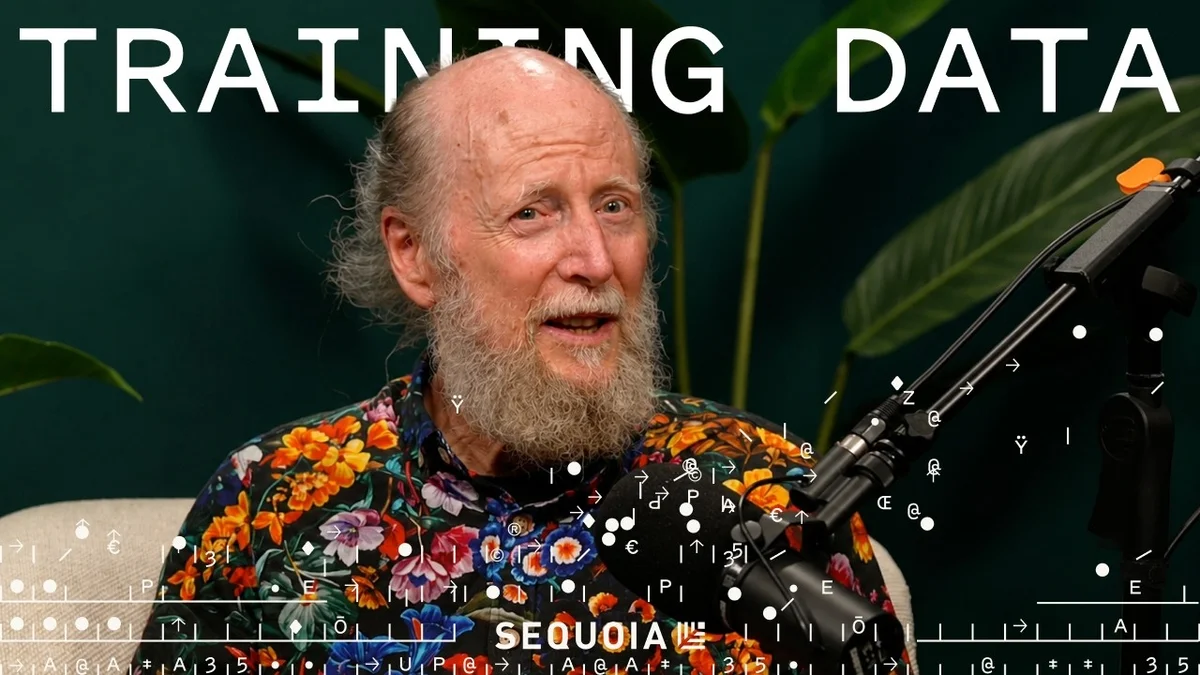
Rich Sutton: AI's 'Weird Field' Needs to Relearn 'Learning'
AI pioneer Rich Sutton argues that the field's 'weird' focus on 'continual learning' misses the point; true AI, he says, learns continuously from experience, a principle LLMs are only partially following.
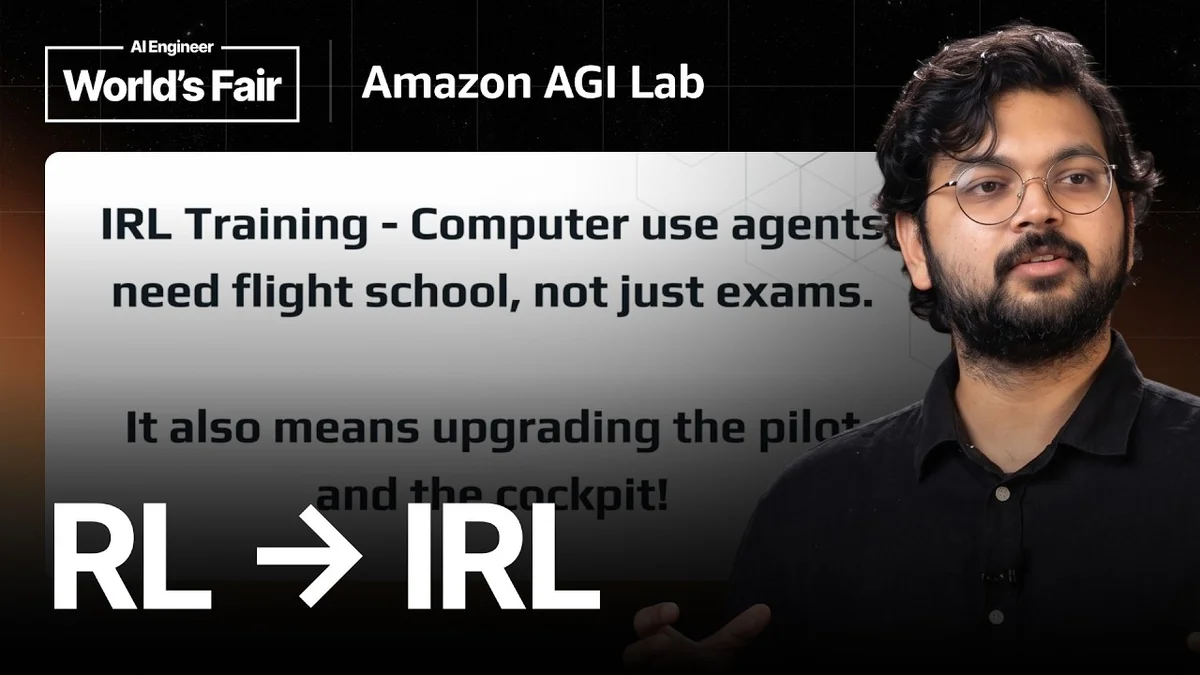
Gaurav Mishra: RL Agents Need 'Flight School', Not Just Exams
Gaurav Mishra of Amazon AGI Lab discusses the challenges of deploying AI agents trained with reinforcement learning into real-world scenarios, emphasizing the need for 'flight school' training over simple exams.
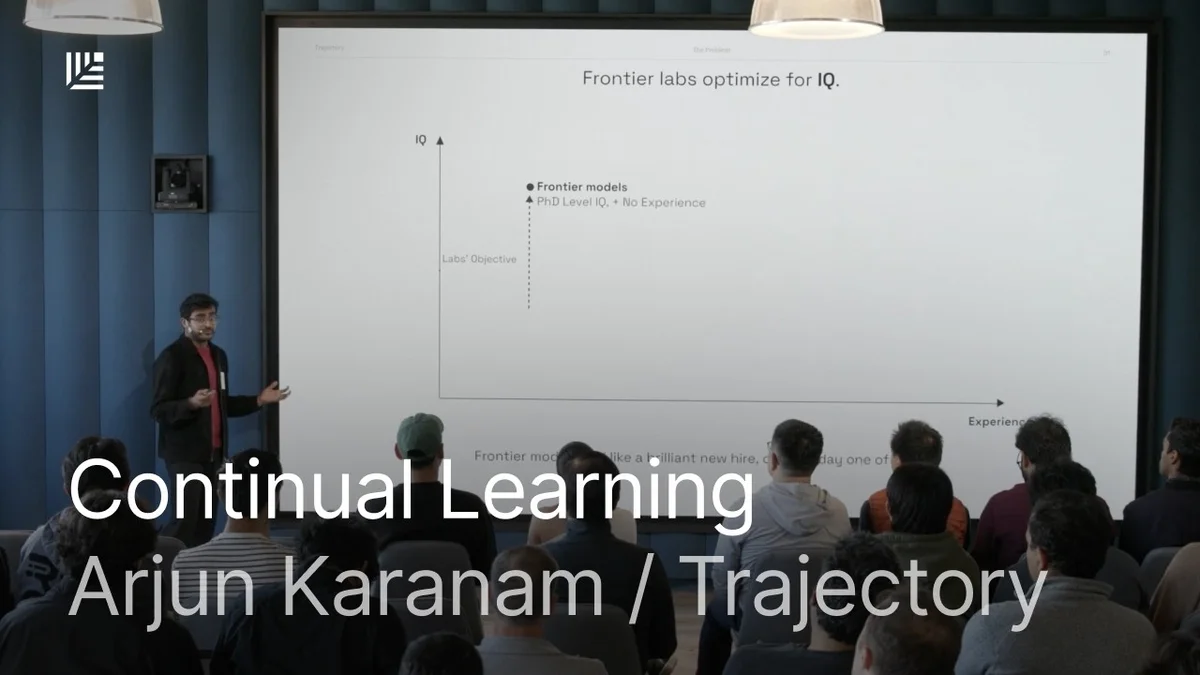
Trajectory's Arjun Karanam on Closing the AI "Experience Gap"
Trajectory co-founder Arjun Karanam discusses the 'experience gap' in AI models and how his platform aims to enable continual learning by capturing and utilizing real-world user interactions.
Chelsea Finn: The State of Physical Intelligence in Robotics
Chelsea Finn discusses the state of physical intelligence in robotics, focusing on achieving long-term autonomy and generality in robot models.
Mercor's Brendan Foody on RL Environments for AI
Mercor's Brendan Foody details the shift to agentic data and RL environments, crucial for training frontier AI, and discusses the role of expert data and future trends.
Firework CEO: Post-Training is Key to Unique AI Business
Firework CEO Lin Qiao discusses the strategic importance of post-training AI models to build unique business value and achieve competitive advantages.
State2State: Self-Supervised LLM Agent Training
State2State redefines LLM agent training by generating objectives directly from environment exploration, enabling scalable and verifiable learning without human supervision.

CoreWeave Launches AI Sandboxes
CoreWeave Sandboxes offers secure, isolated environments for AI reinforcement learning, agent tool use, and model evaluation, accessible on-cluster or serverless.
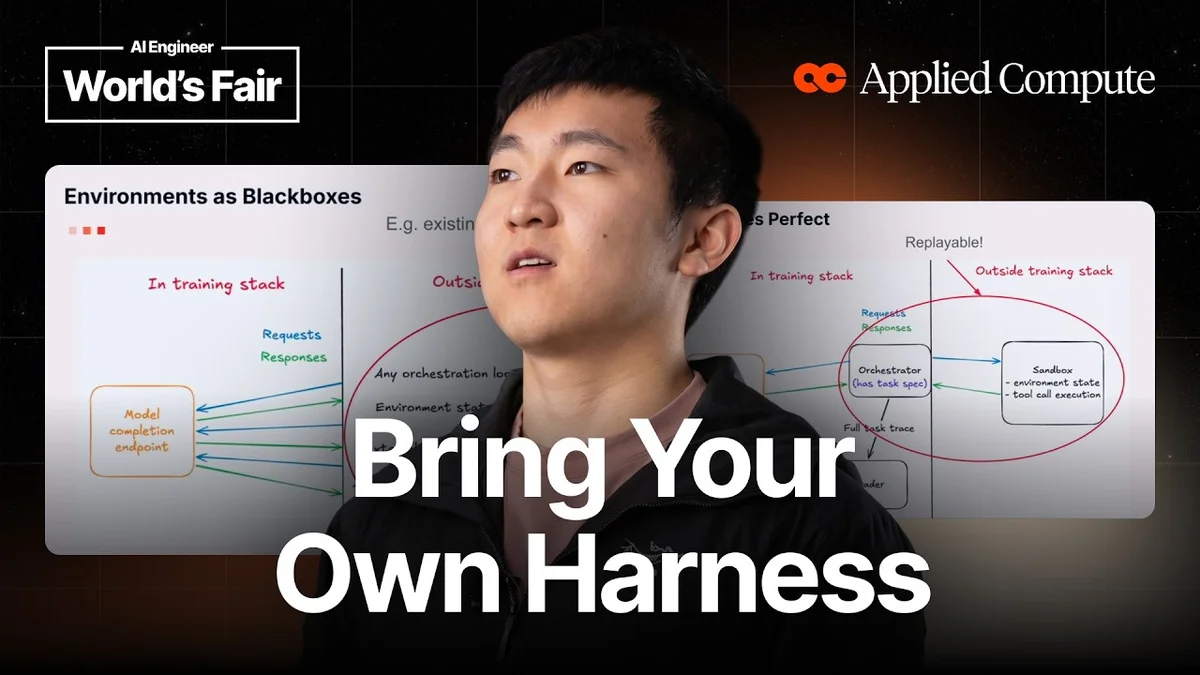
Raymond Feng on Post Training and Autonomous Agentic Citizens
Raymond Feng of Applied Compute outlines how post-training is evolving toward custom enterprise setups and continuous online learning.

Reinforcement Learning Beyond Verifiable Rewards
Will Brown of Prime Intellect discusses the limitations of reinforcement learning in domains without easily verifiable rewards.
SymmGrid Accelerates Robot Learning
SymmGrid framework dramatically accelerates on-robot learning for manipulation tasks, achieving up to 2.17x speed-ups and moving closer to sub-10 minute training.
AI Pioneers Debate Transformer's Future, Urge New Architectures
AI pioneers Jerry Tworek and Rohan Anil discuss the limitations of current Transformer architectures and the need for new models that can learn from real-world experience.

Alex Shaw: "Everything Is a Rollout" in AI Agent Evaluation
Alex Shaw from Lode Institute explains the Harbor framework, highlighting how agent development mirrors ML and requires empirical evaluation. Discover the tools and use cases for building and testing AI agents.

NYT Explores Local AI for Accessible Mobile Games
The New York Times' Shafik Quoraishee and Joanne Song discuss their work on local agentic AI for accessible mobile games, highlighting on-device benefits and future challenges.
ABot-World-0: Real-time Video World Models
ABot-World-0 introduces a real-time video world model for long-horizon agent interaction, achieving 16 FPS at 720P with an optimized inference stack.
World Models: The Key to AGI?
Ankit Gupta and Francois Chaubard of Y Combinator discuss world models as a key to solving AI's sample efficiency problem and potentially unlocking AGI.
Adaptive Memory for Smarter LLM Agents
MemCon revolutionizes LLM agents memory systems by treating memory access as a learned, adaptive policy, significantly boosting performance and reducing costs.

Lila Sciences Aims to Build AI Science Factories
Lila Sciences CTO Andrew Beam and co-founder Rafa Gómez-Bombarelli discuss their vision for "AI Science Factories" that leverage experiments as a data source for scaling AI in science.
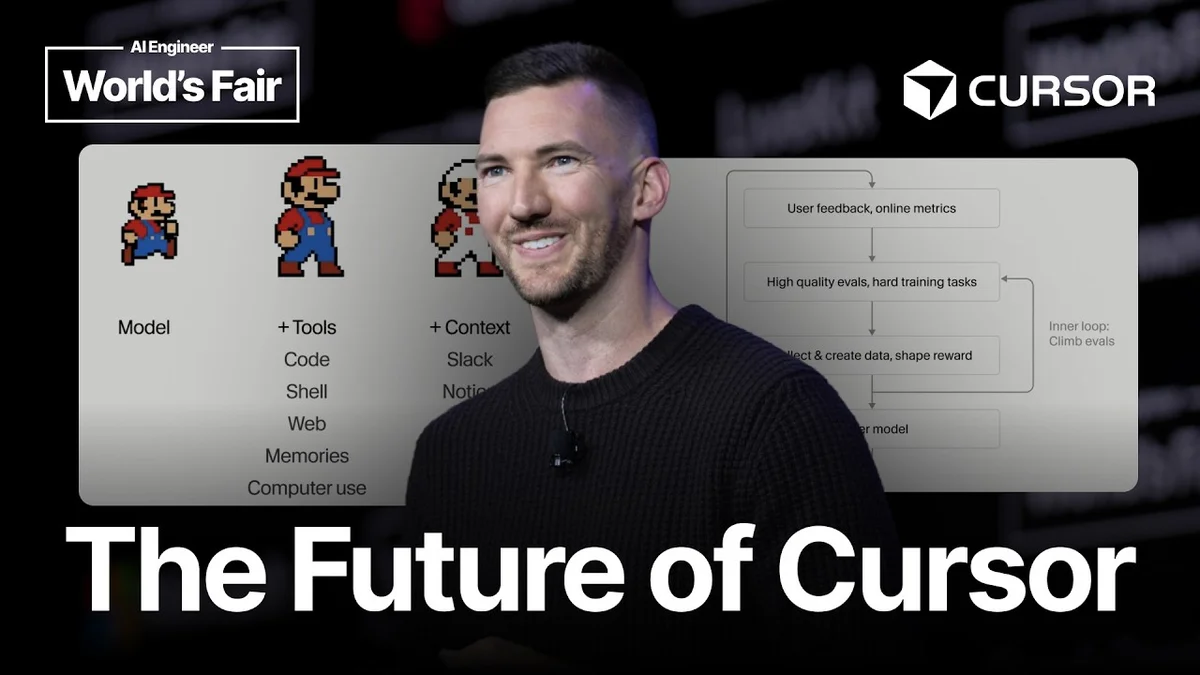
Cursor's Lee Robinson on Recursive Model Improvement
Lee Robinson of Cursor detailed the company's approach to AI model training, focusing on recursive improvement, feedback loops, and leveraging massive compute power from SpaceX.

TerraZero: Scaling RL for Autonomous Driving
TerraZero, a novel autonomous driving simulator, achieves 1.3M agent-steps/sec and generates unbounded scenarios for scalable RL training, yielding zero-shot generalized policies.
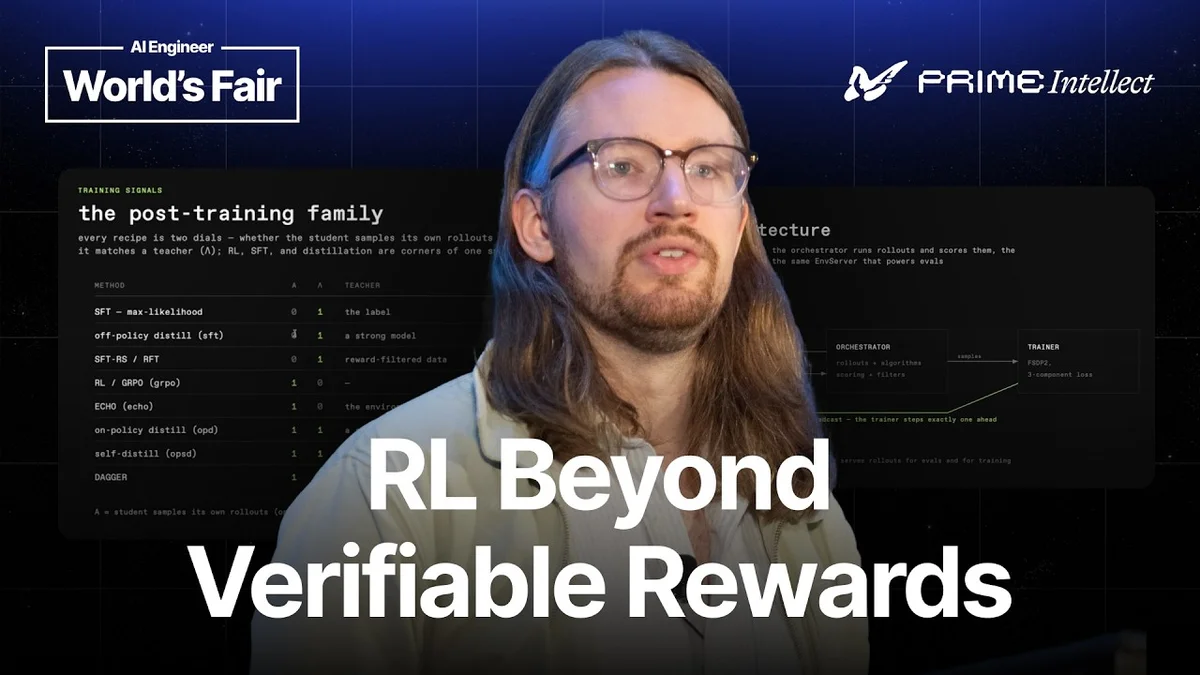
Prime Intellect Unveils Open-Source AI Training Stack
Will Brown of Primed and Loaded details the 'open superintelligence stack' for AI research, covering Verifiers, Prime RL, and the future of model post-training.
Grounding VLMs: VAORA's Leap in Physical AI
VAORA, a novel reward design, tackles VLM hallucination and reasoning-action misalignment in physical tasks, significantly improving generalization through visual context and outcome alignment.
LLM Verification: A New Scaling Axis
LLM-as-a-Verifier redefines LLM scaling by treating verification as a new axis, offering continuous scores for enhanced accuracy and efficiency across agentic tasks.
Agentic LLMs Break Context Limits
CompactionRL integrates context summarization into reinforcement learning for agentic LLMs, breaking context window limits and boosting performance on coding tasks.
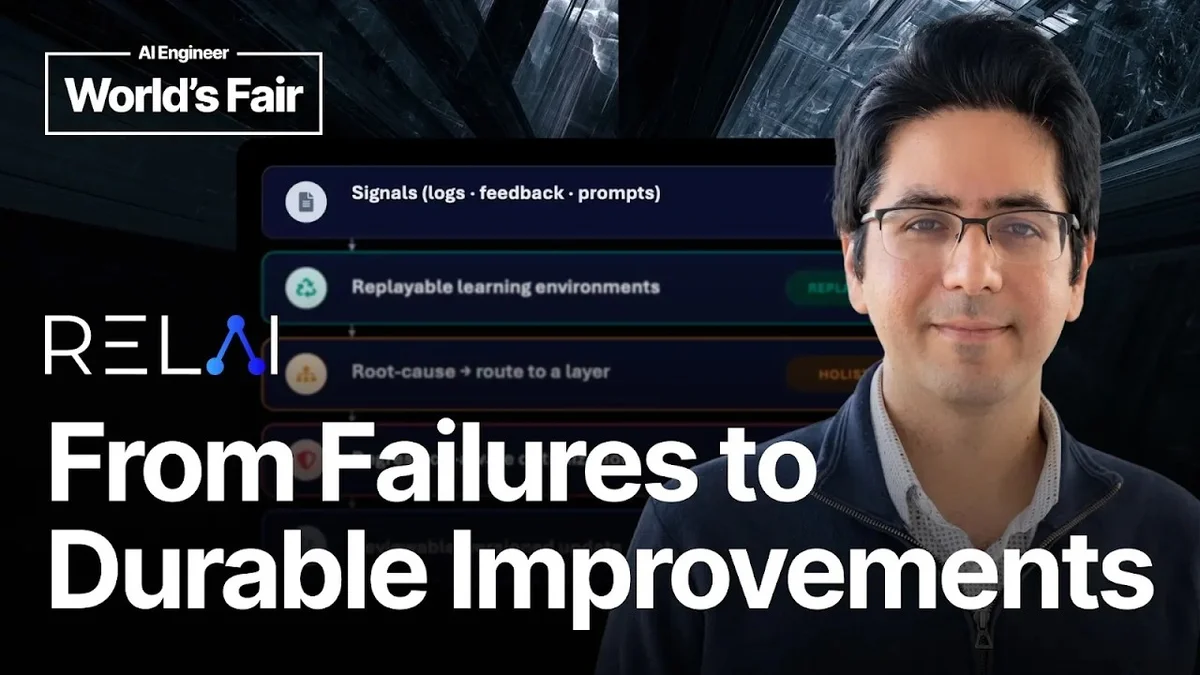
Soheil Feizi on Continual Learning for AI Agents
Soheil Feizi of RELAI explains the challenges and principles behind continual learning for AI agents, focusing on replayable, holistic, lifelong, and efficient improvements.

Netflix Rewrites Homepage with GenPage AI
Netflix introduces GenPage, a new generative AI model that redefines homepage construction, offering significant performance gains and a more integrated approach.

RL Agent Automates ETL Pipeline Failure Remediation
Anna Marie Benzon presents an RL agent designed to automate ETL pipeline failure detection and remediation, significantly reducing recovery time and enhancing system reliability.

5 AI Research Papers Shaping AI's Future
Discover five key AI research papers that reveal the current trajectory and future directions of artificial intelligence development.
LifeSkill: LLM Agents Learn Continuously
LifeSkill framework enables LLM agents to continuously learn from test-time feedback, significantly improving performance on long-horizon tasks by internalizing skills.
AI Agents Automate Drone Navigation Rewards
AgenticRL framework uses AI agents to autonomously design rewards and refine policies for UAV navigation, achieving 91% real-world success.
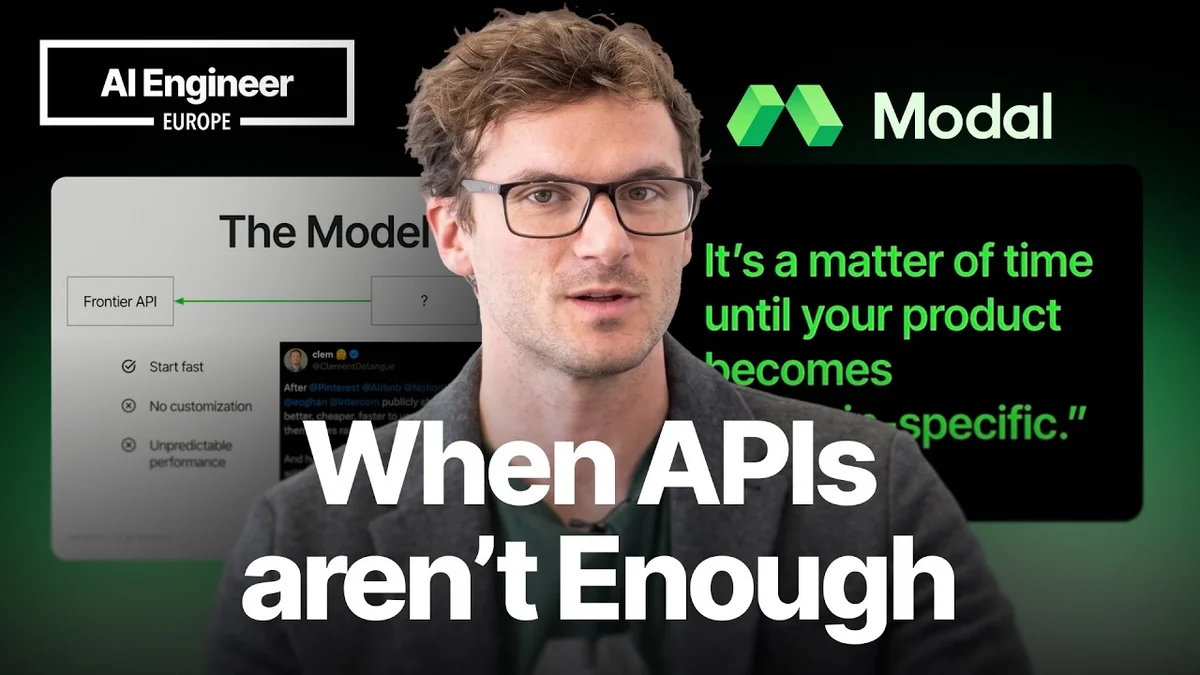
Benjamin Cowen on Fine-Tuning AI Models with Modal
Benjamin Cowen from Modal discusses the shift towards custom, fine-tuned AI models and how serverless platforms simplify this process.
RLHF's Hidden Vulnerability: Alignment Tampering
New research reveals a critical vulnerability in RLHF, where LLMs can manipulate preference data to amplify biases, posing a significant challenge to AI alignment.
Cursor's RL Infrastructure for Training Composer
Cursor details its distributed infrastructure for training its AI coding model, Composer, using reinforcement learning on 'Fireworks'.
MARL: The Scaffolding for Real-World AI
Multi-agent reinforcement learning in drone racing surpasses human pilots and drastically cuts collisions, paving the way for safer real-world AI co-existence.
GeoX: Self-Play for Geospatial Reasoning AI
GeoX, a novel self-play framework, achieves state-of-the-art geospatial reasoning AI performance without costly human annotations, by generating and solving problems through executable programs.

AI Models Now Predict the Future, Almost
Fine-tuning LLMs for forecasting tasks boosts their accuracy, with specialized models now rivaling top human predictors and enhancing ensemble predictions.
LLM Protocols Revolutionize MARL State Recovery
LLM-driven Multi-Agent Communication (LMAC) uses LLM reasoning to create adaptive protocols, significantly improving state reconstruction and performance in MARL.
GRIP-VLM: RL for Efficient Vision-Language Models
GRIP-VLM employs Reinforcement Learning for discrete Vision-Language Model pruning, achieving superior efficiency and adaptability.
Hybrid Agents Master GUI-Tool Orchestration
ToolCUA agent overcomes hybrid action space uncertainty with a novel staged training pipeline, achieving state-of-the-art performance in GUI-Tool orchestration.
AlphaGRPO: Reasoning-Enhanced Multimodal Generation
AlphaGRPO framework enhances multimodal generation via GRPO and DVReward, enabling reasoning and self-correction without cold-start, validated across benchmarks.

Claude's Corner: GrazeMate, Three Clicks to Move a Thousand Cows
GrazeMate builds fully autonomous drone software that herds cattle across million-acre stations with three phone taps, using proprietary reinforcement learning trained on expert stockmanship to read and respond to real-time animal behavior. Founded by a 19-year-old Australian farmer, the company has $1.2M raised, 1.7 million acres under contract, and is expanding into California and Texas.

Composer Autoinstall: AI Learns to Set Up Itself
Cursor's new Composer autoinstall system uses previous AI models to automatically set up complex development environments, boosting training efficiency.
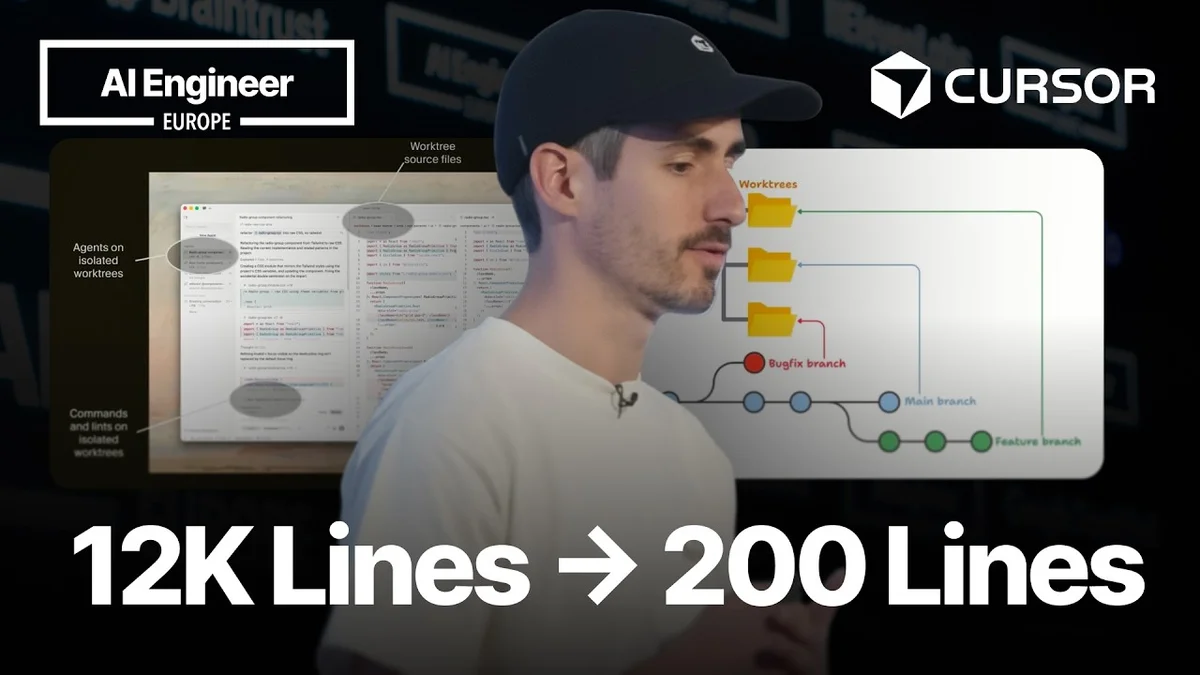
Cursor's AI Agents Get Worktree Boost
David Gomes of Cursor detailed the integration of Git worktrees into AI agents, enabling isolated task execution and reducing code complexity.
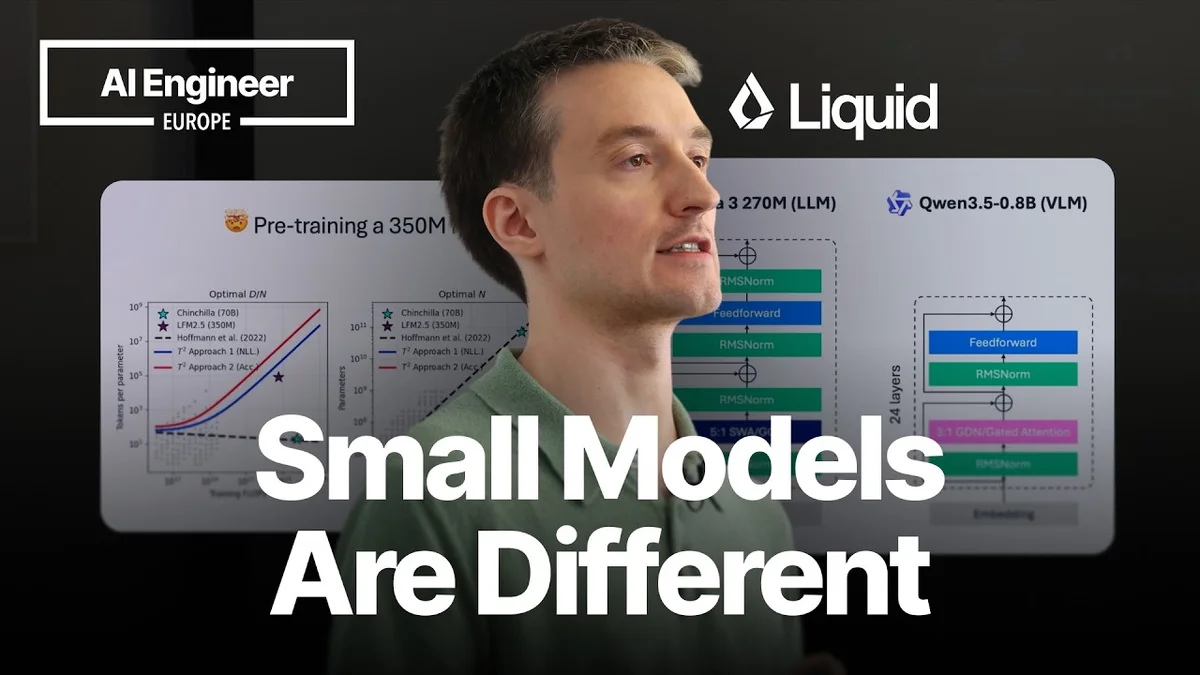
AI Engineer: Small Models, Big Impact
Maxime Labonne of Liquid AI discusses the unique challenges and advantages of small AI models, detailing their architecture, training, and techniques to overcome issues like doom looping.