

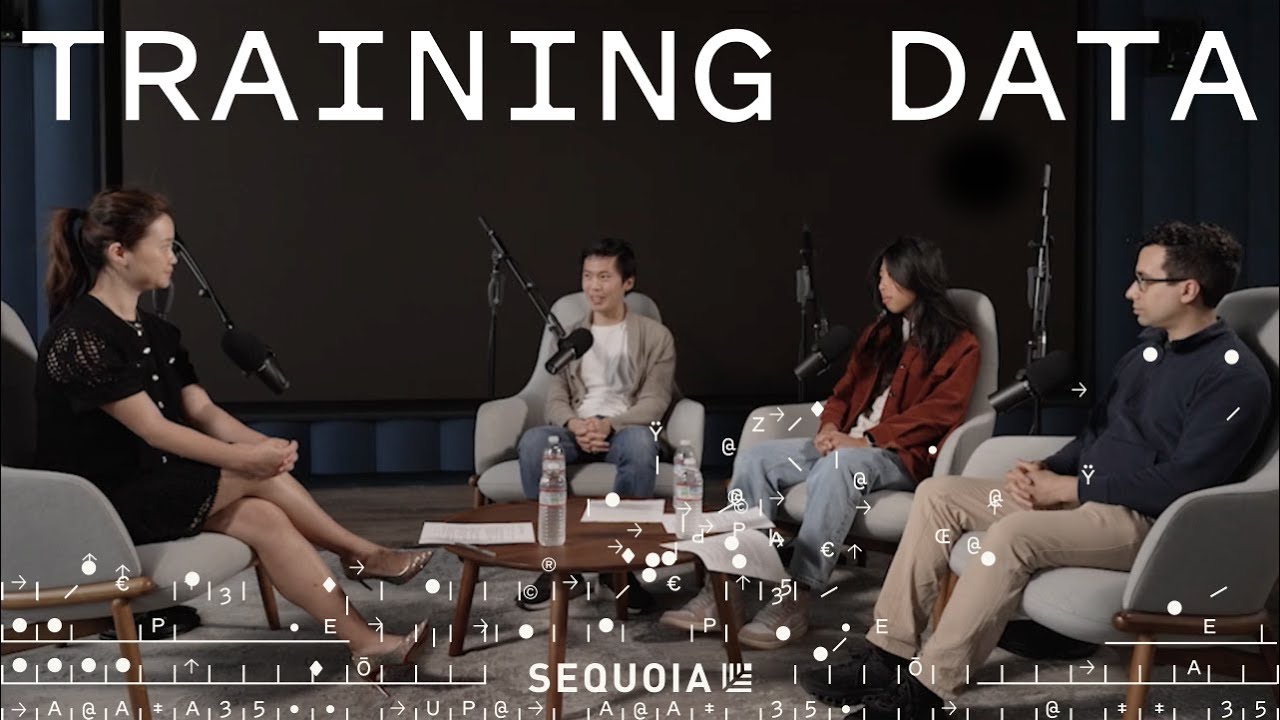
OpenAI’s scrappy three-person team has achieved a monumental feat, securing a gold medal equivalent performance at the International Mathematical Olympiad (IMO) with their AI model. This breakthrough represents a significant leap in AI’s ability to tackle complex, abstract reasoning, moving far beyond previous benchmarks.
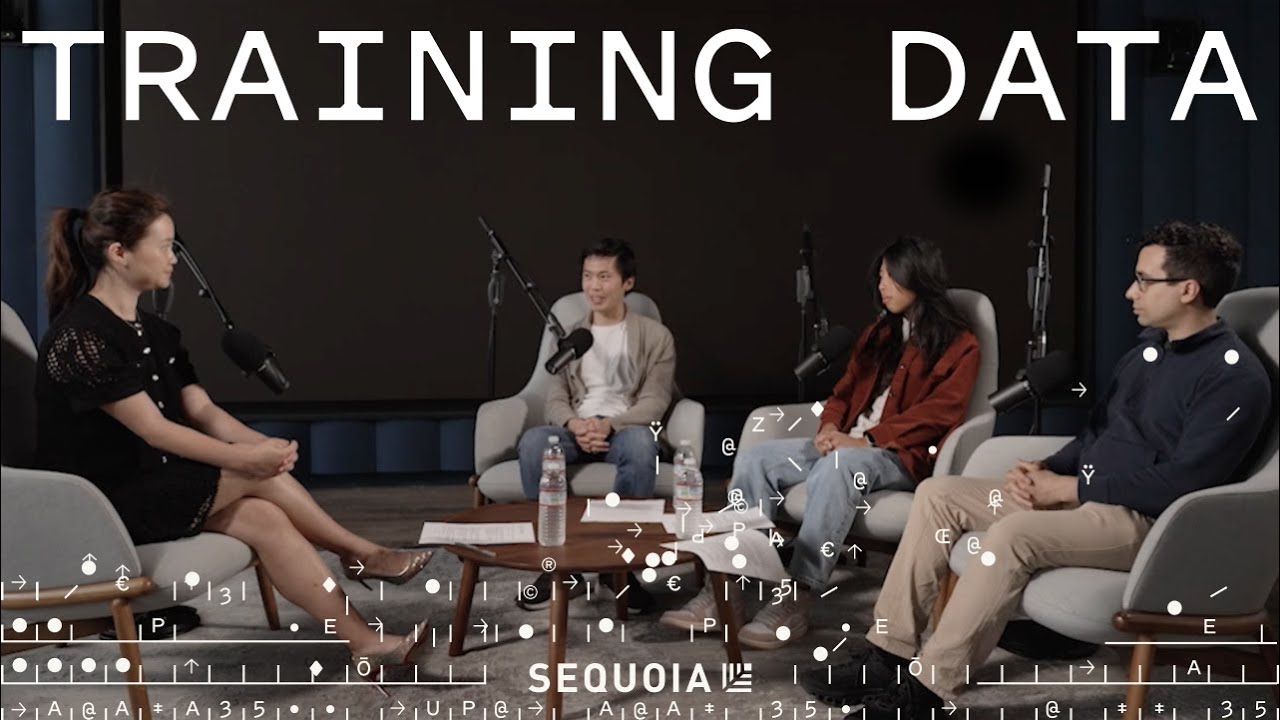
Alex Wei, Sheryl Hsu, and Noam Brown, key members of the OpenAI IMO team, recently joined Sonya Huang of Sequoia Capital on "Training Data" to discuss this historic accomplishment. Their conversation shed light on the unique approach employed and the broader implications for artificial superintelligence. The core of their strategy hinged on general-purpose reinforcement learning techniques, rather than domain-specific formal verification tools, to solve problems that are inherently hard to verify.
The pace of progress in AI's mathematical capabilities has been astounding. As Noam Brown observed, just a few years ago, models struggled with grade school math. "And then it was like Math for a short period of time and then it became AIME and then it became USAMO, and the pace that it's just gone, blown through all of these math benchmarks is just astonishing." This rapid advancement highlights the power of scaling and generalizable techniques.
Remarkably, this gold-medal achievement was driven by a lean, focused effort. Alex Wei revealed that the intensive sprint to prepare for this year's IMO spanned "maybe like a couple months." This agility underscores OpenAI's culture of empowering researchers to pursue impactful moonshots, even with skepticism. Noam Brown elaborated, stating, "One of the nice things about OpenAI is that I think the researchers are really empowered to do the kinds of research that they think is impactful."
A particularly insightful aspect of the model's performance was its surprising self-awareness. Unlike earlier models prone to "hallucinating" plausible but incorrect answers, OpenAI's model explicitly stated when it could not solve Problem 6, the Olympiad's toughest question. Sheryl Hsu noted, "It was good to see like the model doesn't try to hallucinate or like try to just like make up some solution, but instead will say like no answer." This self-limitation offers a glimpse into a more robust and trustworthy form of AI, acknowledging its boundaries rather than fabricating confidence. However, this self-awareness also underscores the current chasm between mastering competition-level problems and genuine mathematical research breakthroughs. As Alex Wei pointed out, a real research problem could take "an entire field, like, you know, people's lifetimes of thinking," far exceeding the time-boxed nature of Olympiad challenges.