

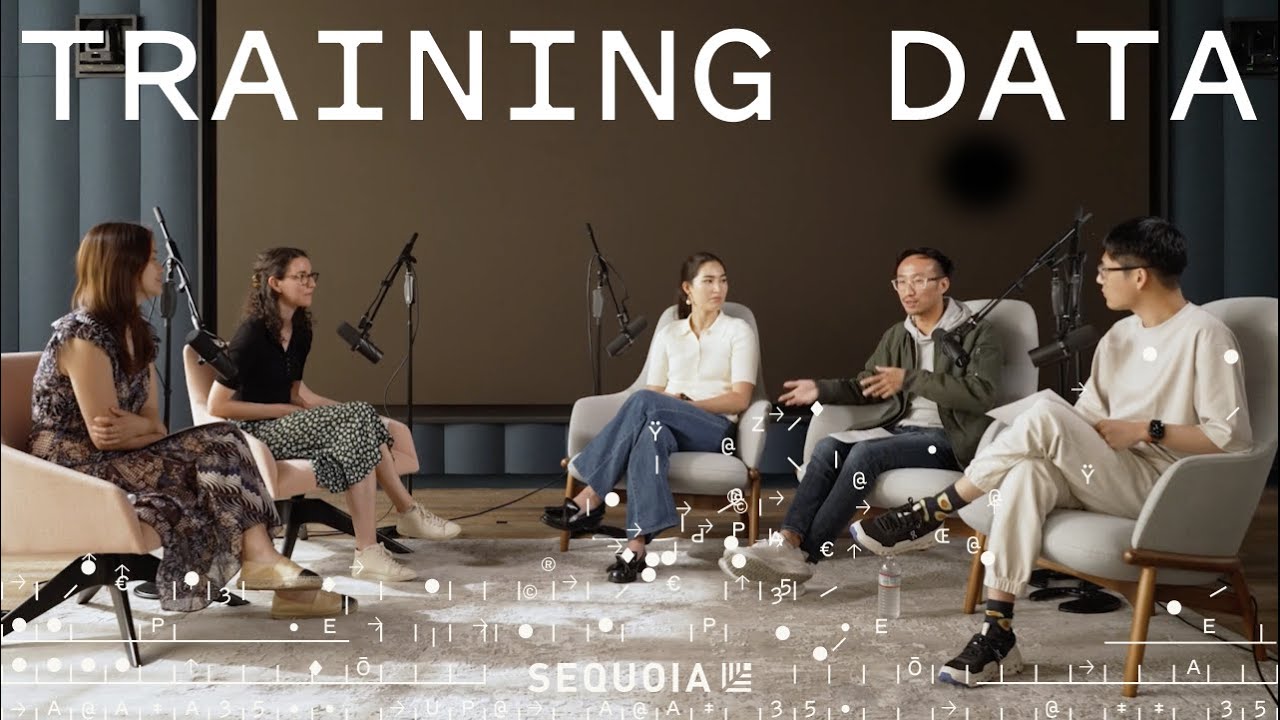
OpenAI has unveiled its latest advancement, the ChatGPT Agent, a powerful iteration designed to tackle complex, multi-step tasks that can span up to an hour. This sophisticated AI assistant, discussed by OpenAI's Isa Fulford, Casey Chu, and Edward Sun with hosts Sonya Huang and Lauren Reeder from Sequoia Capital, marks a significant leap in AI’s interactive capabilities.
The core innovation behind this agent lies in unifying the architectures of OpenAI’s previously distinct Deep Research and Operator tools. The agent now possesses access to a virtual computer, integrating text browsing, visual browsing, terminal access, and various API integrations, all operating with a shared state. Isa Fulford emphasized this synergy: "This has been a collaboration between the Deep Research and Operator teams. We've created a new agent... that's able to carry out tasks that would take humans a long time." She further elaborated that "all of the tools have shared state. So it's similar to if you're using a computer, like all of your different applications have access to the same file system and things like that." This unified environment enables fluid transitions between different modalities of interaction, from analyzing dense text to navigating graphical user interfaces.
A crucial aspect of the agent's development involved a reinforcement learning approach to tool utilization. Instead of explicitly programming the agent for specific tool usage patterns, OpenAI allowed the models to discover optimal strategies through extensive training across thousands of virtual machines. Sonya Huang noted, "Rather than programming specific tool usage patterns, they let the models discover the optimal strategies through reinforcement learning across thousands of virtual machines." This method allows the agent to adapt and learn the most efficient ways to combine its diverse tools for any given task.
The agent is designed for a highly collaborative and multi-turn interaction with users, expanding the ways humans can engage with AI. It can work alongside users for extended periods, asking clarifying questions, accepting mid-task corrections, and even initiating communication. Isa Fulford highlighted this human-like interaction: "This model's very flexible and collaborative and that was very important to us. So it's modeled after how you would interact with someone if you asked them to do a task for you." This capability allows for complex workflows where the user can guide, correct, and monitor the agent's progress, fostering a more symbiotic relationship.
Practical applications span a wide range, from mundane administrative tasks to intricate research. The agent can handle online shopping, book flights, create professional slide decks, perform data analysis, and even dive into highly specialized research topics. However, this increased autonomy introduces new challenges, particularly concerning safety. Edward Sun acknowledged, "The Internet's a scary place... our model is a bit, it can it can reason about these things, like if you tell it to be careful... but sometimes it can get fooled." OpenAI has implemented extensive safety mitigations, including a monitoring system that "looks over its shoulder" to identify and halt any suspicious or potentially harmful actions. The team also revealed that seemingly simple tasks like date picking still pose mysterious difficulties for AI systems, illustrating the nuanced challenges in achieving true general intelligence.
