Visual TL;DR
Healthcare ScarcityDriver
system built on scarcity of clinicians, time, and money, necessitating triage
From the article 4 mentionsSpeaking at the AI Engineer World's Fair, Muppalla highlighted the transformative potential of AI in healthcare, moving from a system historically built on scarcity to one of abundance.
Hippocratic AI MissionContext
From the article 6 mentionsHippocratic AI's mission is to build "clinically safe abundance for all," not by replacing clinicians, but by empowering them to reach more patients than ever before.
200M+ Patient CallsCore
AI has conducted over 200 million patient calls, demonstrating scalability
Intelligence-Latency FlywheelContext
optimizing for speed and quality in AI-driven clinical conversations
ASR & Contextual UnderstandingCore
advanced speech recognition and deep understanding of clinical context
Orchestration & VerifiersCore
power of orchestrating AI models with human-like verification steps
From the articleFor critical functions like scheduling, verifiers are used to confirm accuracy, achieving a 99.49% success rate.
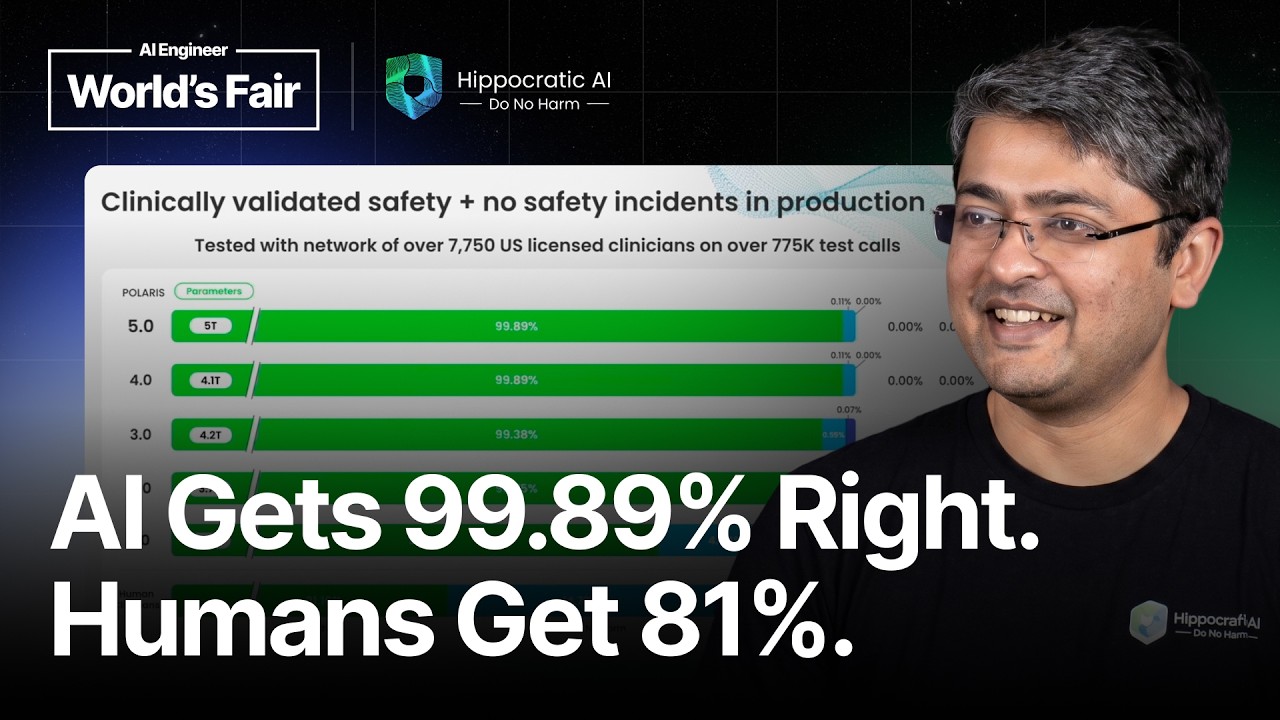
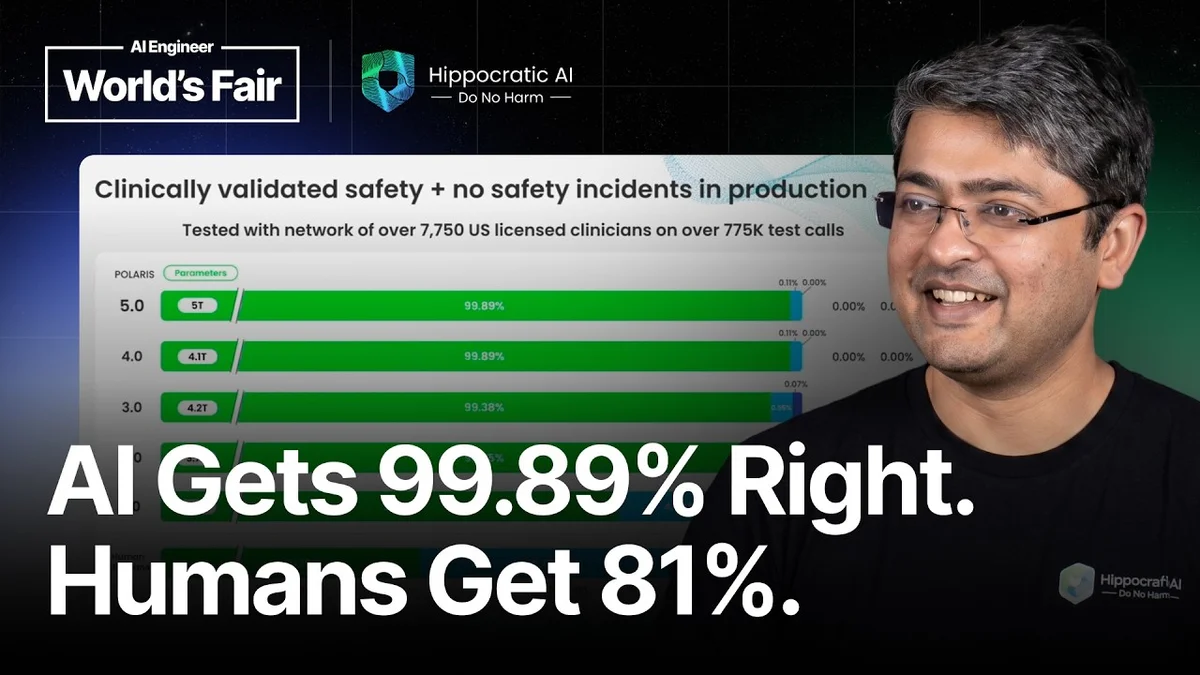
99.89% No HarmOutcome
achieving high accuracy through advanced architecture and rigorous evaluation
From the article 3 mentionsThey boast a 99.89% accuracy rating for "no harm" and an 8.5 out of 10 patient satisfaction score across over 60 health systems.
Healthcare AbundanceEffect
From the article 5 mentionsSpeaking at the AI Engineer World's Fair, Muppalla highlighted the transformative potential of AI in healthcare, moving from a system historically built on scarcity to one of abundance.