

SuperDial says it has completed more than 10 million AI-powered calls to insurers and will now judge itself by resolved requests, not calls.
Someone still has to sit on hold to confirm coverage or chase a claim.
Revenue cycle management is the back-office work that gets doctors and hospitals paid by insurers. A billing team hands SuperDial a request, such as verifying benefits before a visit, and SuperDial takes responsibility for closing it. It first tries an electronic route that can return an answer without a call, then checks a payer portal or faxback document, and only dials when something is still missing. The company works with provider groups and health systems as well as RCM companies and payers, reported by The Next Web, which is why it sees pressure on both sides.
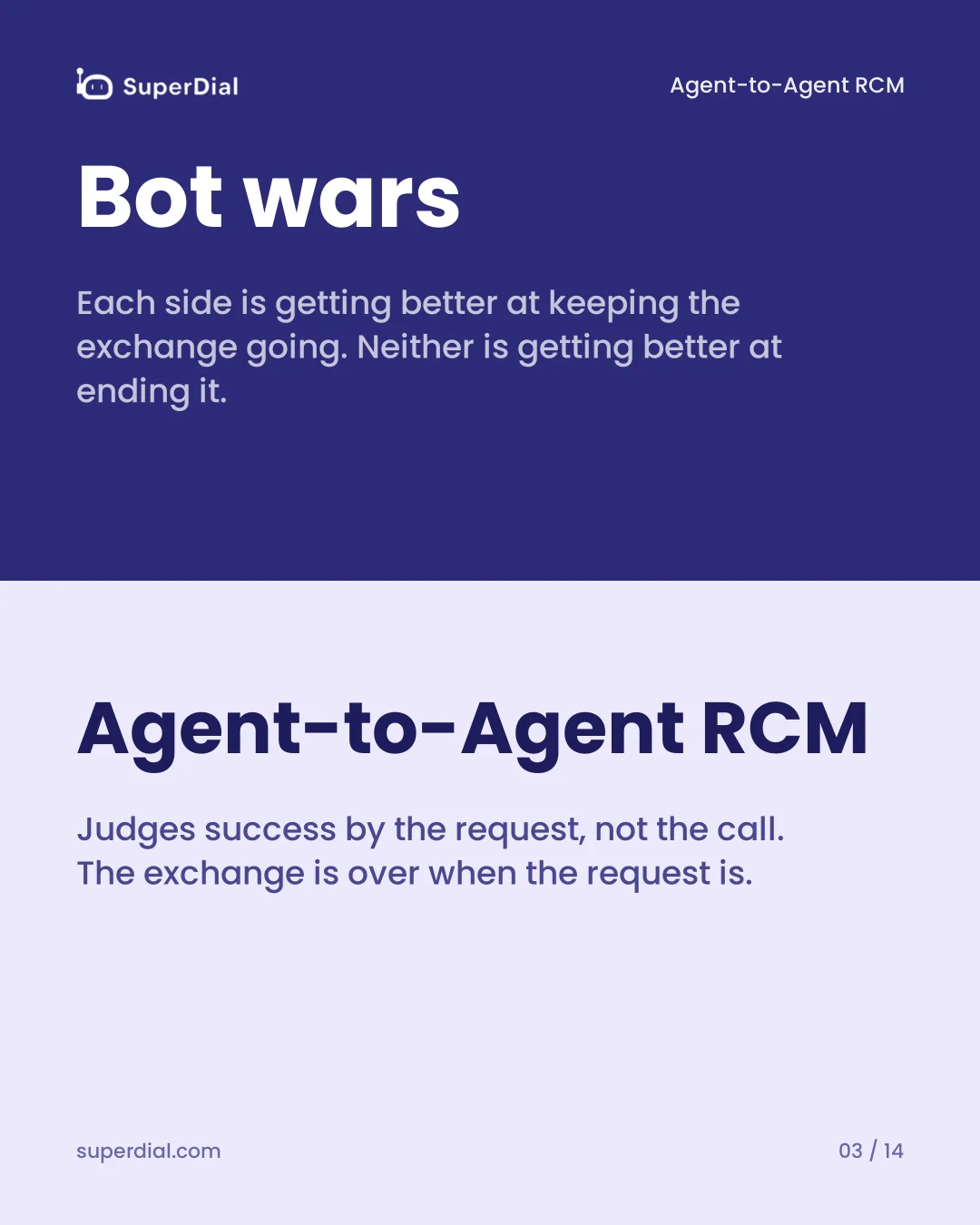
When a call is unavoidable, SuperDial says its agents carry forward what is already known and ask only for what is missing. Among successful requests where information is retrieved, the agents average about four minutes per call attempt with payer voice automation, the company said, compared with seventeen minutes or more when reaching a human representative. Sam Schwager, co-founder and CEO of SuperDial, whose team built its business on automating those calls, said the future cannot be two bots arguing faster and context should travel with the request.
That bot-on-bot problem is the shift. Providers use agents to chase information and payers use automation to answer, so each side gets better at sustaining the exchange. SuperDial cites McKinsey’s 2021 estimate that simpler healthcare administration could save up to $265 billion annually, according to the company, as evidence that speed alone will not fix it.
Its longer ambition is an AI-native network where agents exchange trusted information directly instead of requesting it across disconnected systems. That part is still unfinished, and payers would have to trust outside agents with coverage decisions. Watch whether SuperDial can prove fewer exchanges, not just shorter holds.




