
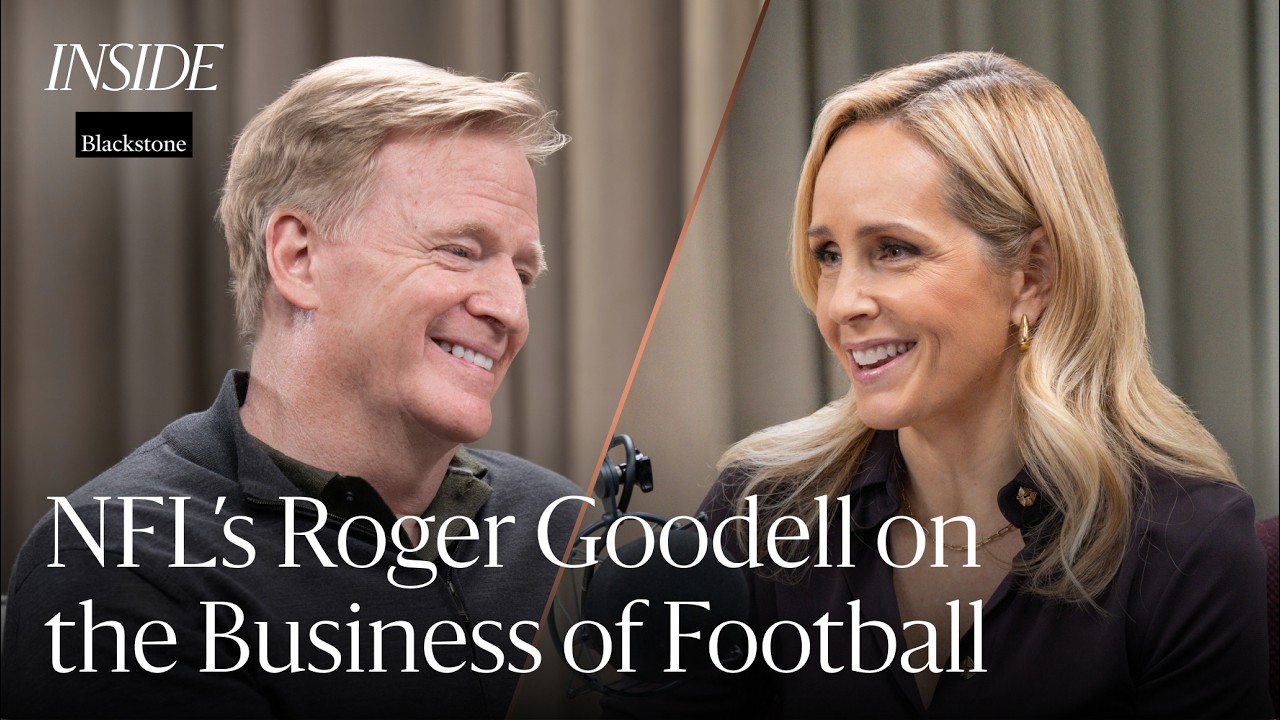
Roger Goodell told Blackstone host Christine Anderson he expects NFL team values to rise further on international growth and media demand. League revenue has climbed from about $6 billion to more than $23 billion across his 20 years as commissioner.
His play is reach, not scarcity.
Broadcast rights are fees media companies pay to show games, and they remain the engine. Goodell pointed to about $110 billion in deals with CBS, Fox, NBC and Amazon, plus Netflix and YouTube, and a 10% stake in ESPN. He said 87% of games stay on free TV. Every game is free in the two teams' home markets, while streaming chases younger fans.
Private capital is minority investment capped at 10% that gives families cash without forcing a sale, and Goodell said six teams have used it. He needs 24 votes from 32 owners for major moves, and he requires each owner to file confidential succession plans with him. The model was built to support a collective bargaining agreement, the labor deal that gives players roughly 50% of revenue. That growth underpins a $25 billion target for 2027.
Live remains the moat. Last year 83 of the 100 most watched U.S. broadcasts were NFL games, Goodell said. He cited the first London game with the Giants and Dolphins. Australia sold 100,000 tickets for a Friday morning kickoff, and the draft drew 800,000 in person and 55 million viewers. "They want to see the human stories, the triumphs, the failures," Goodell said. "That's what makes football so special."
The risk is not demand today. Goodell said ticket, sponsorship and ad data show no negative signal, though he warned of cautionary signs around consumers. Days earlier he mistakenly used the old Redskins name for Washington at a draft countdown event, reported by Yahoo Sports, a reminder that tradition cuts both ways. The test now is whether London, Berlin and Melbourne will watch and pay like America does.




