Visual TL;DR. Real-World Robotics Challenge requires Physical AI Demands Reliability. Physical AI Demands Reliability achieved by Iterative Learning & Memory. Iterative Learning & Memory enables Long-Term Autonomy. Long-Term Autonomy leads to General-Purpose Robotics. General-Purpose Robotics culminates in Future Physical Intelligence. Chelsea Finn addresses Real-World Robotics Challenge.
- Real-World Robotics Challenge: moving beyond impressive demos to practical, useful, and impactful robot applications
- Physical AI Demands Reliability: unlike language models, physical AI requires higher reliability for real-world tasks
- Iterative Learning & Memory: critical factors needed for long-term autonomy and generality in robot models
- Long-Term Autonomy: enabling robots to perform any task in the real world over extended periods
- General-Purpose Robotics: robots capable of performing diverse tasks, not just specific impressive feats
- Future Physical Intelligence: the ultimate goal of making robots truly useful and impactful in people's lives
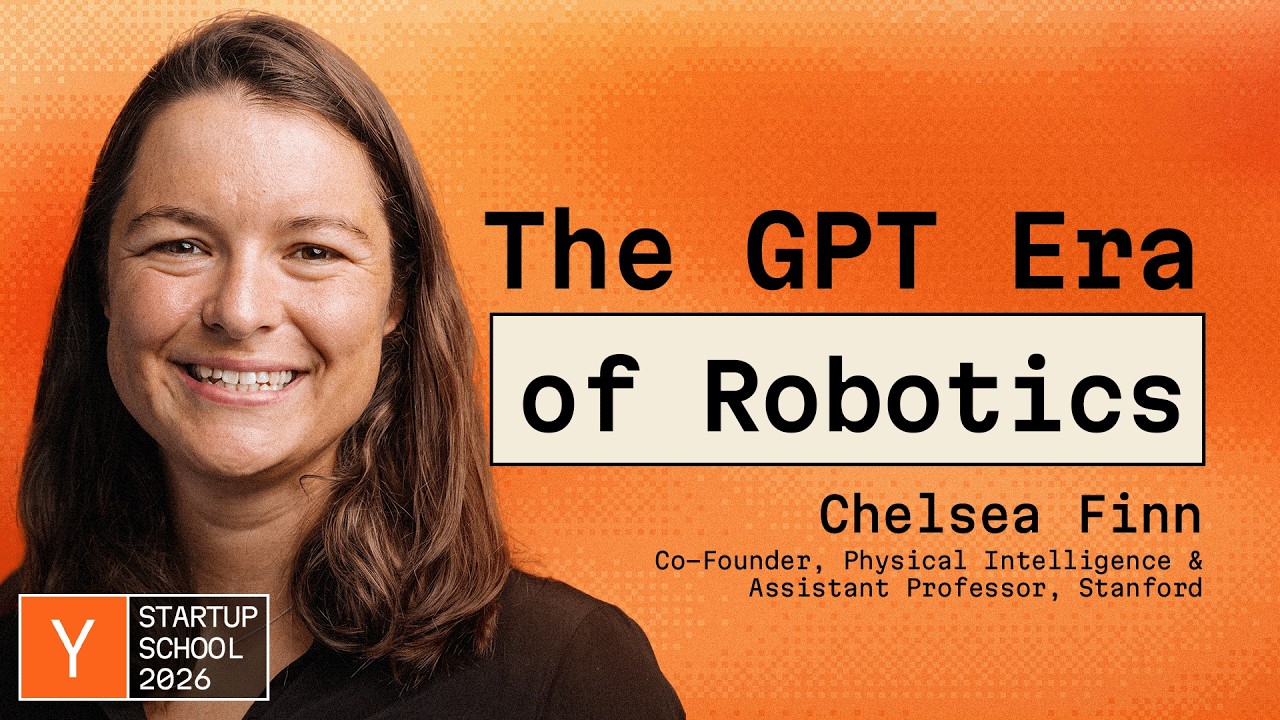
- Chelsea Finn: Stanford professor and co-founder outlining the state of physical intelligence
Visual TL;DR