


Stanford's AI Pipeline Under Scrutiny

Theo Baker, author of "How to Rule the World," discusses Stanford's culture, Silicon Valley ties, and the impact of AI on ambition and integrity.

6 min read
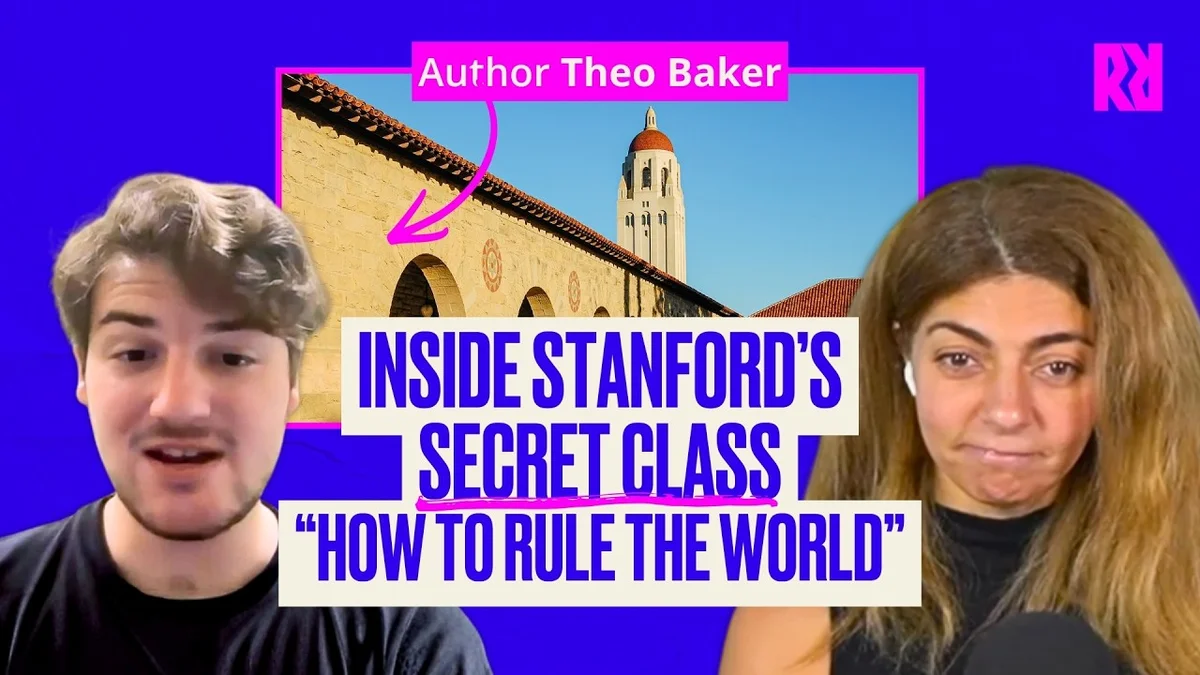
Theo Baker, author and journalist, speaking on the Pioneers of AI podcast.
Pioneers of AI
Visual TL;DR
Silicon Valley InfluenceCore
deeply intertwined relationship with tech industry, shaping university ethos
From the article 2 mentionsBaker criticizes the "no boundaries relationship" between Stanford and Silicon Valley, suggesting that while it has fueled the university's wealth, it has also contributed to its corruption.
AI as AccelerantCore
AI amplifies existing issues, increasing pressure for rapid, often unethical, success
Stanford's Business ModelDriver
university transformed into a powerful business, students viewed as the 'product'
Secret 'Rule World' ClassContext
clandestine class for tech elite, taught by a Silicon Valley CEO
From the articleIn a candid conversation on the Pioneers of AI podcast, Theo Baker, a recent Stanford graduate and author of "How to Rule the World," discusses the university's deeply intertwined relationship with Silicon Valley.
Unethical AmbitionDriver
From the article 2 mentionsBaker paints a stark picture of an institution that has transformed from a place of learning into a powerful business, where students are viewed as the "product." He highlights a pervasive culture of ambition that can lead to unethical practices, including the faking of demos and the celebration of unearned achievements.
Institutional CorruptionOutcome
blurred boundaries between academia and industry, compromising integrity
From the article 2 mentionsHe points to the resignation of Stanford's president, Mark Tessier-Lavigne, following allegations of research manipulation, as an example of how institutional incentives can lead to ethical compromises.
Erosion of IntegrityOutcome
shift from idealism to 'a little bit of fraud' in pursuit of success
From the articleBaker advises aspiring students and founders to remain grounded in their values, emphasizing the importance of integrity and a human-centered approach.
Contents(5)

In a candid conversation on the Pioneers of AI podcast, Theo Baker, a recent Stanford graduate and author of "How to Rule the World," discusses the university's deeply intertwined relationship with Silicon Valley. Baker paints a stark picture of an institution that has transformed from a place of learning into a powerful business, where students are viewed as the "product." He highlights a pervasive culture of ambition that can lead to unethical practices, including the faking of demos and the celebration of unearned achievements.

The "Secret Class" and Silicon Valley's Influence

Baker reveals the existence of a clandestine class at Stanford called "How to Rule the World," which selects just 12 students annually through a "cloak and dagger admissions process." This class, styled as a "skull and bones for the aspiring tech elite," is reportedly taught by a Silicon Valley CEO who instructs students on how to "extract value from people." Baker notes that this ethos aligns with Silicon Valley's broader messaging that "the only thing that matters is if you win in the end," a sentiment that can overshadow integrity.

From Idealism to "A Little Bit of Fraud"

Baker recounts his own journey to Stanford, initially drawn by a passion for technology. However, his experience as a student journalist exposed him to a different reality. He witnessed firsthand how the pressure to succeed, coupled with a lack of accountability, could foster a culture where "a little bit of fraud" becomes normalized. He cites the example of a friend who faked a launch demo, received widespread acclaim and funding, and was celebrated for technology she did not create. This, he argues, is the path to success that many students are taught, one that involves "trampling on everyone else's shoulders to get there."

The full discussion can be found on Pioneers of AI's YouTube channel.

Stanford’s Silicon Valley pipeline, investigated (with Theo Baker) | Pioneers of AI - Pioneers of AI
Stanford’s Silicon Valley pipeline, investigated (with Theo Baker) | Pioneers of AI, from Pioneers of AI

The "No Boundaries" Relationship and Institutional Corruption

Baker criticizes the "no boundaries relationship" between Stanford and Silicon Valley, suggesting that while it has fueled the university's wealth, it has also contributed to its corruption. He points to the resignation of Stanford's president, Mark Tessier-Lavigne, following allegations of research manipulation, as an example of how institutional incentives can lead to ethical compromises. The incident, which involved a researcher challenging the president's previous work and facing career repercussions, illustrates how unchecked ambition can have detrimental effects.

AI as an Accelerant

The conversation also touches upon the role of AI, particularly the advent of ChatGPT, in accelerating these trends. Baker observes that AI tools have become so advanced that they can perform tasks like coding better than many junior engineers, leading to a more competitive and uncertain job market. He notes that while AI is a transformative technology, the associated hype and the rush to capitalize on it can create unrealistic valuations and foster a "bubble" mentality, as seen with the astronomical valuations of some AI startups that have yet to demonstrate a clear technological edge or revenue.

Advice for Aspiring Founders and Students

Baker advises aspiring students and founders to remain grounded in their values, emphasizing the importance of integrity and a human-centered approach. He encourages them to "stay true to your values" and not be swayed by the pressure to achieve success based solely on external validation or the success of others. The conversation concludes with a reflection on the broader implications of these trends for the future of education and the tech industry, urging a greater focus on transparency and accountability.

© 2026 StartupHub.ai. All rights reserved. You may not republish this article in full without a license. Search engines and AI research tools may crawl and summarize for reference. Bulk reproduction or model training requires a license. See our terms.