

Science CEO on Restoring Sight and Brain-Computer Interfaces

Max Hodak, founder of Science and formerly of Neuralink, discusses the company's CE-approved Prima retinal prosthesis and the future of brain-computer interfaces.

8 min read
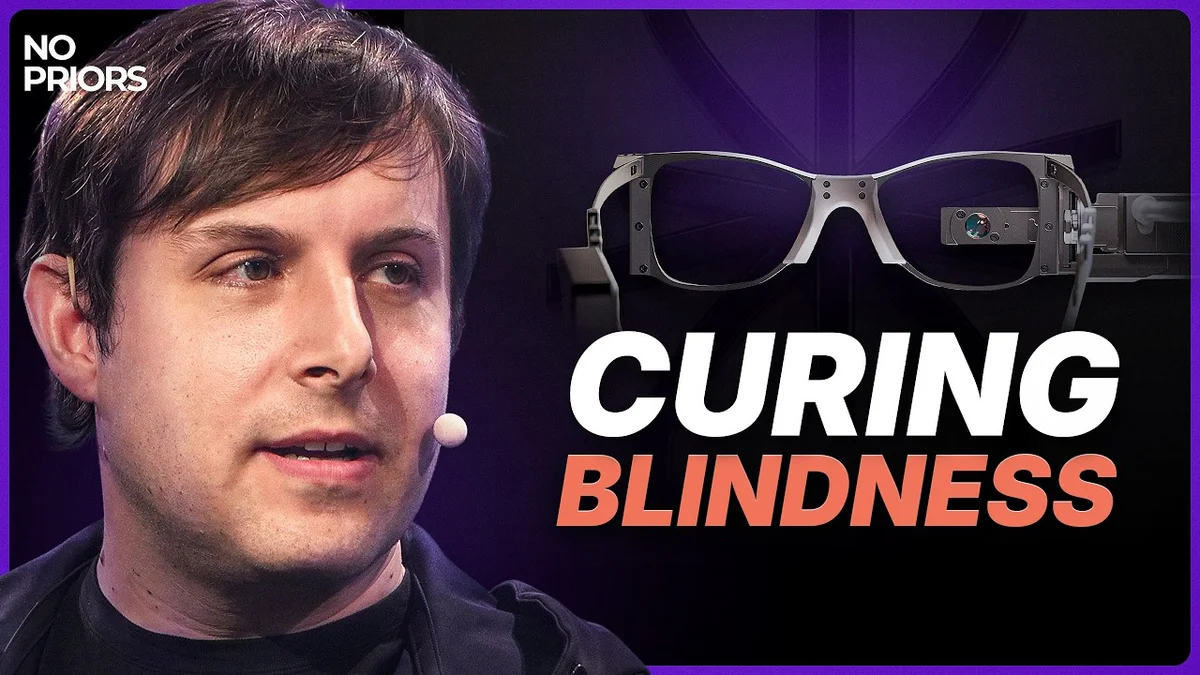
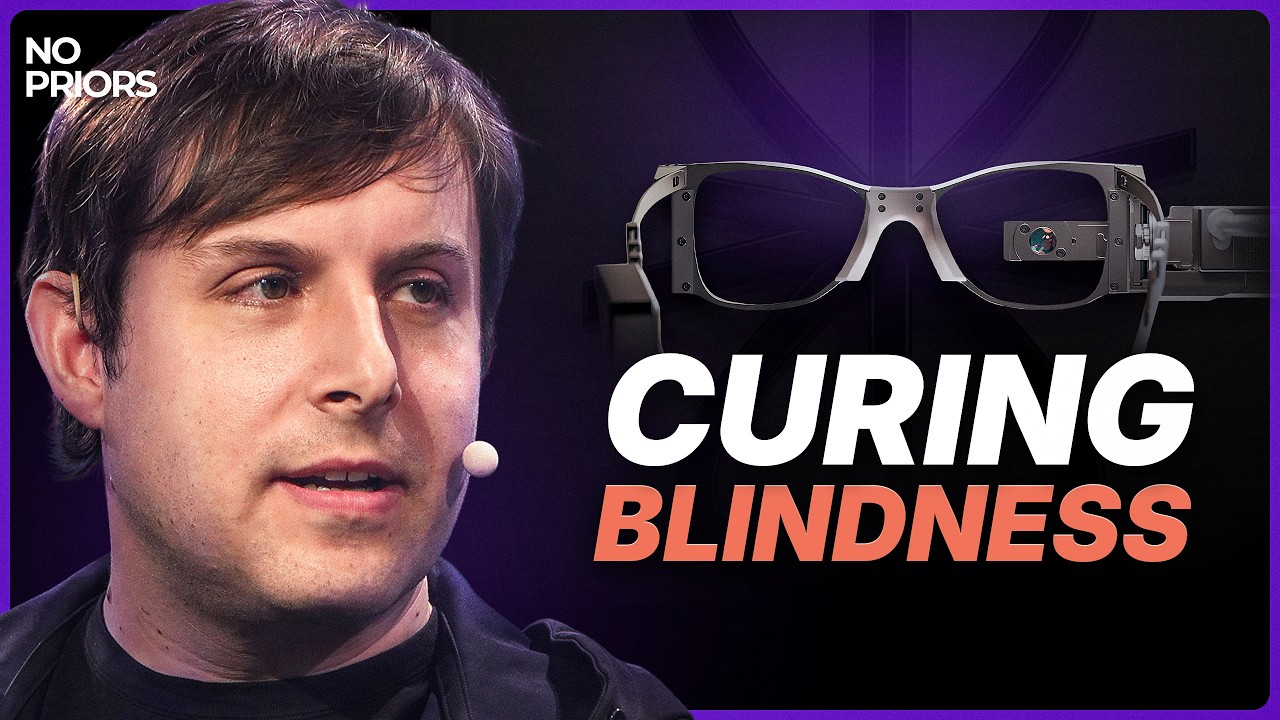
Max Hodak, CEO of Science, speaking into a microphone in a studio setting.
Max Hodak, CEO of Science, discusses the company's work on restoring sight and advancing neuroscience.· NoPriors

Visual TL;DR. Science CEO Max Hodak develops Prima retinal prosthesis. Vision loss addressed by Prima retinal prosthesis. Prima retinal prosthesis achieves CE Approval Europe. CE Approval Europe enables Restoring sight. Science CEO Max Hodak also focuses on Brain-Computer Interfaces. Brain-Computer Interfaces informs Future AI prospects.

  1. Science CEO Max Hodak: founder of Science and formerly Neuralink, discusses company's mission
  2. Vision loss: patients with macular degeneration, retinitis pigmentosa, Stargardt's disease
  3. Prima retinal prosthesis: tiny chip implanted under retina, like a cochlear implant for the eye
  4. CE Approval Europe: significant regulatory milestone achieved for the retinal prosthesis
  5. Restoring sight: enables blind patients to regain vision through light-sensitive cell replacement
  6. Brain-Computer Interfaces: Science's broader focus beyond vision, understanding the brain
  7. Future AI prospects: exploring the Platonic Representation Hypothesis and advanced AI
Visual TL;DR
Visual TL;DR, startuphub.ai Science CEO Max Hodak develops Prima retinal prosthesis. Prima retinal prosthesis achieves CE Approval Europe. CE Approval Europe enables Restoring sight develops achieves enables Science CEO Max Hodak Prima retinal prosthesis CE Approval Europe Restoring sight From startuphub.ai · The publishers behind this format
Visual TL;DR, startuphub.ai Science CEO Max Hodak develops Prima retinal prosthesis. Prima retinal prosthesis achieves CE Approval Europe. CE Approval Europe enables Restoring sight develops achieves enables Science CEO MaxHodak Prima retinalprosthesis CE ApprovalEurope Restoring sight From startuphub.ai · The publishers behind this format
Visual TL;DR, startuphub.ai Science CEO Max Hodak develops Prima retinal prosthesis. Prima retinal prosthesis achieves CE Approval Europe. CE Approval Europe enables Restoring sight develops achieves enables Science CEO Max Hodak founder of Science and formerly Neuralink,discusses company's mission Prima retinal prosthesis tiny chip implanted under retina, like acochlear implant for the eye CE Approval Europe significant regulatory milestone achievedfor the retinal prosthesis Restoring sight enables blind patients to regain visionthrough light-sensitive cell replacement From startuphub.ai · The publishers behind this format
Visual TL;DR, startuphub.ai Science CEO Max Hodak develops Prima retinal prosthesis. Prima retinal prosthesis achieves CE Approval Europe. CE Approval Europe enables Restoring sight develops achieves enables Science CEO MaxHodak founder of Scienceand formerlyNeuralink,… Prima retinalprosthesis tiny chip implantedunder retina, likea cochlear implant… CE ApprovalEurope significantregulatorymilestone achieved… Restoring sight enables blindpatients to regainvision through… From startuphub.ai · The publishers behind this format
Visual TL;DR, startuphub.ai Science CEO Max Hodak develops Prima retinal prosthesis. Vision loss addressed by Prima retinal prosthesis. Prima retinal prosthesis achieves CE Approval Europe. CE Approval Europe enables Restoring sight. Science CEO Max Hodak also focuses on Brain-Computer Interfaces. Brain-Computer Interfaces informs Future AI prospects develops addressed by achieves enables also focuses on informs Science CEO Max Hodak founder of Science and formerly Neuralink,discusses company's mission Vision loss patients with macular degeneration,retinitis pigmentosa, Stargardt's disease Prima retinal prosthesis tiny chip implanted under retina, like acochlear implant for the eye CE Approval Europe significant regulatory milestone achievedfor the retinal prosthesis Restoring sight enables blind patients to regain visionthrough light-sensitive cell replacement Brain-Computer Interfaces Science's broader focus beyond vision,understanding the brain Future AI prospects exploring the Platonic RepresentationHypothesis and advanced AI From startuphub.ai · The publishers behind this format
Visual TL;DR, startuphub.ai Science CEO Max Hodak develops Prima retinal prosthesis. Vision loss addressed by Prima retinal prosthesis. Prima retinal prosthesis achieves CE Approval Europe. CE Approval Europe enables Restoring sight. Science CEO Max Hodak also focuses on Brain-Computer Interfaces. Brain-Computer Interfaces informs Future AI prospects develops addressed by achieves enables also focuses on informs Science CEO MaxHodak founder of Scienceand formerlyNeuralink,… Vision loss patients withmaculardegeneration,… Prima retinalprosthesis tiny chip implantedunder retina, likea cochlear implant… CE ApprovalEurope significantregulatorymilestone achieved… Restoring sight enables blindpatients to regainvision through… Brain-ComputerInterfaces Science's broaderfocus beyondvision,… Future AIprospects exploring thePlatonicRepresentation… From startuphub.ai · The publishers behind this format

Max Hodak, founder and CEO of Science, sat down with Sarah Guo on the No Priors podcast to discuss the company's mission to improve the human condition through a unique understanding of the universe, particularly how to work with the brain. Science's primary product, the Prima retinal prosthesis, has recently achieved regulatory approval in Europe, marking a significant milestone in restoring vision for blind patients.

Science CEO on Restoring Sight and Brain-Computer Interfaces - NoPriors
Science CEO on Restoring Sight and Brain-Computer Interfaces — from NoPriors

Restoring Vision with Prima

Hodak described Science as a medical device company with a mission rooted in scientific advancement. He likens their Prima retinal prosthesis to a cochlear implant for the eye, drawing parallels to the profound impact such devices have had in medicine. Prima is a tiny chip implanted under the retina, designed for patients who have lost sight due to the degradation of light-sensitive cells, common in diseases like macular degeneration, retinitis pigmentosa, and Stargardt's disease. Patients wear glasses with a laser projector that beams an image onto the implant, stimulating the retina to bypass damaged cells and send a visual signal to the brain.
The Brain as a Computer

Hodak articulated a core belief that the brain is, quite literally, a computer. He views the universe itself as a computational system, where problems can be solved by arranging matter in specific ways. This perspective shapes Science's approach to neuroscience, focusing on engineering solutions rather than purely biological or pharmacological ones. He stated, "The brain very literally, very clearly, plainly is a computer."

From Neuralink to Science

Previously associated with Neuralink, Hodak explained that Science was founded with multiple ideas, including a bio-hybrid neural interface direction. However, they prioritized a near-term business with significant impact. The decision to focus on restoring vision was driven by the belief that they could achieve this with available resources and the current state of the field in early 2021. The company explored various pathways, including gene therapy and electrical stimulation, ultimately acquiring a French company with advanced retinal stimulation technology.

CE Approval and Future Prospects

The CE Mark designation for Prima signifies commercial availability in Europe, with first sales anticipated in the coming weeks. Hodak acknowledged that while some might see BCI (Brain-Computer Interface) as a distant moonshot, he views successful ventures like the Apollo program as proof that ambitious goals are achievable. He emphasized the importance of building a real business around these technological advancements.

Science's pipeline includes not only their vision work but also bio-hybrid neural interfaces and a perfusion program called Vessel. Hodak believes these three areas, if successful within 10-15 years, could lead to a significant revolution in medicine, offering more direct and effective interventions compared to traditional drug development, which he described as a difficult 'small molecule random walk'.

The Platonic Representation Hypothesis and AI

Hodak discussed the growing interest in BCIs, partly fueled by the progress in AI research. He highlighted the concept of the 'platonic representation hypothesis,' suggesting that the mathematical objects found within AI models bear a striking resemblance to representations in neuroscience. This alignment, he noted, has been confirmed through successful attempts to align animal brain recordings with AI model representations, indicating that AI is on the right track and that there's a fundamental truth about the universe at play.

He elaborated on the distinction between communicating with an AI and integrating with it, suggesting that while high-bandwidth communication is useful, the true frontier lies in augmenting our cognitive capabilities. Hodak also touched upon the philosophical question of identity and consciousness in the context of brain uploads, emphasizing the importance of continuity of experience.

Company Vision and Future Outlook

Looking ahead, Hodak stated that restoring vision is a substantial business, especially considering the prevalence of age-related macular degeneration. He anticipates that their technology will expand to millions of patients with future iterations. Ultimately, Science aims to reduce human fragility by enabling the ability to upgrade and replace parts of ourselves, tackling major causes of death like cardiovascular disease and cancer, and preparing humanity for future challenges such as space exploration.

© 2026 StartupHub.ai. All rights reserved. Do not enter, scrape, copy, reproduce, or republish this article in whole or in part. Use as input to AI training, fine-tuning, retrieval-augmented generation, or any machine-learning system is prohibited without written license. Substantially-similar derivative works will be pursued to the fullest extent of applicable copyright, database, and computer-misuse laws. See our terms.