
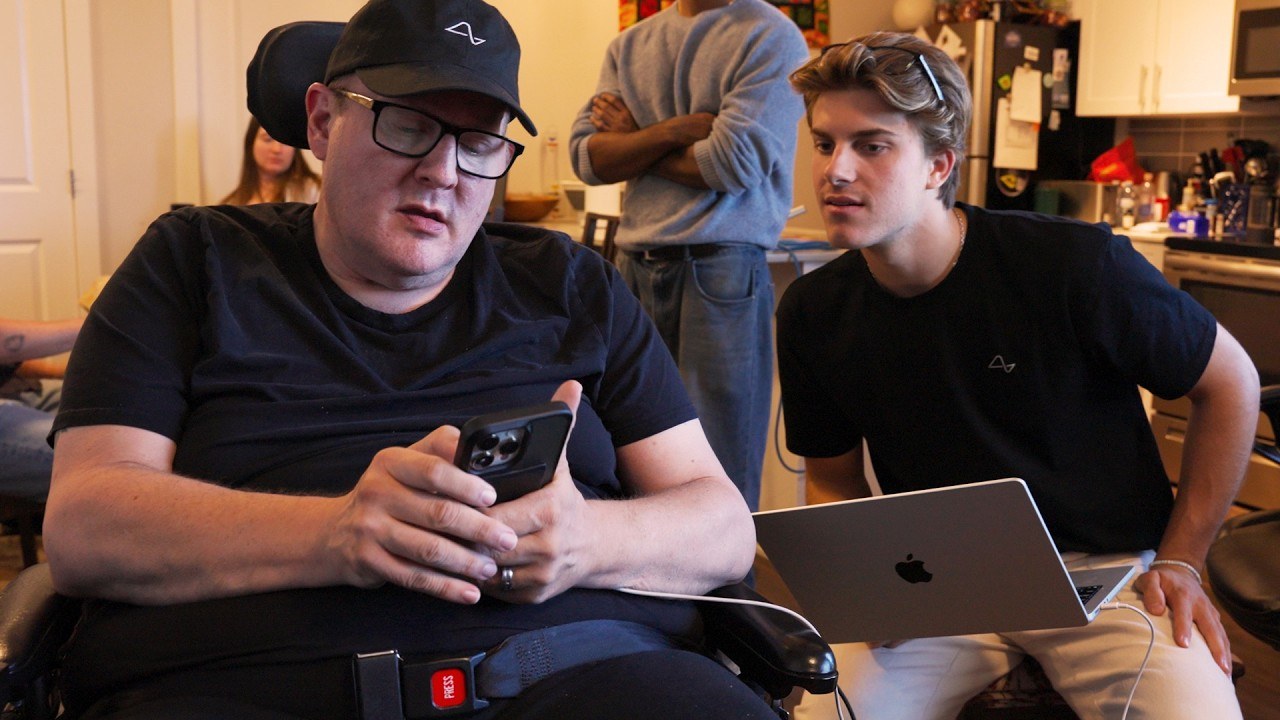
Neuralink spent 72 hours in a VOICE study participant's home trying to kill the button press between thought and speech.
The sprint put engineers beside the only critic that counts. Neuralink says neural signals shift with fatigue, attention and how someone imagines speaking, so dashboards miss the hesitations that decide daily use. Ideas moved from whiteboard to prototype to live test in one sitting, and misses were dropped the same day. The participant, his wife and caregiver co-directed, suggesting fixes and pushing for more.
Hands-free start was the shift.
Neural voice activity detection now opens and closes decoding on its own. The old flow needed a press to record. Real-time visualizations let the participant test imagined patterns to find the strongest signal, turning tuning into play. A prototype fires a Grok agent when the user thinks "Hey Neuralink" plus a task, which it then runs on the computer.
Bloom got the field test. Engineers watched it order coffee outside the lab, then patched blocks to daily use. An iOS keyboard now pipes BCI dictation into any app, and a Live Activity puts status and start on the lock screen. A new edit row adds suggestions in the keyboard because time to fix decides whether dictation survives errors. Calls take BCI speech straight into the iPhone microphone stream, with an optional assistive-device greeting. The team watched the participant joke with his wife by phone again.
Limits still set the workflow. Decoders still err, and Neuralink says its devices are investigational and have not been approved by the FDA or other regulators. For ALS users and caregivers who cannot rely on standard keyboards or unlocking to talk, that means no clinic order yet. Neuralink is still private, with secondary paperwork that typically settles in 45 to 60 days, per Forge.
If auto-start and lock-screen speech hold up, the job changes from operating an app to correcting it.




