

Alexander Wissner-Gross on AI's Transformative Decade

Alexander Wissner-Gross discusses AI's reliance on data, the significance of GPT-2, and predicts major breakthroughs in science and consciousness within the next decade.

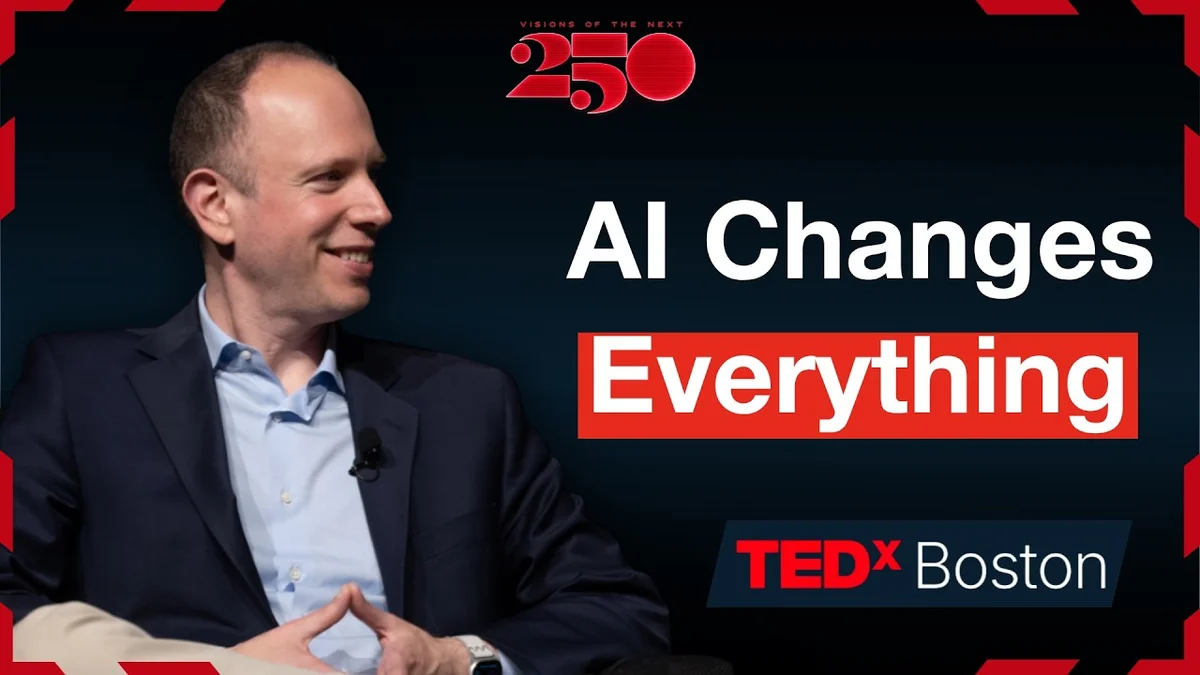
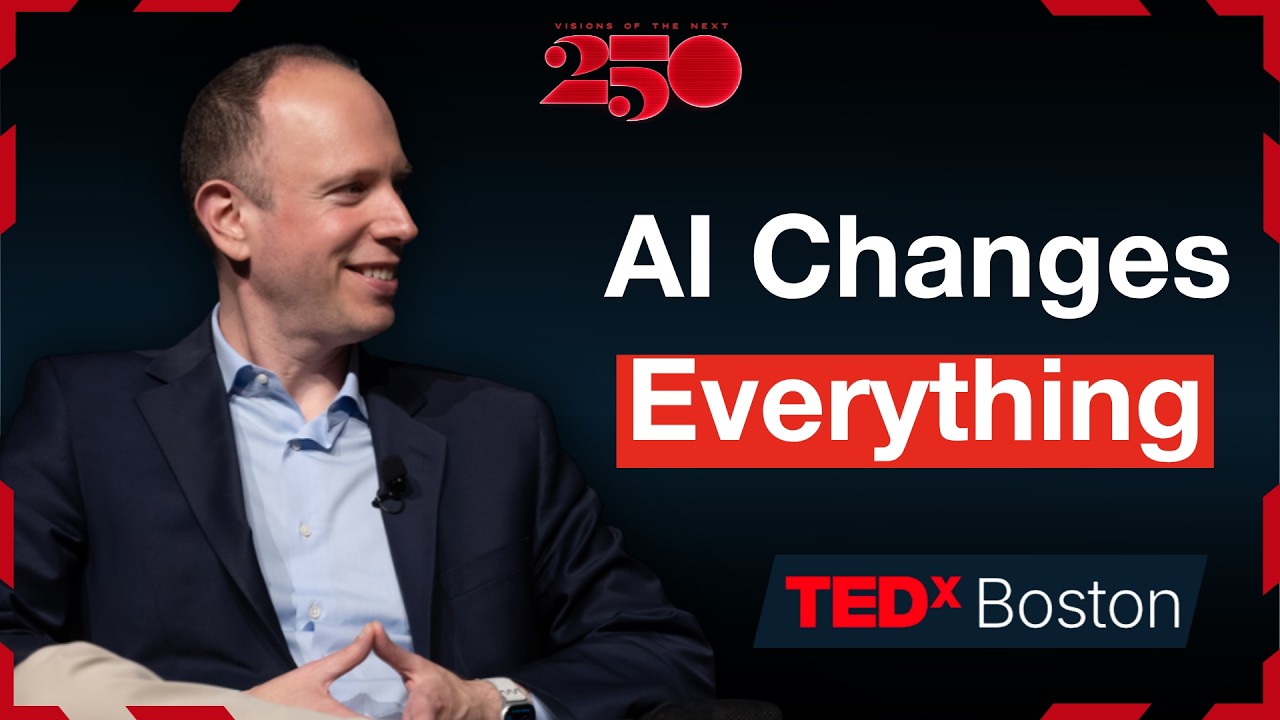
Alexander Wissner-Gross speaking on stage at TEDxBoston
YouTube
Visual TL;DR
GPT-2 Turning PointCore
OpenAI's GPT-2 publication identified as most important event of 21st century
From the articleTitled "The Next 10 Years of AI Will Change Everything," the conversation delved into what Wissner-Gross believes will be the defining turning points of the 21st century and the foundational steps necessary to ensure a positive future for humanity.
Avoid AI WintersDriver
foundational steps necessary to ensure a positive future for humanity
From the article 2 mentionsReflecting on the cyclical nature of AI advancements, Wissner-Gross acknowledged the possibility of another "AI winter" but suggested it would not resemble past periods of stagnation.
Data CompressionContext
core breakthrough was elegantly simple: taking general knowledge and compressing it
From the article 4 mentionsHe further elaborated on his long-held view that the primary driver for AI's grand challenges has been data, not compute.
Few-Shot LearningEffect
From the articleHe asserts that this moment, and the subsequent understanding that large language models are few-shot learners, signaled humanity's realization of how to build superintelligence.
Superintelligence RealizedOutcome
From the articleHe asserts that this moment, and the subsequent understanding that large language models are few-shot learners, signaled humanity's realization of how to build superintelligence.
AI's Transformative DecadeOutcome
next 10 years will bring major breakthroughs in science and consciousness
From the article 4 mentions"I think we're going to see a whole lot more doors open up to ontological shock over the next 10 years," Wissner-Gross predicted, highlighting the transformative potential of AI.
Future of IntelligenceContext
delved into defining turning points of 21st century and future implications
From the article 3 mentionsIn a thought-provoking discussion at TEDxBoston, Alexander Wissner-Gross, a prominent figure in the AI field, shared his perspectives on the rapid advancements and future implications of artificial intelligence.
Contents(3)

In a thought-provoking discussion at TEDxBoston, Alexander Wissner-Gross, a prominent figure in the AI field, shared his perspectives on the rapid advancements and future implications of artificial intelligence. Titled "The Next 10 Years of AI Will Change Everything," the conversation delved into what Wissner-Gross believes will be the defining turning points of the 21st century and the foundational steps necessary to ensure a positive future for humanity.

Alexander Wissner-Gross on AI's Transformative Decade

The GPT-2 Turning Point and the Power of Data

Wissner-Gross identified the publication of GPT-2 by OpenAI as the single most important event in the first quarter of the 21st century. He asserts that this moment, and the subsequent understanding that large language models are few-shot learners, signaled humanity's realization of how to build superintelligence. He posits that the core of this breakthrough was elegantly simple: taking general knowledge and compressing it. Wissner-Gross argued that this insight could have been shared decades earlier, accelerating progress in areas like general-purpose robotics and advanced language models.

He further elaborated on his long-held view that the primary driver for AI's grand challenges has been data, not compute. "I've argued in the past that the key to unlocking grand challenges in AI is actually more of a data set problem than a compute problem," Wissner-Gross stated. He emphasized that creating focused datasets and benchmarks around them is a fundamental societal accelerant, citing achievements like automated speech recognition, statistical machine translation, and conversational AI as being fundamentally constrained by data availability.

Avoiding AI Winters and the Future of Intelligence

Reflecting on the cyclical nature of AI advancements, Wissner-Gross acknowledged the possibility of another "AI winter" but suggested it would not resemble past periods of stagnation. He pointed to the significant capital expenditure on data centers as a potential trigger for a temporary slowdown if frontier labs fail to justify the investment. However, he expressed confidence that the ongoing recursive self-improvement of AI will prevent a prolonged winter, suggesting that breakthroughs are imminent.

Looking ahead, Wissner-Gross made bold predictions for the next decade and beyond. He believes that within 5 to 10 years, humanity will definitively answer the question of whether we are alone in the universe, largely due to AI's ability to analyze vast datasets. He also anticipates rapid progress in understanding consciousness, human cognitive enhancement, full-bandwidth virtual reality, brain-computer interfaces, and even whole-brain emulation and mind uploading, all within the same timeframe.

"I think we're going to see a whole lot more doors open up to ontological shock over the next 10 years," Wissner-Gross predicted, highlighting the transformative potential of AI. He also touched upon the historical development of AI, noting that early pioneers like Marvin Minsky may have inadvertently set back the field by focusing on algorithms over benchmarks, citing the XOR function problem as an example.

The Next 10 Years: A Transformative Era

Wissner-Gross concluded by outlining his vision for a successful human-AI civilization within the next decade. He highlighted the ongoing progress in AI's ability to solve complex mathematical problems as a harbinger of broader scientific and technological advancements. He believes that AI's capacity to "speedrun the future of medicine" and unlock physically possible inventions, such as those depicted in Star Trek, is within reach in the coming years, driven by the same underlying AI advances.

© 2026 StartupHub.ai. All rights reserved. You may not republish this article in full without a license. Search engines and AI research tools may crawl and summarize for reference. Bulk reproduction or model training requires a license. See our terms.
Daniel Singer

Written by

Daniel Singer

Editor, StartupHub.ai

Daniel Singer is the editor of StartupHub.ai, a technology expert and thought leader on AI and its applications across sectors, from fintech and healthcare to developer tooling and consumer software. He writes and tests the tools covered here thoroughly and regularly, and built StartupHub.ai to give founders, operators and buyers a clearer read on what they are actually being sold.

More from Daniel Singer