OpenAI's Akshay Nathan on ChatGPT's 'Everything App' Vision

OpenAI's Akshay Nathan discusses the company's vision for ChatGPT as a 'super app,' the evolution of AI tools, and the democratization of powerful capabilities.

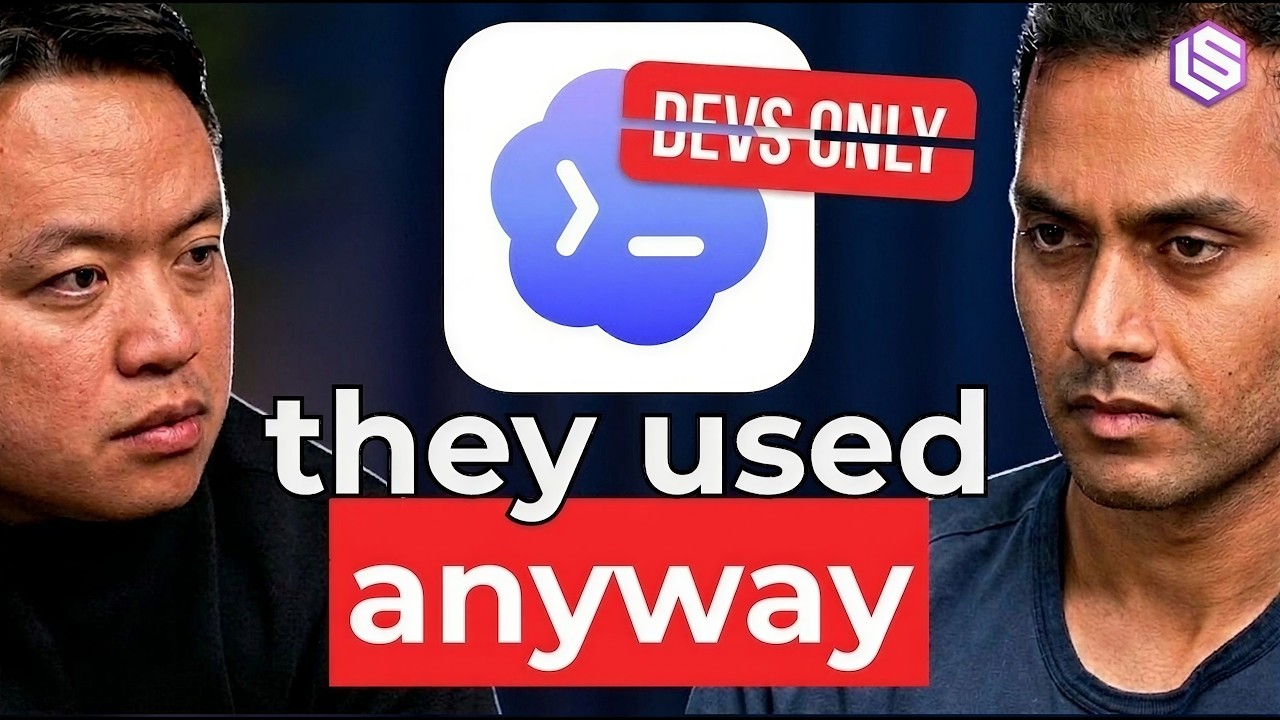
Akshay Nathan speaking on a podcast panel about OpenAI's ChatGPT strategy.
Latent Space
Visual TL;DR
Akshay NathanCore
leads core product engineering at OpenAI, previously worked on no-code platforms
From the article 9+ mentionsNathan's career has been marked by a hypothesis that the power of code could be made more accessible to a wider audience.
No-code visionDriver
democratizing code power, making advanced capabilities accessible to wider audience
From the article 3 mentionsThe recent launch of ChatGPT Work is a manifestation of this vision.
LLMs emergeCore
provided missing piece to democratize advanced capabilities without deep technical knowledge
From the article"Once LLMs came onto the scene, it became clear that this was like the missing piece, the missing technology required to bring the magic of code to everyone without them having to know what's going on underneath the hood," Nathan stated.
ChatGPT 'ultimate no-code'Effect
users interact with powerful AI without needing to understand underlying complexity
ChatGPT 'Super App'Context
vision for ChatGPT as an 'everything app' beyond current capabilities
Enterprise AI lessonsContext
insights from enterprise adoption inform future development and integration strategies
From the articleNathan shared insights from his experience working on enterprise AI solutions.
Harness engineering evolutionContext
discusses the evolution of tools and model choices for AI development
Democratize AIOutcome
making powerful AI accessible to everyone, fulfilling the no-code hypothesis
From the articleThe advent of large language models, Nathan explained, provided the missing piece to democratize advanced capabilities, allowing users to interact with powerful AI without needing to understand the underlying complexity.
Contents(5)

Akshay Nathan, who leads core product engineering at OpenAI, recently joined Vibhu Sapra on the Latent Space podcast to discuss the company's ambitious plan to transform ChatGPT into an "everything app." Nathan, who previously worked on no-code/low-code platforms like Walrus and Airtable, sees a clear lineage from those efforts to the current iteration of ChatGPT, which he describes as the "ultimate no-code" tool.

StartupHub data

OpenAI and Airtable

OpenAI is an AI research and deployment company dedicated to ensuring that artificial general intelligence benefits all of humanity.

Founded
2015
Location
San Francisco, United States
Valuation
Private / $100B+ est

Airtable offers a next-gen app-building platform that enables teams to create enterprise-ready AI workflows, apps, and agents without coding.

Founded
2012
Location
San Francisco, United States
Valuation
$11.7B
OpenAI's Akshay Nathan on ChatGPT's 'Everything App' Vision - Latent Space
OpenAI's Akshay Nathan on ChatGPT's 'Everything App' Vision, from Latent Space

From No-Code to AGI

Nathan's career has been marked by a hypothesis that the power of code could be made more accessible to a wider audience. His work at Airtable and his previous startup focused on bringing database functionality and automated testing to users without requiring deep technical knowledge. The advent of large language models, Nathan explained, provided the missing piece to democratize advanced capabilities, allowing users to interact with powerful AI without needing to understand the underlying complexity.

"Once LLMs came onto the scene, it became clear that this was like the missing piece, the missing technology required to bring the magic of code to everyone without them having to know what's going on underneath the hood," Nathan stated.

OpenAI's Enduring Mission and Startup Culture

Nathan joined OpenAI in 2023 and was struck by the persistent startup culture within the 500-person company. He noted that the "bottoms-up ambition" and the ability for anyone to "do anything or have an idea and and ship it" remained strong, even as the company scaled. The core mission, he emphasized, has always been to "bring frontier intelligence to everyone, building AGI, and then bringing it to everyone." He acknowledged that this journey wouldn't be linear, involving various products that would succeed or fail, but the overarching vision has remained constant.

Lessons from Enterprise AI Adoption

Nathan shared insights from his experience working on enterprise AI solutions. He highlighted the lack of a one-size-fits-all approach, noting that early conversations with companies revealed a wide variance in how they envisioned using AI. While many had data and resources, they struggled with discrete use cases. Nathan stressed the importance of meeting users where they are and teaching them how AI can provide leverage in their specific workflows.

The 'Super App' Vision: ChatGPT Work and Beyond

The recent launch of ChatGPT Work is a manifestation of this vision. Nathan pointed to the surprising adoption of Codex by non-developers internally at OpenAI, realizing that the power of agents and advanced capabilities could extend far beyond developers. The company's strategy, he explained, is to bring these powerful tools to the massive existing user base of ChatGPT, making them accessible and intuitive.

He elaborated on the concept of "worky" or productivity-related tasks, emphasizing that this doesn't strictly mean professional work. He shared an anecdote about an agent helping a user locate a misplaced package by analyzing a photo and searching local listings, demonstrating the broad applicability of these tools. The goal is not to segment users but to enable them to accomplish tasks more effectively, whether personal or professional.

The Evolution of Harness Engineering and Model Choices

Discussing the technical underpinnings, Nathan clarified that the underlying "harness" for agents is shared across products, with improvements made for knowledge work and plugin integration. Differences lie in the opinionated UX choices made for each experience. He also touched upon the vast array of model options available, advising users to start with the default, which is optimized for most use cases, while acknowledging that power users can adjust parameters for specific needs.

Nathan also highlighted the importance of "artifacts," such as the Excel file generated by the AI, which are crucial for iteration and collaboration. The idea is to move beyond simple text outputs to functional, high-fidelity outputs that users can trust and build upon. While the current capabilities are stage one, the vision includes enhancing these artifacts and enabling seamless collaboration, potentially even multiplayer experiences.

The conversation also touched on the broader trend of AI augmenting human capabilities, blurring the lines between different job functions and enabling individuals to achieve more. Nathan concluded by emphasizing the importance of imagination and continuous exploration, as the pace of AI development means that capabilities once thought impossible are now within reach.

© 2026 StartupHub.ai. All rights reserved. You may not republish this article in full without a license. Search engines and AI research tools may crawl and summarize for reference. Bulk reproduction or model training requires a license. See our terms.
Daniel Singer

Written by

Daniel Singer

Editor, StartupHub.ai

Daniel Singer is the editor of StartupHub.ai, a technology expert and thought leader on AI and its applications across sectors, from fintech and healthcare to developer tooling and consumer software. He writes and tests the tools covered here thoroughly and regularly, and built StartupHub.ai to give founders, operators and buyers a clearer read on what they are actually being sold.

More from Daniel Singer