
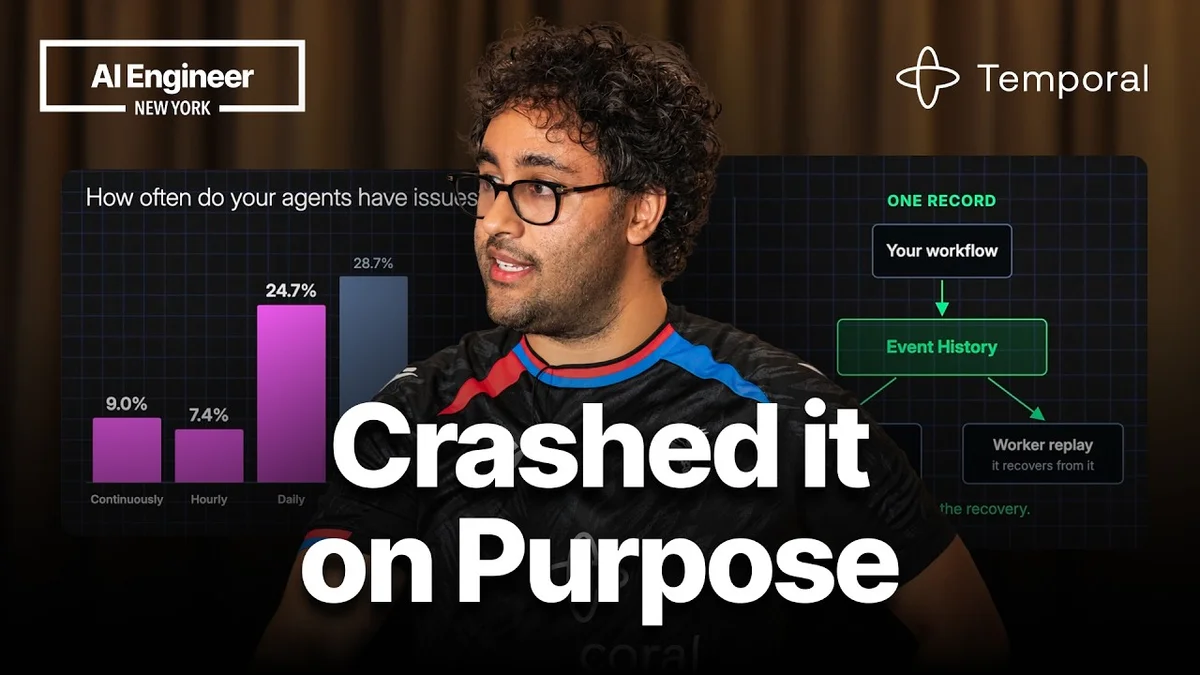
AI Engineer host Shy Ruparel demoed a nine-stage $2,500 payout workflow that survives a local worker kill without losing reserved funds or LLM work.
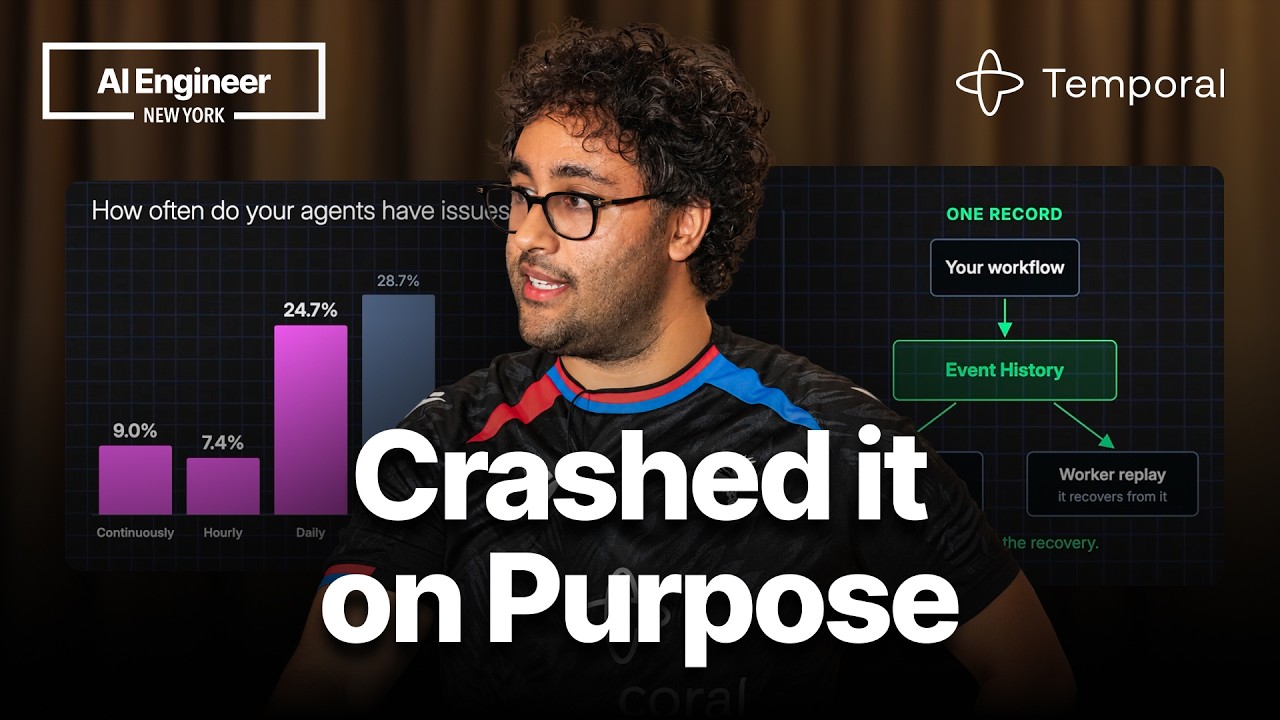
Temporal surveyed 554 engineers and found 80.8% now use agents daily versus 47.3% a year ago, while only 49.1% run agents in production, a gap Ruparel framed as reliability.
Trust sits at 85.5% at least somewhat per the report, yet 41.1% hit issues daily and 16.4% hit them hourly, and self-described successful teams were 1.7 times more likely to hit issues continuously with no correlation to agent count.
Durable execution records every step as event history, runs LLM calls and bank calls as replayable activities, and stores human approval as a signal that persists while zero workers run.
Just 51.3% move a prototype to production in hours, but at firms with 5,000 plus employees about one in five takes months versus about one in 20 elsewhere, a difference Ruparel linked to approvals and audit trails.
Tracking state at 35.7% and debugging at 30.9% top productivity blockers, 22.2% lose progress on crashes while only 13% feel very confident debugging at scale, and like hygienic pigging systems that clear residual product from pipelines to reduce contamination risk per IUS Pigging, replay avoids rebuilding state from scratch.
The crash was an intentional local stop with no remote attacker and no patch, and the data does not separate auditability from bureaucracy, so the read would change if large firms showed where those months actually go.



