

Maven Clinic's AI Transition: From Traditional to Native

Dan Feng of Maven Clinic discusses the company's pivot to an AI-native model, focusing on internal adoption, product integration, and cultural shifts.

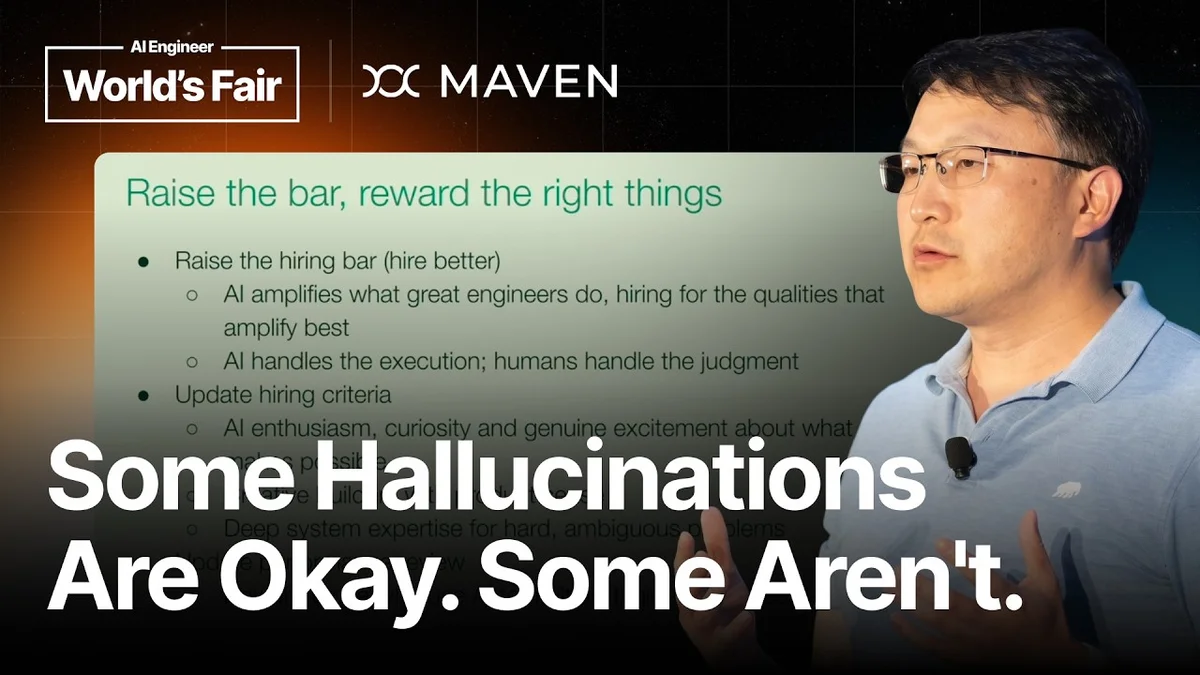
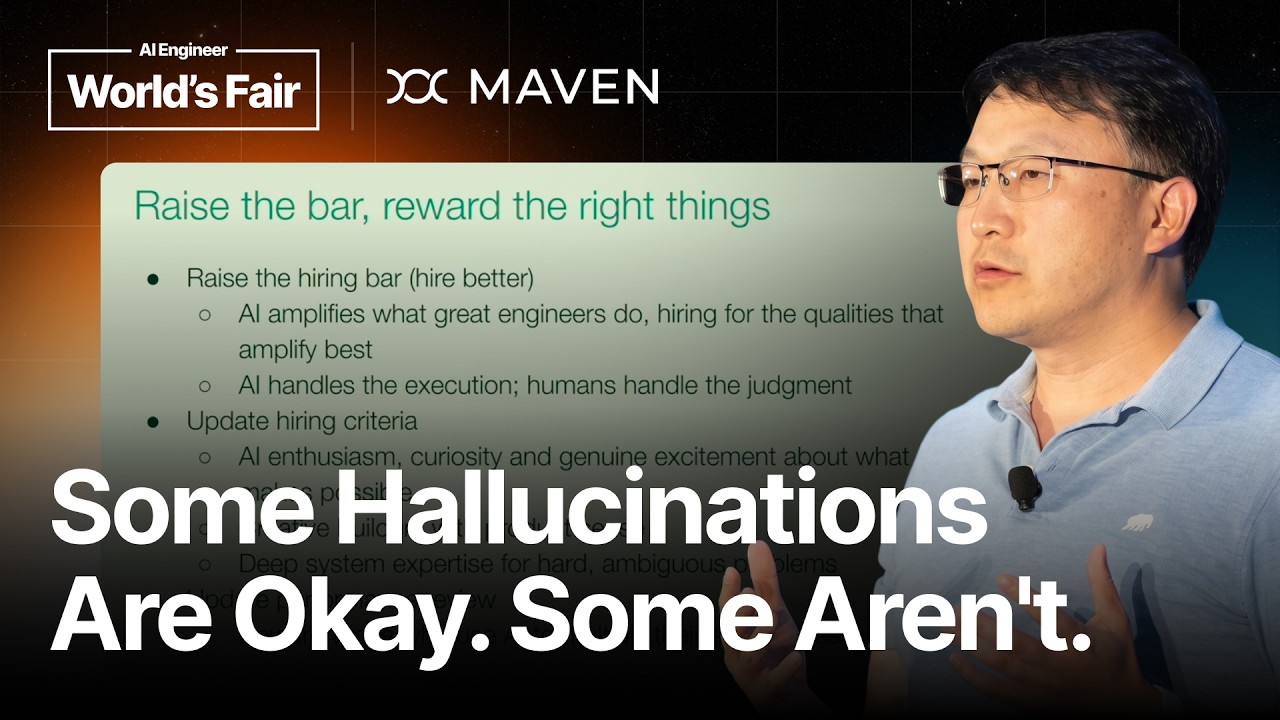
Dan Feng presenting at the AI Engineer World's Fair
AI Engineer
Visual TL;DR
Maven ClinicCore
largest digital health platform for women and families, specializing in maternity and fertility
From the article 6 mentionsDan Feng from Maven Clinic shared insights into the company's strategic shift from a traditional technology firm to an AI-native organization.
AI Adoption ImperativeDriver
AI is improving daily, making adoption a necessity, not a choice for the company
From the article 2 mentionsSpeaking at the AI Engineer World's Fair, Feng outlined the three core pillars of this transformation: internal AI adoption, external AI integration into products, and a cultural shift to embrace AI-driven workflows.
AI-Native ModelContext
strategic shift from traditional tech firm to an organization embracing AI-driven workflows
From the article 4 mentionsWhile acknowledging that there isn't a single definition of an 'AI-native' company or a predefined playbook to achieve it, Feng outlined Maven Clinic's approach.
Maven IntelligenceCore
From the article 6 mentionsThe company embarked on its AI journey approximately two years ago, leading to the creation of 'Maven Intelligence,' an AI-powered orchestration layer designed to integrate AI capabilities across all their products and services, benefiting both employees and clients.
Internal AI AdoptionEffect
employees using AI tools and integrating them into daily operational workflows
From the article 2 mentionsSpeaking at the AI Engineer World's Fair, Feng outlined the three core pillars of this transformation: internal AI adoption, external AI integration into products, and a cultural shift to embrace AI-driven workflows.
Product IntegrationEffect
embedding AI capabilities directly into Maven's external-facing products and services
From the article 5 mentionsSpeaking at the AI Engineer World's Fair, Feng outlined the three core pillars of this transformation: internal AI adoption, external AI integration into products, and a cultural shift to embrace AI-driven workflows.
Cultural ShiftEffect
fostering an organizational culture that embraces AI-driven workflows and innovation
From the article 3 mentionsSpeaking at the AI Engineer World's Fair, Feng outlined the three core pillars of this transformation: internal AI adoption, external AI integration into products, and a cultural shift to embrace AI-driven workflows.
Enhanced ServicesOutcome
benefiting both employees and clients with advanced AI-powered features and efficiencies
From the articleThe company embarked on its AI journey approximately two years ago, leading to the creation of 'Maven Intelligence,' an AI-powered orchestration layer designed to integrate AI capabilities across all their products and services, benefiting both employees and clients.
Contents(7)

Dan Feng from Maven Clinic shared insights into the company's strategic shift from a traditional technology firm to an AI-native organization. Speaking at the AI Engineer World's Fair, Feng outlined the three core pillars of this transformation: internal AI adoption, external AI integration into products, and a cultural shift to embrace AI-driven workflows.

Maven Clinic's AI Transition: From Traditional to Native - AI Engineer
Maven Clinic's AI Transition: From Traditional to Native, AI Engineer

Who is Maven Clinic?

Maven Clinic is described as the largest digital health platform focused on women and their families. Their specializations include maternity, fertility, parenting, and menopause. The company embarked on its AI journey approximately two years ago, leading to the creation of 'Maven Intelligence,' an AI-powered orchestration layer designed to integrate AI capabilities across all their products and services, benefiting both employees and clients.

The Imperative of AI Adoption

Feng emphasized that AI adoption is no longer a choice but a necessity, stating, "AI is here and improving every day. I think adopting it is not optional. Even if you choose not to, your competitors will do." He used the analogy of tractors replacing farmers, noting that "farmers who can operate the tractor will replace the ones who cannot," urging attendees to become proficient in using AI tools.

Defining 'AI-Native'

While acknowledging that there isn't a single definition of an 'AI-native' company or a predefined playbook to achieve it, Feng outlined Maven Clinic's approach. Internally, this means adopting AI tools for tasks ranging from generating daily summaries and managing meetings to creating Jira tasks, encouraging employees to use AI to solve problems rather than delegating them. Externally, the focus is on embedding AI into products to improve user experience and reduce operational costs, citing AI-based chatbots as a prime example of providing 24/7, efficient customer support.

Feng discussed the different user groups when adopting new technologies, categorizing them into early adopters (15%), the majority (70%), and slow adopters (15%). He stressed the importance of supporting the majority by building shared infrastructure and user-friendly tools, while also actively listening to feedback. For slow adopters, the approach is to understand their concerns and clearly communicate the company's direction. This AI transformation also necessitates changes in hiring and reward systems. Feng noted that engineers are now empowered to solve problems independently using AI, blurring the lines between engineering and product management roles. The company now seeks individuals genuinely interested in AI, with a drive for continuous learning and the ability to handle complex, ambiguous problems.

Building Fast, Planning Less

The presentation highlighted a shift in development philosophy: 'Build fast, plan less.' Feng explained that with AI, building can be incredibly rapid, making traditional, lengthy planning cycles less relevant. Instead, the focus is on short-term goals (2-4 weeks) and iterative development. The company aims to replace lengthy PRDs and TDDs with concise documents, allowing PMs and designers to stay ahead of engineers, who can then execute and ship features quickly. This agile approach makes it easier to pivot and correct course if initial decisions are found to be wrong.

Rethinking Code Review in the AI Era

With AI generating more code, the code review process becomes a bottleneck. Maven Clinic is adapting by allowing engineers to self-identify when a Pull Request (PR) is simple enough to bypass manual review, though they remain accountable. For more complex reviews, they enforce best practices like limiting PRs to under 500 lines of code and enabling stacked PRs for larger features. The goal is to avoid 'rubber-stamping' and maintain meaningful review processes while continuing to explore AI-assisted code review tools.

Redefining Reliability with AI

Feng addressed the challenge of AI hallucinations, stating that while they cannot be ignored, completely eliminating them can be costly and sometimes unnecessary. The approach is to define acceptable failure rates and implement continuous evaluation, including using Large Language Models (LLMs) as judges with human oversight. For critical functions like reimbursement claims, where failures are unacceptable, Maven Clinic employs multiple models to verify data consistency. For less critical functions, like appointment scheduling, occasional failures might be tolerable, with users able to retry. The company also emphasizes rigorous testing, including running integration tests multiple times to ensure consistent high pass rates, and post-launch monitoring and human review of conversations to refine systems and evaluation rubrics.

© 2026 StartupHub.ai. All rights reserved. You may not republish this article in full without a license. Search engines and AI research tools may crawl and summarize for reference. Bulk reproduction or model training requires a license. See our terms.
Daniel Singer

Written by

Daniel Singer

Editor, StartupHub.ai

Daniel Singer is the editor of StartupHub.ai, a technology expert and thought leader on AI and its applications across sectors, from fintech and healthcare to developer tooling and consumer software. He writes and tests the tools covered here thoroughly and regularly, and built StartupHub.ai to give founders, operators and buyers a clearer read on what they are actually being sold.