

Applied Vertical AI: From Trading to Drug Discovery

Ayush Bhardwaj of Allos AI outlines a 7-step process for building applied vertical AI, stressing the importance of proprietary data and domain expertise.

8 min read
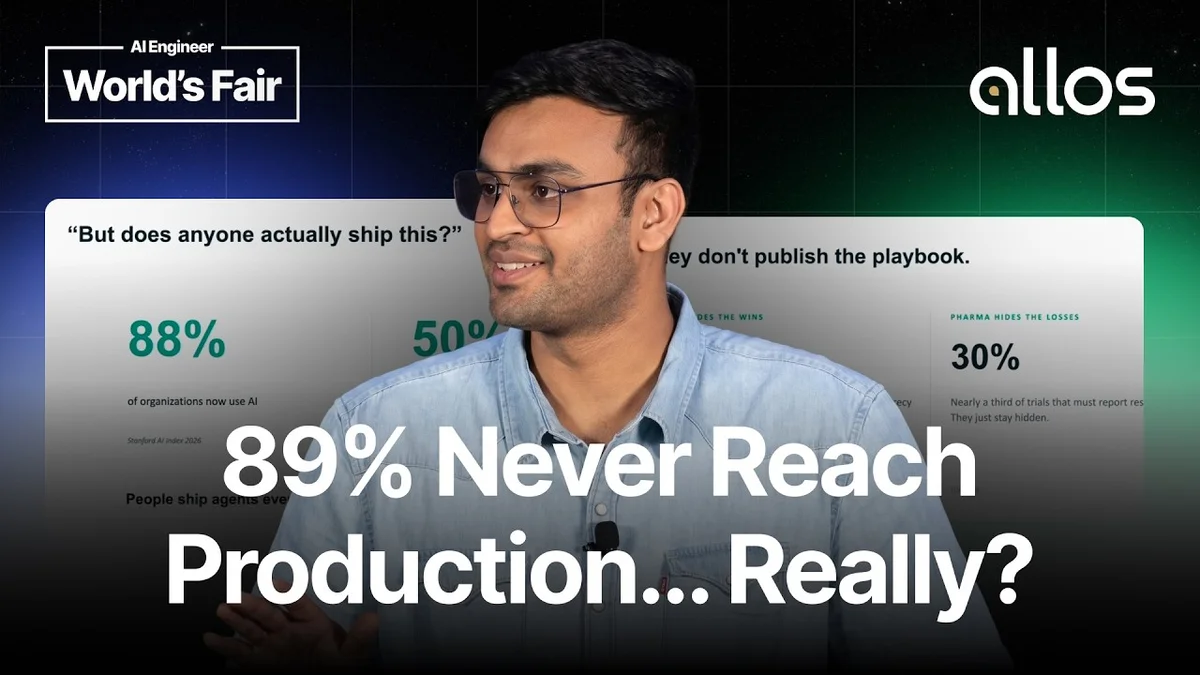
Ayush Bhardwaj speaking at a podium at the AI Engineer World's Fair.
AI Engineer

Visual TL;DR. Vertical AI requires 7-Step Recipe. 7-Step Recipe leverages Domain Expertise. 7-Step Recipe needs Proprietary Data. Domain Expertise enables Industry-Specific Solutions. Proprietary Data drives Industry-Specific Solutions. Data Scarcity leads to Human Loop. Human Loop generates Proprietary Data. Proprietary Data creates Competitive Moat. Domain Expertise builds Competitive Moat.

  1. Vertical AI: AI built for a single industry, simulating job functions of people within that sector
  2. 7-Step Recipe: Ayush Bhardwaj outlines a structured process for building applied vertical AI solutions
  3. Domain Expertise: critical for understanding industry nuances and building effective, specialized AI models
  4. Proprietary Data: essential for creating a 'moat' and competitive advantage in vertical AI applications
  5. Data Scarcity: common challenge in specialized fields, requiring human-in-the-loop for data generation
  6. Human Loop: iterative process where human feedback refines models and generates more training data
  7. Industry-Specific Solutions: AI tailored for sectors like trading or drug discovery, addressing unique challenges
  8. Competitive Moat: proprietary data and domain expertise create a defensible advantage for vertical AI
Visual TL;DR
Visual TL;DR, startuphub.ai Vertical AI requires 7-Step Recipe. 7-Step Recipe leverages Domain Expertise. 7-Step Recipe needs Proprietary Data. Domain Expertise enables Industry-Specific Solutions. Proprietary Data drives Industry-Specific Solutions requires leverages needs enables drives Vertical AI 7-Step Recipe Domain Expertise Proprietary Data Industry-Specific Solutions From startuphub.ai · The publishers behind this format
Visual TL;DR, startuphub.ai Vertical AI requires 7-Step Recipe. 7-Step Recipe leverages Domain Expertise. 7-Step Recipe needs Proprietary Data. Domain Expertise enables Industry-Specific Solutions. Proprietary Data drives Industry-Specific Solutions requires leverages needs enables drives Vertical AI 7-Step Recipe Domain Expertise Proprietary Data Industry-SpecificSolutions From startuphub.ai · The publishers behind this format
Visual TL;DR, startuphub.ai Vertical AI requires 7-Step Recipe. 7-Step Recipe leverages Domain Expertise. 7-Step Recipe needs Proprietary Data. Domain Expertise enables Industry-Specific Solutions. Proprietary Data drives Industry-Specific Solutions requires leverages needs enables drives Vertical AI AI built for a single industry, simulatingjob functions of people within that sector 7-Step Recipe Ayush Bhardwaj outlines a structuredprocess for building applied vertical AIsolutions Domain Expertise critical for understanding industrynuances and building effective,specialized AI models Proprietary Data essential for creating a 'moat' andcompetitive advantage in vertical AIapplications Industry-Specific Solutions AI tailored for sectors like trading ordrug discovery, addressing uniquechallenges From startuphub.ai · The publishers behind this format
Visual TL;DR, startuphub.ai Vertical AI requires 7-Step Recipe. 7-Step Recipe leverages Domain Expertise. 7-Step Recipe needs Proprietary Data. Domain Expertise enables Industry-Specific Solutions. Proprietary Data drives Industry-Specific Solutions requires leverages needs enables drives Vertical AI AI built for asingle industry,simulating job… 7-Step Recipe Ayush Bhardwajoutlines astructured process… Domain Expertise critical forunderstandingindustry nuances… Proprietary Data essential forcreating a 'moat'and competitive… Industry-SpecificSolutions AI tailored forsectors liketrading or drug… From startuphub.ai · The publishers behind this format
Visual TL;DR, startuphub.ai Vertical AI requires 7-Step Recipe. 7-Step Recipe leverages Domain Expertise. 7-Step Recipe needs Proprietary Data. Domain Expertise enables Industry-Specific Solutions. Proprietary Data drives Industry-Specific Solutions. Data Scarcity leads to Human Loop. Human Loop generates Proprietary Data. Proprietary Data creates Competitive Moat. Domain Expertise builds Competitive Moat requires leverages needs enables drives leads to generates creates builds Vertical AI AI built for a single industry, simulatingjob functions of people within that sector 7-Step Recipe Ayush Bhardwaj outlines a structuredprocess for building applied vertical AIsolutions Domain Expertise critical for understanding industrynuances and building effective,specialized AI models Proprietary Data essential for creating a 'moat' andcompetitive advantage in vertical AIapplications Data Scarcity common challenge in specialized fields,requiring human-in-the-loop for datageneration Human Loop iterative process where human feedbackrefines models and generates more trainingdata Industry-Specific Solutions AI tailored for sectors like trading ordrug discovery, addressing uniquechallenges Competitive Moat proprietary data and domain expertisecreate a defensible advantage for verticalAI From startuphub.ai · The publishers behind this format
Visual TL;DR, startuphub.ai Vertical AI requires 7-Step Recipe. 7-Step Recipe leverages Domain Expertise. 7-Step Recipe needs Proprietary Data. Domain Expertise enables Industry-Specific Solutions. Proprietary Data drives Industry-Specific Solutions. Data Scarcity leads to Human Loop. Human Loop generates Proprietary Data. Proprietary Data creates Competitive Moat. Domain Expertise builds Competitive Moat requires leverages needs enables drives leads to generates creates builds Vertical AI AI built for asingle industry,simulating job… 7-Step Recipe Ayush Bhardwajoutlines astructured process… Domain Expertise critical forunderstandingindustry nuances… Proprietary Data essential forcreating a 'moat'and competitive… Data Scarcity common challenge inspecialized fields,requiring… Human Loop iterative processwhere humanfeedback refines… Industry-SpecificSolutions AI tailored forsectors liketrading or drug… Competitive Moat proprietary dataand domainexpertise create a… From startuphub.ai · The publishers behind this format

In the rapidly evolving world of artificial intelligence, the focus is shifting towards specialized applications tailored for specific industries. Ayush Bhardwaj, who has experience in applied AI for both hedge funds and a pharma-tech startup, shared his insights on building and iterating applied vertical AI at a recent AI Engineer World's Fair event.

Applied Vertical AI: From Trading to Drug Discovery - AI Engineer
Applied Vertical AI: From Trading to Drug Discovery — from AI Engineer

The Essence of Applied Vertical AI

Bhardwaj defined applied vertical AI as AI built for a single industry, aiming to simulate the job functions of people within that sector. He contrasted this with general-purpose AI like Google Translate, highlighting that vertical AI solutions, such as those used for drug discovery at his former company Allos AI, are highly specific in their application.

He noted that despite the vastly different timelines and risk tolerances between the fast-paced hedge fund world (where speed and 'mostly right' is acceptable) and the pharma industry (where accuracy over 15 years is paramount), the core process of building applied AI remained surprisingly similar. This observation led him to abstract a common seven-step recipe for developing these specialized AI agents.

The Seven-Step Recipe for Applied Vertical AI

Bhardwaj outlined the key steps involved in building and iterating applied vertical AI:

  1. Formulate the problem: Emphasizing the need for a narrow focus, he advised against trying to solve too many problems at once. Specificity is key, such as identifying a particular market and industry, and then defining a precise task for the AI agent.
  2. Identify the data: Bhardwaj stressed that proprietary data is the true moat. While public data is accessible, a company's unique, curated datasets are what will differentiate its AI solutions. He suggested that leveraging existing unstructured data within an organization and converting it to structured data using LLMs is a feasible approach.
  3. Write the prompts: The prompts should be designed to mirror how a human expert would solve the problem, breaking down the task into logical steps.
  4. Observe: Implementing observability is critical to track the AI's actions, understand its outputs, and debug effectively.
  5. Hire the user: Perhaps the most critical step, Bhardwaj asserted the necessity of bringing domain experts into the AI development process. These experts are vital for data curation, prompt refinement, and ultimately, for judging the AI's performance.
  6. Iterate: The process is iterative, requiring continuous refinement based on observed performance and expert feedback.
  7. Ship: Once the AI agent is performing effectively and demonstrating ROI, it's time to deploy it.

The 'Moat' and the Role of Domain Expertise

Bhardwaj highlighted that while the technical aspects of building AI agents (tools, prompts, observability) are becoming commoditized, the true competitive advantage lies in domain expertise and proprietary data. He pointed out that many vertical AI projects fail because they cannot accurately assess the performance of their models without this specialized knowledge.

He shared a personal anecdote about struggling to evaluate the output of his AI agents in finance and biology, realizing that an LLM could not replace the nuanced judgment of a human expert who understands concepts like 'alpha' or biological significance.

Data Scarcity and the Human Loop

The scarcity of crucial data, particularly negative results in pharma or proprietary trade theses in finance, was identified as a major challenge. Bhardwaj noted that companies often keep this data private, as it represents their competitive edge. He also touched upon the importance of turning expert judgment into reusable signals through methods like supervised fine-tuning, reinforcement learning from human feedback, rubrics as rewards, and error analysis.
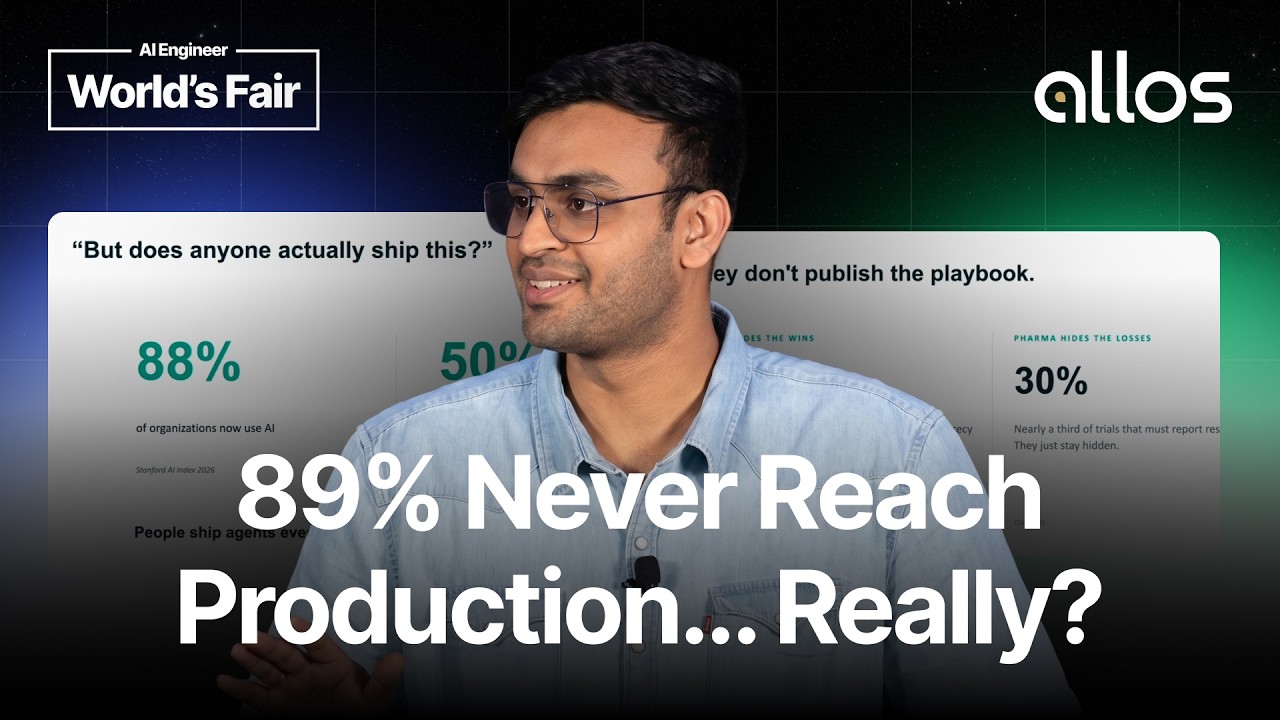
Bhardwaj concluded by emphasizing that while 89% of enterprise AI agents may never reach production, those that do succeed often keep a domain expert in the loop. This human-in-the-loop approach, or more accurately 'AI in the loop' for specialized industries, is essential for ensuring AI models can reason from causation rather than just correlation, ultimately leading to more effective and valuable solutions.

© 2026 StartupHub.ai. All rights reserved. Do not enter, scrape, copy, reproduce, or republish this article in whole or in part. Use as input to AI training, fine-tuning, retrieval-augmented generation, or any machine-learning system is prohibited without written license. Substantially-similar derivative works will be pursued to the fullest extent of applicable copyright, database, and computer-misuse laws. See our terms.