Four years after ChatGPT showed up on campus, nobody in education is still asking whether AI belongs in school. They're improvising answers to harder questions. How do you know a student learned something? What is worth learning when a machine can produce the answer? Who gets to decide?
No one has settled any of this. Here's where things stand in six places as 2027 approaches.
1. Testing goes back into the room
For generations, a finished essay counted as proof that learning had happened behind it. Generative AI broke that link.
In Chris Schaffer's biomedical engineering course at Cornell, teaching assistants no longer grade the written problem sets. Each student sits for an oral defense of their answers instead. At NYU's Stern School of Business, Panos Ipeirotis told the AP, "I don't trust written assignments anymore to be the result of actual thinking." His final is oral too, run by an AI voice agent built with ElevenLabs. He calls it fighting fire with fire.
It goes beyond single courses.
Princeton now requires proctors at all in-person exams, the biggest change to an honor code that dates all the way back to 1893. Demand for blue books is surging again at campuses across the country.
Not everyone thinks this is progress.
Berkeley computer scientist Armando Fox calls handwritten exams "a retreat." Oral exams are hard to scale to a 200-person lecture, rough on anxious students, and won't stop AI glasses or earpieces. Still, several of Schaffer's students told the AP they came to prefer the format.
2. What students should learn
Employers and educators are landing in the same place: judgment, adaptability, and working with people.
At a CUNY Graduate Center panel last month, Cornell vice provost Steve Jackson described what employers say they need from graduates in the AI era. You might expect the answer to be AI skills, and a few do make the list, like knowing which tasks to hand off to a machine and catching it when it's wrong. But the top requests are older than any chatbot: people who keep learning and change their minds when the facts change, and people who work well with others. Even asked about AI, employers mostly want what universities have always tried to teach.
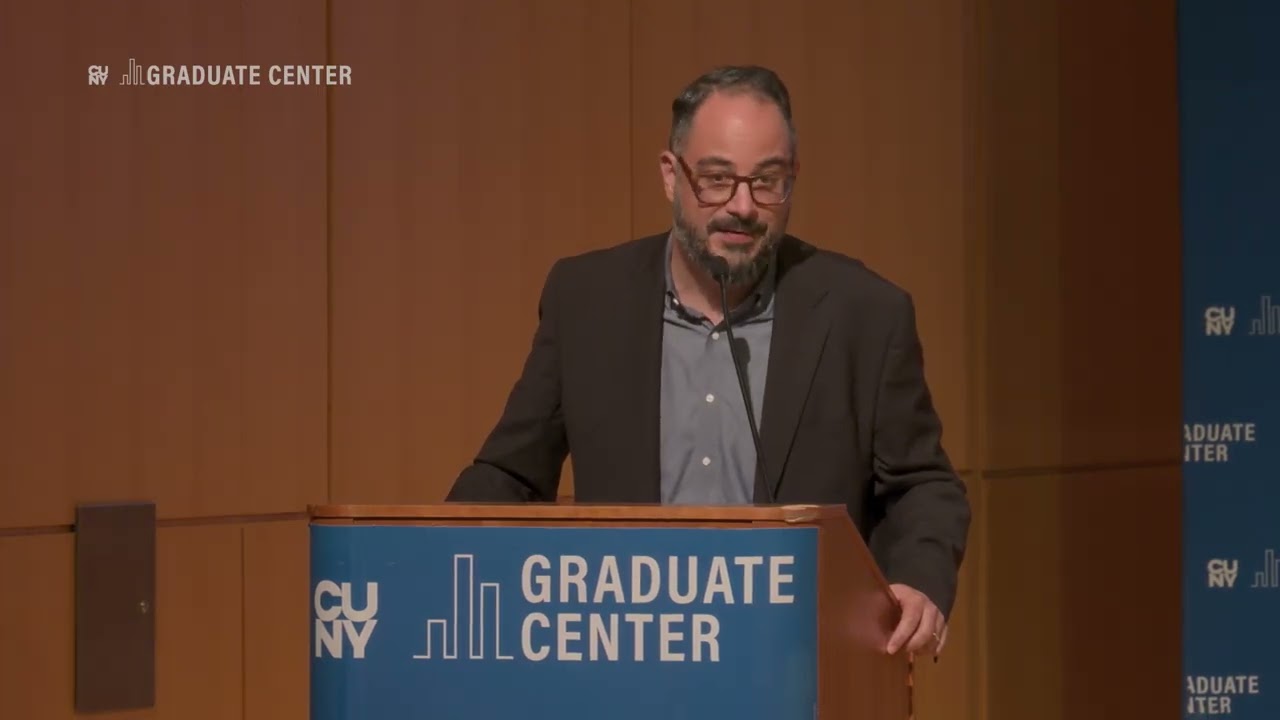
Aankit Patel, CUNY's dean for technology, argued that judgment gets built through the slow work AI makes optional, like summarizing a text yourself and deciding what matters. Education, he noted, is notoriously inefficient, and it isn't supposed to be efficient.
That's a pedagogical argument, not a technical one: the inefficiency is the point.
Colby College president David Greene, speaking to ABC News, goes further. Colby gives every student AI access and has spent six years training faculty through its Davis Institute for Artificial Intelligence. He still argues that when most intelligence is artificial, trained human intelligence becomes a scarce resource. He calls this "a golden hour for the liberal arts."
Cornell is testing a version of that idea, redesigning some humanities courses to run like an architecture studio, with long stretches of work done together in the room.

The obvious question is whether that golden hour reaches anyone outside a place like Colby. Greene doesn't really answer it. Neither, yet, does anyone else.
3. The middle, from a school using it now
An interesting approach is at Trinity International Private School in Cyprus, a new school and the first investment of SP Ventures, the firm Sergey Portnov launched after stepping back from day-to-day management of Parimatch. Head of School Dr Vladimir Kuskovski puts teacher preparation at the center of the discussion. His emphasis is on "what to do with it, rather than what not to do with it."
One practical opportunity, in his view, is helping teachers understand where individual students are struggling. A series of checkpoints throughout a term or teaching unit can provide data for AI to analyze, helping teachers identify different learning gaps and adapt their instruction. Drawing on his experience as a language teacher, Kuskovski notes how difficult that work can be: "It's a lot easier to just say the word differentiation rather than actually do it." The benefit depends on teachers knowing which questions to ask and what they want to understand from the assessment results.
He is more cautious about handing over curriculum design. "I wouldn't necessarily use it yet to build the curriculum, but I would use it to inform curriculum building." For a humanities topic, for example, he suggests using AI to find current resources that can support a teacher's planning. He would not yet trust it to create the full scope and sequence of a subject. His approach leaves teachers responsible for deciding how the information should shape teaching.
ELSA, new to Israeli classrooms, applies the same logic, according to a Nov. 19 report in ynet. Through Safe School, which says it operates in about 1,600 schools, the AI platform for English speaking and pronunciation already used in Japanese schools is being brought into Israeli middle schools, adapted for Hebrew and Arabic speakers and aligned to the Education Ministry curriculum. Founder Doron Herman calls English "the leading gateway to tomorrow's world and the high-tech industry," and says the goal is to let students practice "in a supportive, personalized environment without the anxiety of speaking." Chairman Amit Edri puts the shift more broadly: "the classroom as we knew it is changing, the teacher's role is changing, and every student will learn at their own pace with fully personalized instruction."
4. K-12 is pulling back
New York City, the country's largest district, has put a one-year moratorium on student-facing AI from 2-K through 8th grade, with only limited pilots in high schools.
Los Angeles has barred students from using AI on district devices.
Google has made the same move in its own products: Gemini and its other AI tools will stay off for K-12 student accounts until a school administrator turns them on.
The caution reflects a lack of evidence. NPR recently reported that a Stanford review of more than 800 papers found little solid research on how schools should use AI. What research exists suggests well-designed tools do better than general-purpose chatbots. Districts don't even agree on how to measure success. The consultant behind an AI pilot in Dayton, Ohio, told NPR that every attempt to measure it concretely gets him only as far as how students and staff feel about it.
5. The industry builds the tools and funds the training
Earlier this month, Google announced "Guided Learning," a mode in which its AI coaches students through a problem step by step instead of handing over the answer. It is now available worldwide in Google Classroom and is starting as a pilot in Google Search in selected U.S. schools. The same day, Google.org announced more than $9.5 million for five organizations building AI for teachers, including CUNY's Computing Integrated Teacher Education initiative and Teaching Lab.
New York Times reporter Natasha Singer, author of Coding Kids, sees a familiar cycle. In 1912, Thomas Edison predicted motion pictures would replace textbooks. Later came one laptop per child, then personalized learning apps, then coding for every student. Now, she says, some of the same companies are promising one chatbot per child, while preliminary studies show a gap between the promise and the results.
The overlap runs both ways. The CUNY panel where Singer spoke was moderated by Luke Waltzer, who leads two Google.org-funded AI literacy projects. Fellow panelist Aankit Patel led the CUNY teacher-education program now on Google.org's grant list. Neither fact undercuts what they said. It shows how hard it has become to talk about AI in schools without the industry somewhere in the room.
6. The goalpost keeps moving
The technology is changing faster than schools can study it.
At Anthropic, engineers went from merging about 2,500 code changes a day in May 2026 to more than 30,000 in September. Products built on these models change just as quickly. Anthropic's engineers have described a fix they built for one model, which tended to wrap up long tasks too early. Later models stopped doing it, and the fix became unnecessary. In the company's words, the software around a model encodes assumptions about what the model can't do, and those assumptions go stale as models improve.
School research has the same problem. A study run on this year's tutor may say little about next year's. The answer is the one science always gives: test in real classrooms, keep testing, and drop last term's conclusions when they stop holding.
What 2027 looks like
Colby's Greene expects colleges to be in "a pretty funky spot for three or four years" while they work this out. That sounds right. Assessment is moving back into the room. Curricula are shifting toward judgment and away from producing finished work. Schools are pulling back while the evidence catches up. Companies are redesigning their tools and funding the training around them.
Education will adapt. It just won't get to stop adapting.
Whatever schools settle on in 2027 will be tested against the models of 2028, and the question will need asking again: does this version, used this way, help students do their own thinking?