
No venue prices this debate. Polymarket and Kalshi show no live contract for Alex Hormozi’s Change My Mind, Win $10,000, so implied odds are unlisted and volume is effectively zero and what moved was clip distribution, not a market. That is the limitation here: there is no liquidity to test the claims. Not financial advice. Markets move fast.
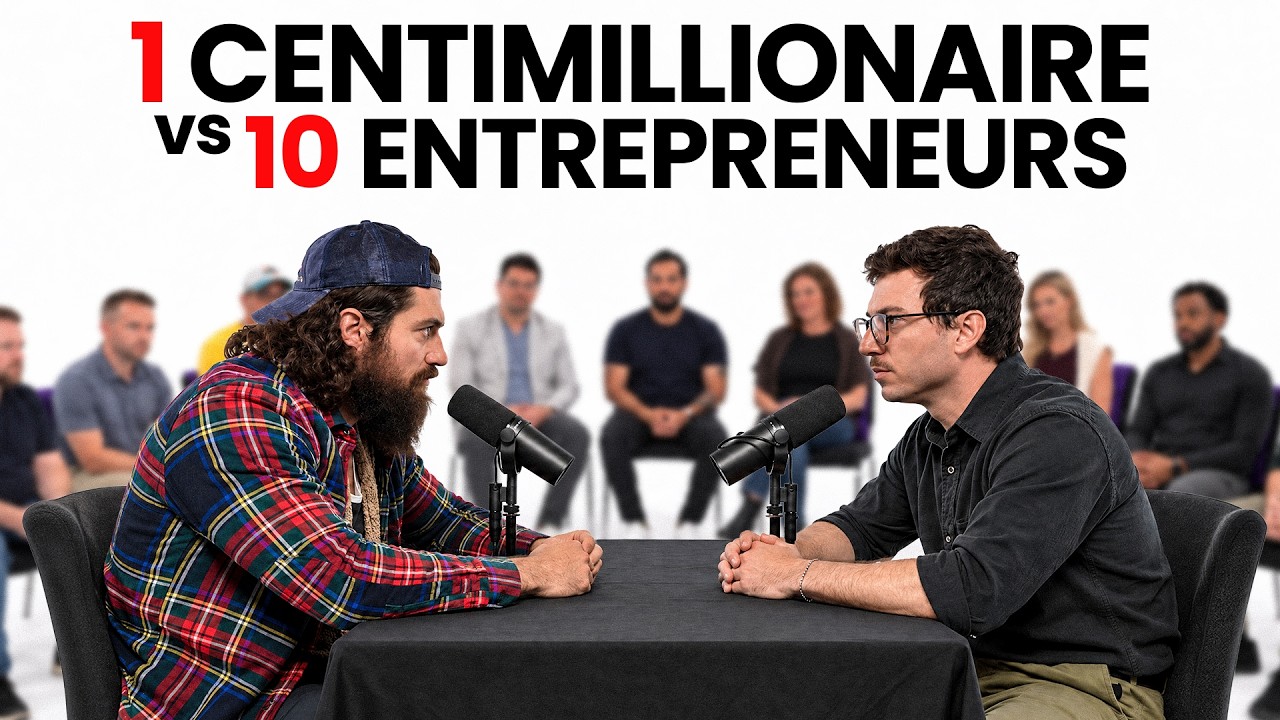
Alex Hormozi staged the fight anyway, offering $10,000 to any entrepreneur who could change his mind, and I think he proved both his point and its limits. Hormozi, who said he has spent 14 years building, scaled 10 businesses past $10 million and three past $100 million a year and now runs Acquisition.com at $250 million in aggregate revenue last year, invited founders to challenge his maxims one by one.
The sharpest exchange came on weekends.
A mother challenged his line that you do not need a weekend, arguing parenthood changes the math. Hormozi said he and Leila plan to shift schedules after kids, working roughly 5 a.m. to 2 p.m. for him while she takes more time off, but he kept the core claim. The person with the same skill who works more gets 104 more work days per year, he argued, and he framed the pushback as resistance to what he called self-care maxing that has softened a generation. He also argued the weekend itself is only about 100 years old, a Henry Ford invention for productivity, and that rest is productive but not the same as a weekend. It is a trade he wants founders to name plainly.
Hiring drew the next real fight. One founder said early-stage companies cannot afford A players and that hiring them too early can damage relationships and burn cash. Hormozi clarified his rule: cut three B players to hire one A player, then pay that A player what you would have paid two B players and you will save more and make more. A players are horizontal as well as vertical, he said, an A cashier is better than other cashiers, not a CEO in a cashier role, and the line he repeated was pay better people better and it will cost you less than paying poor people poorly. For a hiring manager staring at payroll, the budget move is not to add headcount but to consolidate it.
The pricing argument was just as concrete. A founder who has worked in low-income housing and building repair argued it is irrelevant where the money comes from, it could come from the Pope or from elsewhere, because subsidies and laws create markets serving people with less money. Hormozi countered that the money still originates with the wealthy, often via taxes, and that regulated markets do not behave like free ones. He pointed to a friend who makes serious money selling used cars with high-interest loans to lower-income buyers, a low-cost leader play that only works with high volume and heavy upfront capital. His advice to most founders was to avoid being underpriced and trying to sell to everyone and instead pick avatars with the most gross profit. In healthcare and insurance, he conceded, referrals and buy-ups later can justify serving less affluent channels, but his default remains to optimize for net impact: maximize profit while in money-making mode, then use that cash to help broadly.
Two debate threads circled decision making. One founder said options have value while stored, using a dinner choice as proof that options help you focus. Hormozi agreed an option must exist before you can select, but warned against collecting options forever and never trading. Another founder pushed failing fast over going all in. Hormozi said bet sizing matters, but more people, in his view, suffer from never betting at all than from betting too big, and the required level of all-in depends on the outcome you want. Becoming a trillionaire demands total commitment, he said, a decamillionaire path may not.
Craft versus game drew out his longer thesis. A challenger asked if Hormozi would have worked as hard as a CPA as he did in gyms, and noted that 95% of people at workshops say they want to sell their business, which suggests they love the game, not the craft. Hormozi said his drive came from fear of failing, not the vertical, and that entrepreneurs cycle through stages. Missionaries who stay with a craft on a long horizon ultimately make the most money, he argued, citing Sam Altman on patience as a last mode and Naval on favoring product over marketing or sales. The product is the core of the game, he said, and brands like Apple or Patagonia endure because the craft was never secondary.
Execution versus information got a stark test. A founder said emerging markets sometimes lack guidance and that learning fundraising earlier would have changed his company. Hormozi agreed information can matter at the edge, but said most operators know what to do and do not do it, offering a brutal thought experiment: if your team and parents were kidnapped and you had 90 days to double the business to save them, you would find a way, which suggests a lack of priorities, not information.
The talent mirror was blunt. A structural engineer with 26 years in business said he learned by hiring badly. Hormozi said that proves the premise. Uncomfortable truth, if your employees are mediocre, you probably are too. He argued the founder was mediocre early and hired accordingly, then improved and hired better, and he urged founders to benchmark against peers in the same space who scaled faster to gauge their own skill.
The daily brief
Get the free daily brief with the day's AI news, new AI startups and funding rounds every morning.
Join 11,990 subscribers.
Work-life balance finally broke the never. A founder came to win the $10,000 by citing Yvon Chouinard, who built Patagonia while writing Let My People Go Surfing and taking long time off, and S. Truett Cathy, who built Chick-fil-A while closing every Sunday for family and worship. Hormozi said Chouinard was a good counter and an exception, and conceded the never in his post was inaccurate. His broader claim held, he said, that most people who chase work-life balance and a massive outcome end up with neither, and that much of his posting targets the laptop lifestyle pitch that sells the dream without the price. His alternative scoreboard is to define your own game and play one whose prize you actually want.
Productivity lore got a brief parry. A founder invoked sharpening the axe, saying a weekend makes you sharper Monday. Hormozi agreed rest is productive, but said sharpening the axe is still work, and his point stands on the weekend as a specific construct.
The last warning was about profit. A founder called profit overrated, saying the biggest opportunities hide in the mud with hard-to-see profits early, and that short-term profit focus can kill long-term upside. Hormozi reframed as long-term profit maximization and separated a story of profitability from the reality of it. He pushes for high gross profit and the ability to generate cash flow, with a clear return on invested capital thesis before reinvesting, not reinvestment as a euphemism for no margin. Thin margins without compounding growth, he said, is just an unprofitable business with a narrative.
Hormozi split the $10,000 between two winners, which tells you where he bent. One won for producing a real work-life balance counterexample that countered the never, the other for reminding him that the vast majority of his audience is already trying to be exceptional and does not need hyper-aggression, a useful check on his default tone. He called it the first ever one of these.
Concession granted, the entrepreneur who tries to serve everyone, hire cheap, and keep perfect balance will pay for it in payroll, pricing, and calendar. Founders building for venture-scale outcomes should budget for fewer, better hires, price for gross profit on a narrow avatar, and decide the weekend trade explicitly. If your shop is regulated or volume-led, the rules shift, but you still need the cash engine first.
If you asked me whether to take the weekend, I would ask what game you are playing, and whether you are willing to pay the other price.



