
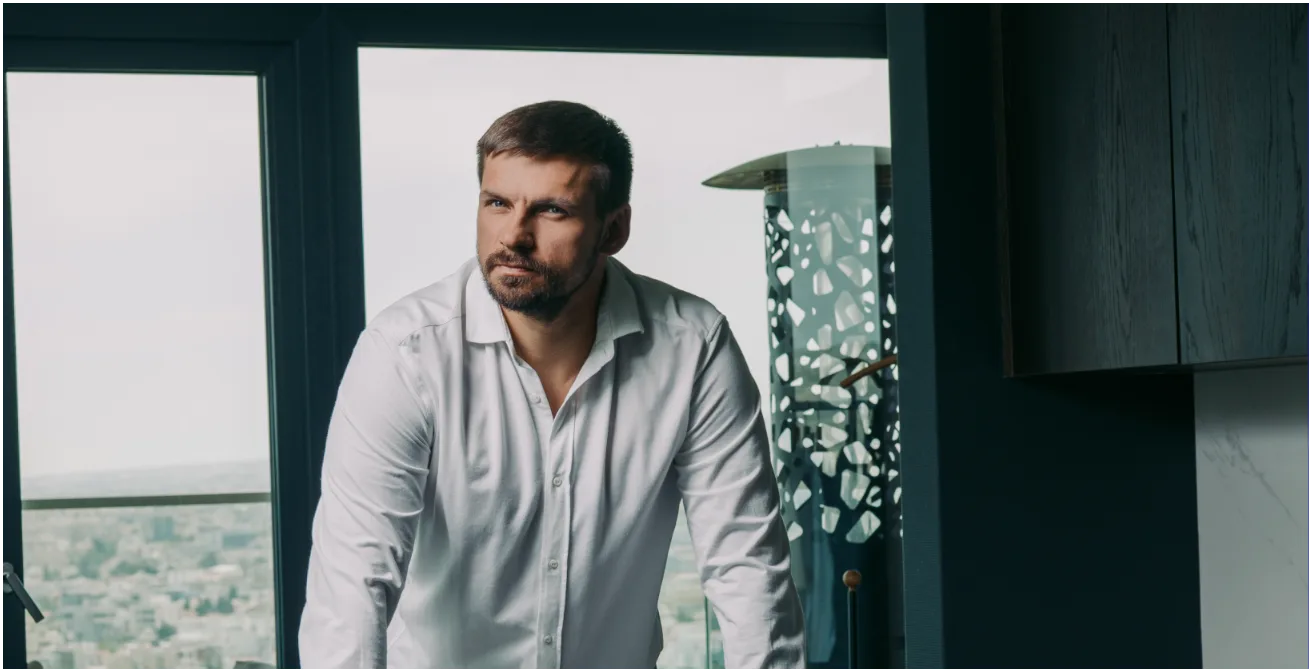
Sergey Portnov does not need to work again. He spent 15 years turning Parimatch from a chain of betting shops into an online brand in 20-plus countries, so he can afford to do something small.
Portnov joined as marketing director in 2011 and took over as CEO in 2013. He rebuilt it from an offline bookmaker into an online platform, brought in ambassadors like McGregor and Tyson, and eventually became owner and chairman. Now he is stepping back from operational management as the company finalizes deals with local operating partners.
His next company is SP Ventures. He will run it as founder and chairman.
It does not charge advisory fees. It takes equity and earns it by working inside: sweat equity. Capital plus hands-on strategy plus operators who have actually scaled before. Portnov's line is simple: money is the easy part, judgment and a network that picks up the phone is not.
It is not a new model. In the startup market we have now, it has never been more relevant.
The daily brief
Get the free daily brief with the day's AI news, new AI startups and funding rounds every morning.
Join 64,000 other subscribers.
The VC numbers that make this pitch land
On paper, VC in 2026 looks insane. NVCA put 2025 deployment at $320 billion, with AI taking 65.4% of it. That number is misleading if you do not split it out.
Q1 2026 was the same pattern, only louder. US VC totaled $267 billion, and the five largest deals took about 73% of it. OpenAI's $122 billion financing sat at the front of that list, with Anthropic, xAI, Waymo and Databricks filling out the rest. If you are not building a foundation model, you felt a contraction, not a boom.
Then there is the exit problem. There are 859 unicorns valued at $4.3 trillion, but only 30 to 40 actually exited last year. Exits totaled $217 billion across 1,463 deals, double 2024, and still nowhere near enough to clear the backlog.
That is why LPs cooled on backing new names. Traditional fundraising was $67 billion across 585 funds. The top ten took $22 billion, or 33%, up 2.5 times from 13% in 2021. First-time fund formation collapsed to 101 funds, the lowest since 2007 and down 78% from 2021.
Founders found another way out: secondaries. Selling existing shares for liquidity hit over $100 billion, rivaling IPO and M&A volumes.
So you have cash concentrated at the very top, no exit at the bottom, and a founder in the middle who does not want more dilution for another generic check.
Sweat equity, applied outside SaaS
That is the opening wedge. Dan Portillo did it first with Sweat Equity Ventures, a firm that does not lead with funding because capital is commoditized. It works for equity instead. He raised $30 million and spent it on engineers and operators who embed with portfolio companies. The pitch: we accrue our stake in common stock, so we align with founders more than a preferred check does. Venture has become capital plus what. They focus on the plus what.
SP Ventures is that model applied outside pure SaaS. The first portfolio deal is Trinity Private School in Cyprus. Education as a core bet, not a side project. The firm sits at sp.ventures.
For Portnov, who actually operated through regulation, internationalization and a full tech rebuild, it is a more credible pitch than most operator funds. The question is whether founders will trade equity for work, not just money. In this market, a lot of them might.



