
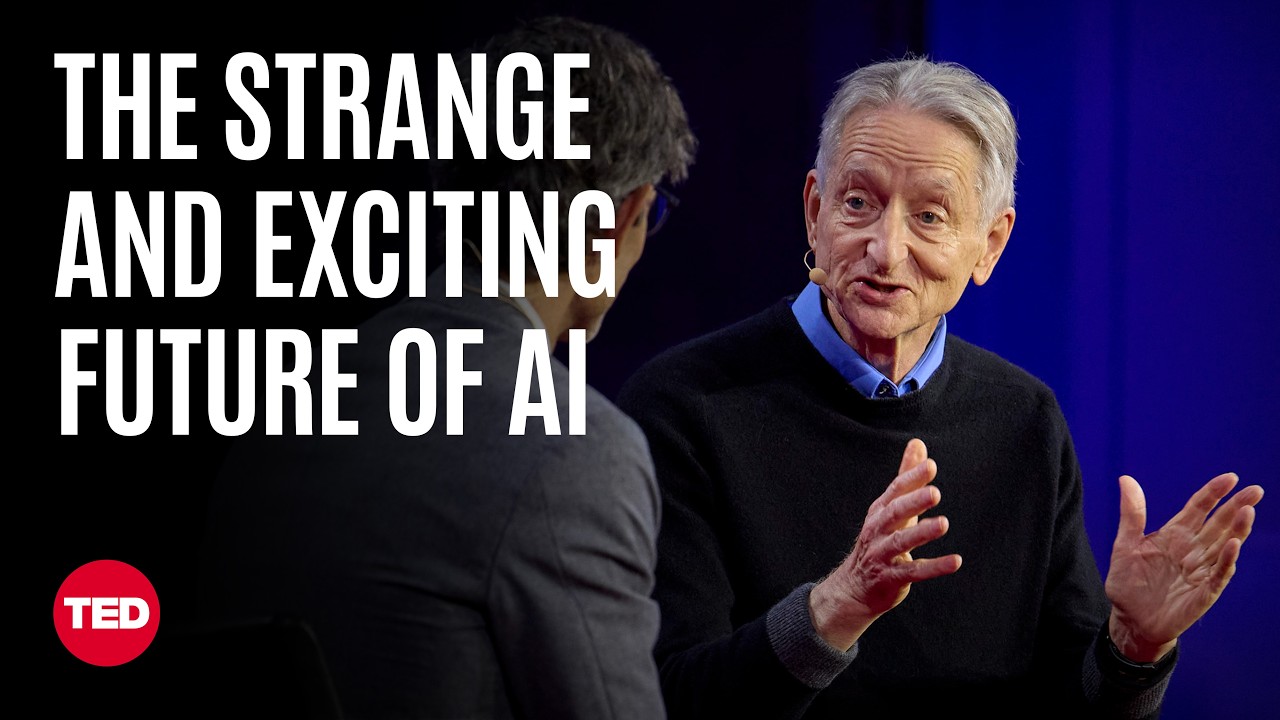
Geoffrey Hinton told TED that AI takeover is only one risk, alongside remote misuse for cyber attacks, engineered viruses and fake videos to corrupt elections, plus chatbot failures and job loss. No local access is needed in his threat model, only access to capable models and agents.
The obvious reading is that the risk hierarchy is now settled and labs should pivot to making models kinder. I do not buy the sequence. The warnings are vivid and the mechanisms are still missing.
Hinton said it would be irresponsible not to warn if wipeout is possible, after the host said Jensen Huang had dismissed talk of a 10% risk of humanity being wiped out as irresponsible in an interview two weeks ago, per TED. Hinton rejected the claim that the risk is zero by 2030 and defended his record, saying he correctly called neural nets over symbolic AI 50 years ago and told 1,000 researchers at NeurIPS in 2009 to buy NVIDIA chips, a call he said Huang did not make until 2012. He owns the failed call that radiologists would be gone by now, which he said was an offhand hospital lecture joke that went viral. What is missing is any agreed probability, and Hinton offers none.
His most honest line is about interpretability. Hinton said after 50 years studying weights he doubts we will ever fully predict why a model gives one answer, because it depends on a trillion weights, and he said models are developing faster than understanding at places like Anthropic. That work, he said, can link an answer to a few training examples but not explain the full process. For that to support a safety case, interpretability would have to improve faster than scale. It has not.
To be fair, he states the industry claim clearly before he attacks it. Many people say systems do not understand what they say, and Hinton said that is crazy because they can answer any question asked. I concede the demos look like understanding. His leap from there to subjective experience is unproven, built on pink elephants seen on LSD as counterfactual world states and a prism thought experiment with a robot arm. His one sentence rule for superintelligence was, "Be nice to people," Hinton said, on the theory that smarter and kinder are orthogonal and the US and China could collaborate on kindness. Separately from TED, he fears a Chernobyl-like AI disaster late this year or next year that could paralyze power and banking, reported by Barlekha Today and not detailed on stage.
If you are building agents, assume remote misuse on day one and prove kindness before you claim scale.




