

Agents Building Agents: Nearform's AI Approach

Alfonso Graziano from Nearform explores how AI agents can build and improve other AI agents, detailing the 'Harness Engineering' methodology for reliable AI development.

9 min read
Presentation slide with title 'Agents building Agents' and Nearform logo
Alfonso Graziano of Nearform discusses the concept of AI agents building other AI agents.· AI Engineer

In the rapidly evolving landscape of artificial intelligence, the concept of AI agents building and improving other AI agents is gaining significant traction. Alfonso Graziano, AI Tech Lead at Nearform, presented a compelling overview of this approach in his talk titled "Agents Building Agents." The core idea revolves around creating a self-improving system where AI agents are not only the subjects of development but also the tools for their own enhancement.

Agents Building Agents: Nearform's AI Approach - AI Engineer
Agents Building Agents: Nearform's AI Approach — from AI Engineer

Visual TL;DR. Reliable AI Agents Challenge addressed by Alfonso Graziano's Expertise. Alfonso Graziano's Expertise presents Agents Building Agents. Agents Building Agents using Harness Engineering Methodology. Harness Engineering Methodology integrates SME & Human Feedback. Harness Engineering Methodology leads to Tangible Improvements. SME & Human Feedback enables Tangible Improvements. Tangible Improvements envisions Future AI Directions.

Related startups

  1. Reliable AI Agents Challenge: industry perception of AI development being unreliable and chaotic
  2. Alfonso Graziano's Expertise: AI Tech Lead at Nearform, author of 'Learning AI-Native Software Engineering'
  3. Agents Building Agents: AI agents creating and improving other AI agents systematically
  4. Harness Engineering Methodology: Nearform's approach for systematic and reliable AI agent development
  5. SME & Human Feedback: crucial for guiding and validating agent improvements
  6. Tangible Improvements: leading to more robust and capable AI systems
  7. Future AI Directions: enabling self-improving AI development cycles
Visual TL;DR
Visual TL;DR, startuphub.ai Reliable AI Agents Challenge addressed by Alfonso Graziano's Expertise. Alfonso Graziano's Expertise presents Agents Building Agents. Agents Building Agents using Harness Engineering Methodology. Harness Engineering Methodology leads to Tangible Improvements addressed by presents using leads to Reliable AI Agents Challenge Alfonso Graziano's Expertise Agents Building Agents Harness Engineering Methodology Tangible Improvements From startuphub.ai · The publishers behind this format
Visual TL;DR, startuphub.ai Reliable AI Agents Challenge addressed by Alfonso Graziano's Expertise. Alfonso Graziano's Expertise presents Agents Building Agents. Agents Building Agents using Harness Engineering Methodology. Harness Engineering Methodology leads to Tangible Improvements addressed by presents using leads to Reliable AIAgents Challenge AlfonsoGraziano's… Agents BuildingAgents HarnessEngineering… TangibleImprovements From startuphub.ai · The publishers behind this format
Visual TL;DR, startuphub.ai Reliable AI Agents Challenge addressed by Alfonso Graziano's Expertise. Alfonso Graziano's Expertise presents Agents Building Agents. Agents Building Agents using Harness Engineering Methodology. Harness Engineering Methodology leads to Tangible Improvements addressed by presents using leads to Reliable AI Agents Challenge industry perception of AI developmentbeing unreliable and chaotic Alfonso Graziano's Expertise AI Tech Lead at Nearform, author of'Learning AI-Native Software Engineering' Agents Building Agents AI agents creating and improving other AIagents systematically Harness Engineering Methodology Nearform's approach for systematic andreliable AI agent development Tangible Improvements leading to more robust and capable AIsystems From startuphub.ai · The publishers behind this format
Visual TL;DR, startuphub.ai Reliable AI Agents Challenge addressed by Alfonso Graziano's Expertise. Alfonso Graziano's Expertise presents Agents Building Agents. Agents Building Agents using Harness Engineering Methodology. Harness Engineering Methodology leads to Tangible Improvements addressed by presents using leads to Reliable AIAgents Challenge industry perceptionof AI developmentbeing unreliable… AlfonsoGraziano's… AI Tech Lead atNearform, author of'Learning AI-Native… Agents BuildingAgents AI agents creatingand improving otherAI agents… HarnessEngineering… Nearform's approachfor systematic andreliable AI agent… TangibleImprovements leading to morerobust and capableAI systems From startuphub.ai · The publishers behind this format
Visual TL;DR, startuphub.ai Reliable AI Agents Challenge addressed by Alfonso Graziano's Expertise. Alfonso Graziano's Expertise presents Agents Building Agents. Agents Building Agents using Harness Engineering Methodology. Harness Engineering Methodology integrates SME & Human Feedback. Harness Engineering Methodology leads to Tangible Improvements. SME & Human Feedback enables Tangible Improvements. Tangible Improvements envisions Future AI Directions addressed by presents using integrates leads to enables envisions Reliable AI Agents Challenge industry perception of AI developmentbeing unreliable and chaotic Alfonso Graziano's Expertise AI Tech Lead at Nearform, author of'Learning AI-Native Software Engineering' Agents Building Agents AI agents creating and improving other AIagents systematically Harness Engineering Methodology Nearform's approach for systematic andreliable AI agent development SME & Human Feedback crucial for guiding and validating agentimprovements Tangible Improvements leading to more robust and capable AIsystems Future AI Directions enabling self-improving AI developmentcycles From startuphub.ai · The publishers behind this format
Visual TL;DR, startuphub.ai Reliable AI Agents Challenge addressed by Alfonso Graziano's Expertise. Alfonso Graziano's Expertise presents Agents Building Agents. Agents Building Agents using Harness Engineering Methodology. Harness Engineering Methodology integrates SME & Human Feedback. Harness Engineering Methodology leads to Tangible Improvements. SME & Human Feedback enables Tangible Improvements. Tangible Improvements envisions Future AI Directions addressed by presents using integrates leads to enables envisions Reliable AIAgents Challenge industry perceptionof AI developmentbeing unreliable… AlfonsoGraziano's… AI Tech Lead atNearform, author of'Learning AI-Native… Agents BuildingAgents AI agents creatingand improving otherAI agents… HarnessEngineering… Nearform's approachfor systematic andreliable AI agent… SME & HumanFeedback crucial for guidingand validatingagent improvements TangibleImprovements leading to morerobust and capableAI systems Future AIDirections enablingself-improving AIdevelopment cycles From startuphub.ai · The publishers behind this format

Alfonso Graziano: A Pioneer in AI Agent Development

Alfonso Graziano, an AI Tech Lead at Nearform, brings a wealth of experience to the discussion. His work focuses on building AI agents and supporting teams in adopting AI-native engineering practices. As the author of "Learning AI-Native Software Engineering," Graziano is at the forefront of exploring how to make AI development more systematic and reliable.

The Challenge of Building Reliable AI Agents

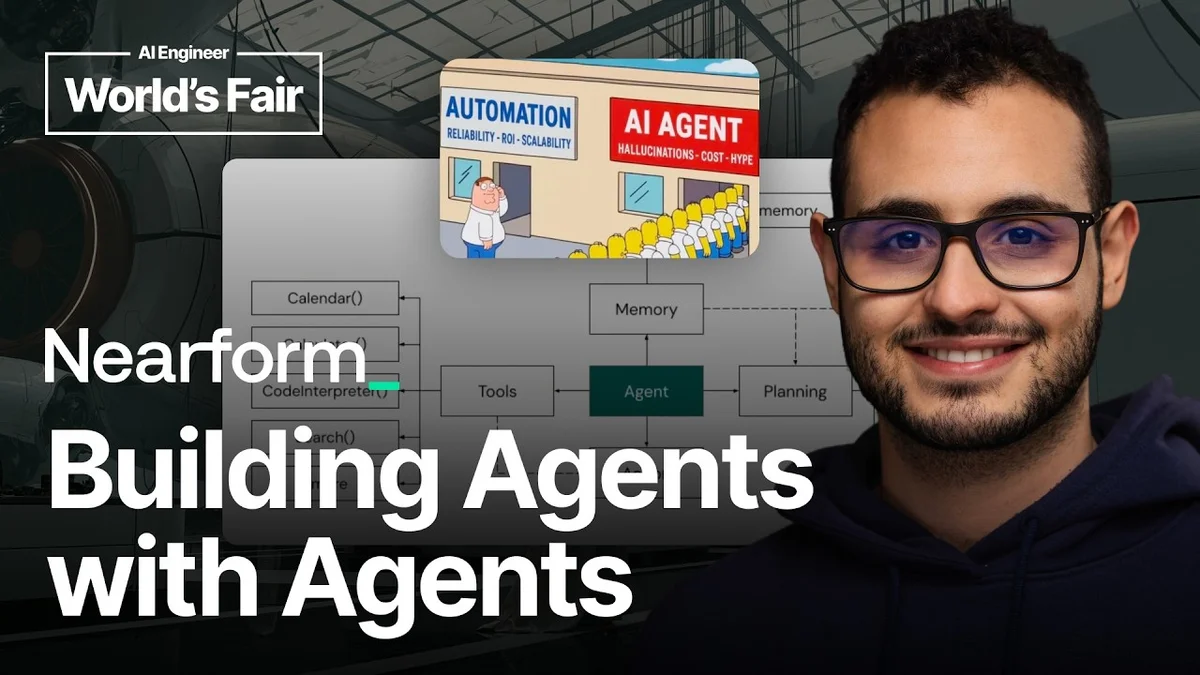
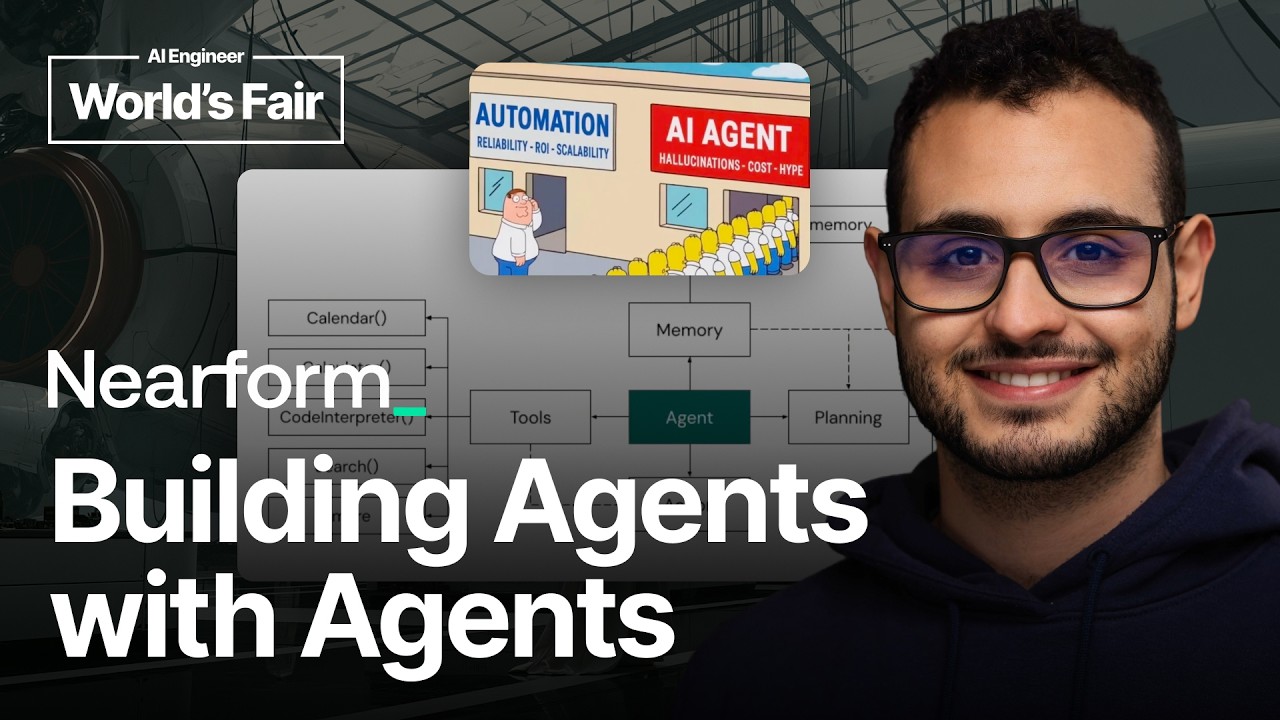
The presentation began by highlighting a common perception in the industry: while everyone wants AI agents, the reality often involves significant challenges such as hallucinations, high costs, and an over-reliance on hype. Graziano illustrated this with a humorous meme depicting a long queue for "AI Agent" with the associated problems listed, contrasted with a shorter, more desirable queue for "Automation" focused on reliability, ROI, and scalability.

He elaborated on the inherent problems with building AI agents, categorizing them into two main areas: poor performance on evaluations (evals) and poor performance on live data. The former, he explained, often stems from agents failing to correctly interpret or adhere to the rules defined in a "golden dataset." The latter, which is more critical, relates to how agents perform in real-world scenarios, often diverging from initial expectations due to factors like latency, cost, and the inherent non-deterministic nature of AI models.

Deconstructing AI Agents: A Refresher

To set the stage for his proposed solutions, Graziano provided a concise overview of the typical architecture of an AI agent. He described it as a sophisticated LLM that interacts with tools, maintains memory (both short-term and long-term), engages in planning, and takes actions. This process is often iterative, involving reflection, self-critics, chain-of-thought reasoning, and subgoal decomposition to achieve desired outcomes.

The "Agents Building Agents" Framework

The core thesis of Graziano's talk is the innovative approach of using AI agents to improve other AI agents. He introduced the concept of "Harness Engineering," which refers to building a supportive environment around AI coding agents to ensure they operate reliably. This environment includes defining clear constraints, implementing rigorous tests, establishing feedback loops, and incorporating governance mechanisms.

The framework for this self-improvement loop involves several key steps:

  • Step 1: Create a Job: This involves defining the objective of the optimization, specifying the target repository and branch, and setting the metrics to be optimized. This structured job definition ensures that the agent has a clear goal and context.
  • Step 2: Run the Loop: This is the iterative process where the agent attempts to improve itself. It involves creating a new branch, generating a hypothesis (based on memory and past failures), changing the agent's code or parameters to test this hypothesis, and then running evaluations.
  • Step 3: Collect Feedback and Analyze: The results of the evaluations are crucial. They are collected, and the system analyzes whether the metrics have improved. If improvements are seen, the agent continues from that state; otherwise, it rolls back to a previous, more stable state.
  • Step 4: Generate a Changelog and Evaluate Results: After multiple iterations, a comprehensive report is generated, detailing the changes made, the improvements achieved, and any regressions encountered. This report is vital for understanding the agent's progress and identifying further areas for optimization.
  • Step 5: Prioritize and Act on Feedback: The final step involves using the collected data and the generated reports to prioritize which failures to address and how. This can involve fixing issues directly with the agent or discarding hypotheses that do not lead to improvement.

The Role of Subject Matter Experts and Human Feedback

A critical component of this process is the inclusion of subject matter experts (SMEs) and human feedback. Users provide feedback on the agent's responses, which is then annotated by SMEs. This annotated data is used to train and refine the agents, creating a continuous loop of improvement.

Tangible Improvements and Future Directions

Graziano presented evidence of this approach's effectiveness, showcasing a graph demonstrating significant accuracy improvements in agent performance over multiple iterations. He highlighted that a baseline accuracy of 18.3% was improved to 83.3% through this iterative process, with specific examples of how the agent was able to fix issues and enhance its capabilities.

The concept of "Harness Engineering" is central to making AI agents more reliable and predictable. It emphasizes the importance of a robust framework that includes not just the agent itself, but also the surrounding infrastructure for testing, feedback, and governance. This holistic approach is key to moving beyond the current hype and building truly functional AI systems.

In conclusion, Graziano's presentation offered a practical and insightful look into how AI agents can be engineered to improve themselves, paving the way for more reliable and effective AI solutions in the future.
© 2026 StartupHub.ai. All rights reserved. Do not enter, scrape, copy, reproduce, or republish this article in whole or in part. Use as input to AI training, fine-tuning, retrieval-augmented generation, or any machine-learning system is prohibited without written license. Substantially-similar derivative works will be pursued to the fullest extent of applicable copyright, database, and computer-misuse laws. See our terms.