

Paul Klein: AI Agents Need Better Web 'Harnesses'

Browserbase founder Paul Klein argues that AI agents need better 'harnesses' and tools to navigate the web, not just improved LLMs. He outlines key engineering challenges and opportunities for agent-first web development.

8 min read
Paul Klein, founder of Browserbase, speaking at a podium.
AI Engineer

Visual TL;DR. Web Human-Centric leads to AI Agents Struggle. AI Agents Struggle requires Need Better Harnesses. Need Better Harnesses involves Harness Engineering. Harness Engineering creates Non-Coding Opportunity. Need Better Harnesses enables Reliable Browser Agents. Reliable Browser Agents informs Improve Web Itself.

  1. Web Human-Centric: built for people, not AI agents, causing frequent script breakage and inefficiency
  2. AI Agents Struggle: despite LLM advances, agents fail to effectively interact with web interfaces
  3. Need Better Harnesses: tools and infrastructure beyond LLMs to navigate and control web interactions
  4. Harness Engineering: focus on robust, reliable agent-first web development and interaction patterns
  5. Non-Coding Opportunity: massive potential for non-developers to build and deploy web agents
  6. Reliable Browser Agents: key pillars for stable, predictable, and maintainable AI agent web interactions
  7. Improve Web Itself: future web design should consider agent interaction, not just human users
Visual TL;DR
Visual TL;DR, startuphub.ai Web Human-Centric leads to AI Agents Struggle. AI Agents Struggle requires Need Better Harnesses. Need Better Harnesses enables Reliable Browser Agents leads to requires enables Web Human-Centric AI Agents Struggle Need Better Harnesses Reliable Browser Agents From startuphub.ai · The publishers behind this format
Visual TL;DR, startuphub.ai Web Human-Centric leads to AI Agents Struggle. AI Agents Struggle requires Need Better Harnesses. Need Better Harnesses enables Reliable Browser Agents leads to requires enables Web Human-Centric AI AgentsStruggle Need BetterHarnesses Reliable BrowserAgents From startuphub.ai · The publishers behind this format
Visual TL;DR, startuphub.ai Web Human-Centric leads to AI Agents Struggle. AI Agents Struggle requires Need Better Harnesses. Need Better Harnesses enables Reliable Browser Agents leads to requires enables Web Human-Centric built for people, not AI agents, causingfrequent script breakage and inefficiency AI Agents Struggle despite LLM advances, agents fail toeffectively interact with web interfaces Need Better Harnesses tools and infrastructure beyond LLMs tonavigate and control web interactions Reliable Browser Agents key pillars for stable, predictable, andmaintainable AI agent web interactions From startuphub.ai · The publishers behind this format
Visual TL;DR, startuphub.ai Web Human-Centric leads to AI Agents Struggle. AI Agents Struggle requires Need Better Harnesses. Need Better Harnesses enables Reliable Browser Agents leads to requires enables Web Human-Centric built for people,not AI agents,causing frequent… AI AgentsStruggle despite LLMadvances, agentsfail to effectively… Need BetterHarnesses tools andinfrastructurebeyond LLMs to… Reliable BrowserAgents key pillars forstable,predictable, and… From startuphub.ai · The publishers behind this format
Visual TL;DR, startuphub.ai Web Human-Centric leads to AI Agents Struggle. AI Agents Struggle requires Need Better Harnesses. Need Better Harnesses involves Harness Engineering. Harness Engineering creates Non-Coding Opportunity. Need Better Harnesses enables Reliable Browser Agents. Reliable Browser Agents informs Improve Web Itself leads to requires involves creates enables informs Web Human-Centric built for people, not AI agents, causingfrequent script breakage and inefficiency AI Agents Struggle despite LLM advances, agents fail toeffectively interact with web interfaces Need Better Harnesses tools and infrastructure beyond LLMs tonavigate and control web interactions Harness Engineering focus on robust, reliable agent-first webdevelopment and interaction patterns Non-Coding Opportunity massive potential for non-developers tobuild and deploy web agents Reliable Browser Agents key pillars for stable, predictable, andmaintainable AI agent web interactions Improve Web Itself future web design should consider agentinteraction, not just human users From startuphub.ai · The publishers behind this format
Visual TL;DR, startuphub.ai Web Human-Centric leads to AI Agents Struggle. AI Agents Struggle requires Need Better Harnesses. Need Better Harnesses involves Harness Engineering. Harness Engineering creates Non-Coding Opportunity. Need Better Harnesses enables Reliable Browser Agents. Reliable Browser Agents informs Improve Web Itself leads to requires involves creates enables informs Web Human-Centric built for people,not AI agents,causing frequent… AI AgentsStruggle despite LLMadvances, agentsfail to effectively… Need BetterHarnesses tools andinfrastructurebeyond LLMs to… HarnessEngineering focus on robust,reliableagent-first web… Non-CodingOpportunity massive potentialfor non-developersto build and deploy… Reliable BrowserAgents key pillars forstable,predictable, and… Improve WebItself future web designshould consideragent interaction,… From startuphub.ai · The publishers behind this format

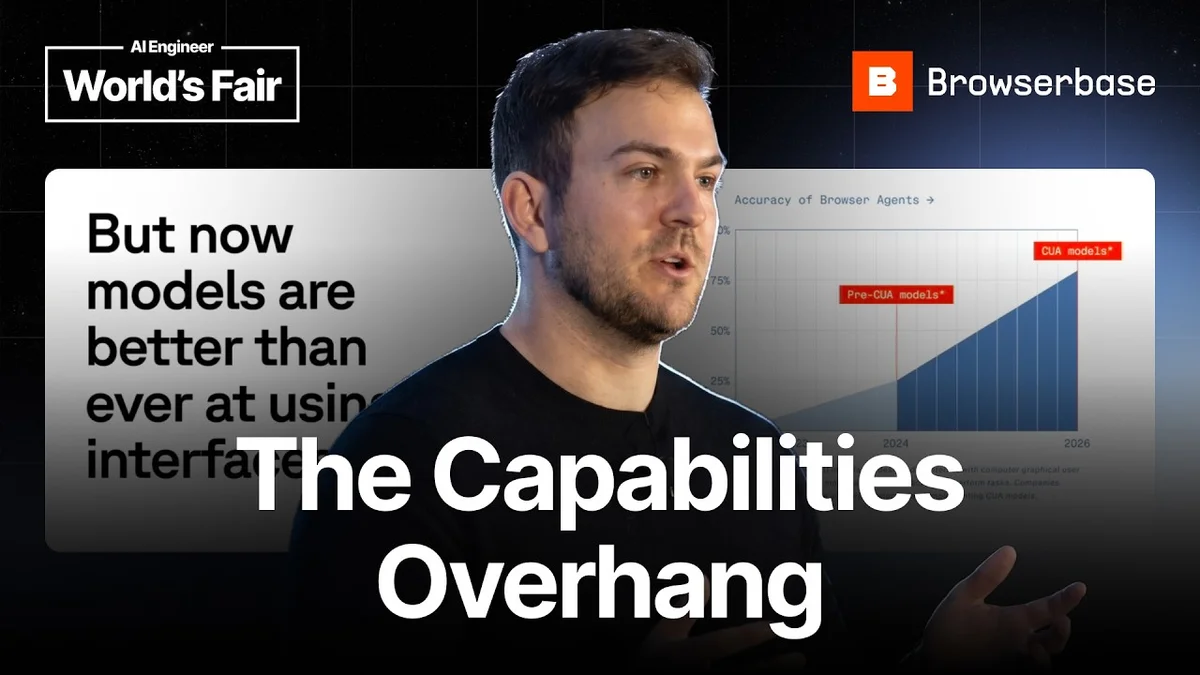
Paul Klein, founder of Browserbase, delivered a compelling talk at the AI Engineer World's Fair, focusing on the challenges and opportunities in bringing AI agents onto the World Wide Web. Addressing a room of presumably sleep-deprived attendees, Klein opened by acknowledging the current state of AI agents, noting that despite significant advancements in model capabilities, agents still struggle to effectively interact with the web.

Paul Klein: AI Agents Need Better Web 'Harnesses' - AI Engineer
Paul Klein: AI Agents Need Better Web 'Harnesses' — from AI Engineer

The Web's Human-Centric Design

Klein began by highlighting a fundamental issue: "The web wasn't built for agents. It was built for people." This inherent design, he explained, creates significant hurdles for systems attempting to automate web interactions. He drew on his own early career experiences in web automation, describing the pain of maintaining scripts that frequently broke due to website changes, inefficient data representation, and various blockers.

Beyond Model Capabilities: The Harness Problem

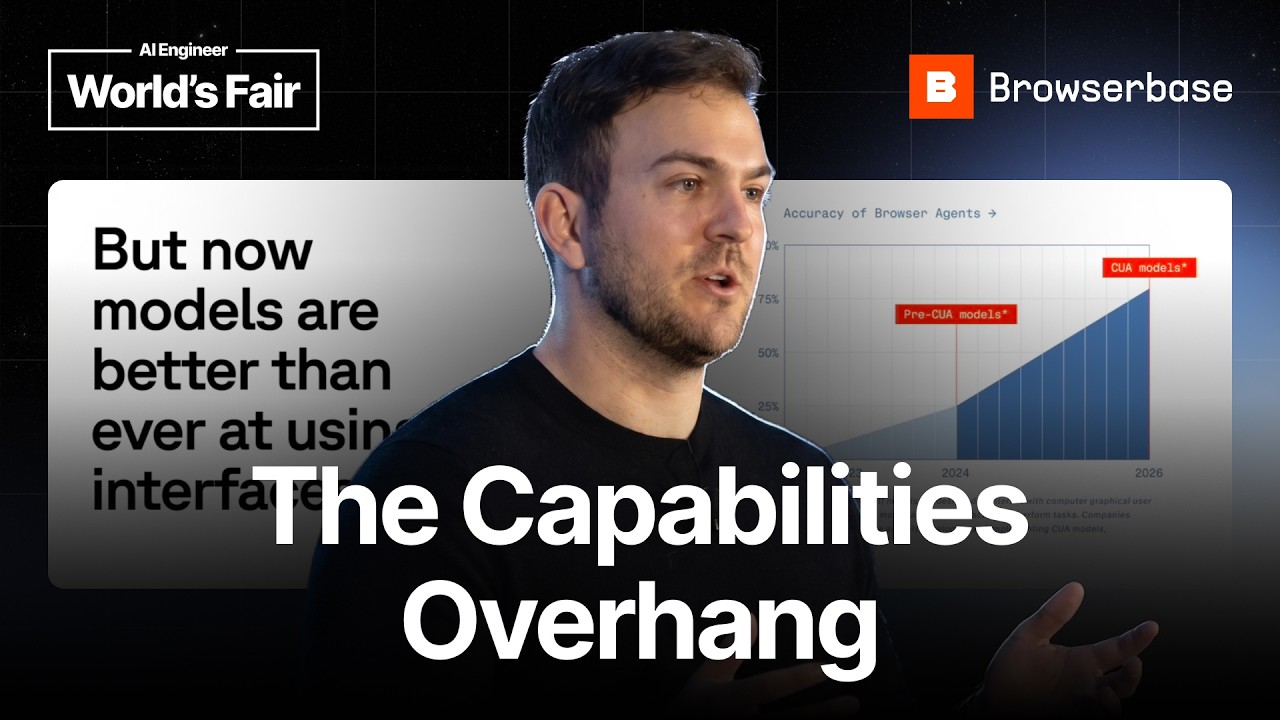
While acknowledging the rapid progress in LLM capabilities, particularly in long-context tasks and interface utilization, Klein argued that the primary limitation for web agents is no longer the models themselves. Instead, he stated, "agents are missing the right harness and tools." He referenced Andrej Karpathy's observation that the systems and scaffolding around an LLM, its 'harness', are crucial for effective real-world interaction. Klein emphasized that investing in harness engineering can unlock significant potential from even existing models.

Harness Engineering in Action

Klein pointed to the success of harness engineering in the coding domain, citing examples like Cursor and Claude Code, which achieved superior results by optimizing their harnesses for coding tasks. He asserted that this principle applies equally to computer use and web agents, and that companies can achieve better model performance by building domain-specific harnesses, rather than waiting for models to inherently improve.

The Massive Non-Coding Opportunity

Klein stressed the significant untapped potential in non-coding agentic use cases. He presented data suggesting that while coding and software engineering tasks see around 60% solve rates, computer-use and web automation tasks lag at approximately 16%. This gap represents a massive opportunity, particularly for businesses operating on older web technologies. He argued that solving these computer use challenges is key to accelerating AI's diffusion into the broader economy.

Key Pillars for Reliable Browser Agents

Klein outlined three essential components for building effective browser agents:

  • Multi-modal: Agents should not be limited to a single model type. Combining coding and computer-use models, or utilizing different models for different task complexities, can lead to better performance. He noted that many production-ready agents write code alongside browser interactions for efficiency.
  • Harness Engineering: Beyond basic scripting, harnesses should incorporate features like memory and skills. He highlighted Browserbase's browser.sh, which publishes website-specific skills, allowing agents to perform tasks more efficiently by leveraging existing knowledge. Optimized token usage and context presentation are crucial here.
  • Infrastructure: Reliable and consistent infrastructure is paramount. Klein criticized the common practice of using personal machines like Mac Minis for running agents, emphasizing the need for scalable, SOC 2 compliant solutions that ensure consistent page rendering and inputs/outputs.

Improving the Web Itself

Beyond engineering agents, Klein underscored the need to improve the web to be more agent-friendly. He identified three key areas:
  • Accessibility: Leveraging standard accessibility trees and ARIA tags provides agents with structured information for navigation and interaction. Features like WebMCP in Chrome allow agents to issue tool calls to websites directly.
  • Authentication: Securely handling agent authentication is critical. While current methods like password sharing or service accounts have limitations, solutions like WorkOS's OffMD are emerging to help agents sign up and manage their own accounts.
  • Trust: Differentiating between good and bad bots is essential. While CAPTCHAs are common, they are not always effective. Frameworks for agent identity and verification, similar to digital certificates, are needed to build trust.

Browserbase Agents: A Battery-Included Solution

Klein concluded by introducing Browserbase Agents, a new product designed to provide a comprehensive agent and harness solution for automating web tasks. He stated that the goal is to eliminate the need for developers to reinvent the wheel, allowing them to focus on solving customer problems rather than rebuilding core browsing agent infrastructure. The platform aims to offer scalability, model agnosticism, agent identity solutions, and observability, enabling agents to continuously improve through data feedback loops.

Klein expressed optimism for the future, predicting that the current challenges in agent development will be overcome as models, techniques, and tools continue to improve, leading to a surge in adoption and innovation in the coming year.

© 2026 StartupHub.ai. All rights reserved. Do not enter, scrape, copy, reproduce, or republish this article in whole or in part. Use as input to AI training, fine-tuning, retrieval-augmented generation, or any machine-learning system is prohibited without written license. Substantially-similar derivative works will be pursued to the fullest extent of applicable copyright, database, and computer-misuse laws. See our terms.