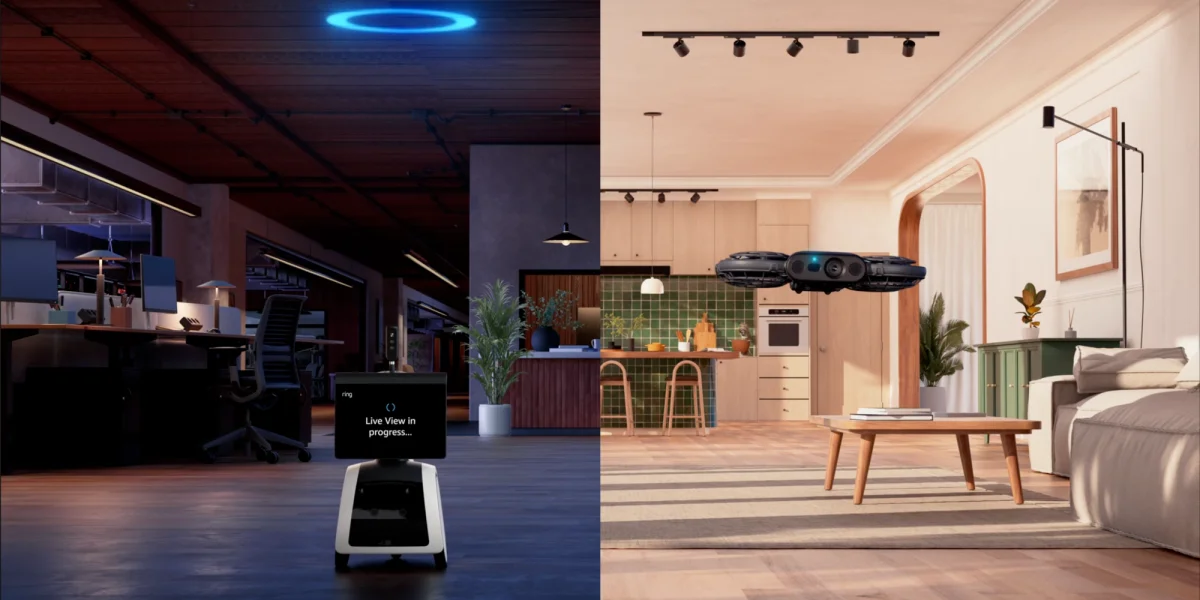
Ring says it created Ring Robotics to sell mobile security with a $249.99 flying Drone Cam and a $999.99 Rover Cam for business.
The obvious reading is that fixed cameras are dead because patrols can check anything on schedule.
I think Ring has not shown this replaces more cameras or just adds costly moving parts.
Ring says AI Pilot builds a floor plan from a walkthrough or Rover explore, suggests patrol points like doors and registers, then routes around furniture and shelving in real time.
Ring lists Drone Cam with 2K video, a 148-degree view and 360-degree spin, plus LED lights and automatic flights when alarms trip, all run from the Alexa Home Map.
Ring says Rover Cam streams up to 4K while moving, does a 360-degree scan on arrival, raises a periscope over counters, and adds a siren, light tower and two-way talk.
That integration with doorbells, cameras, sensors and alarms in one app is genuinely useful for small shops tired of five dashboards.
Ring notes patrols need a Protect plan, Rover ships December 16 2026 while Drone waits until January 27 2027, and Drone still lacks FCC authorization needed before sale.
Ring says Drone powers down with camera off in its dock, Rover Sleep Mode retracts the mast and kills the mic, and both use Throw Away the Key encryption with loud visible presence.
ZDNET calls Ring Robotics a new subbrand, not just a feature, and the timing stings because Amazon set a 12-day Black Friday clock neither robot can meet with those ship dates.
Jamie Siminoff, Ring founder and chief inventor who built the doorbell brand, argues customers wanted eyes where fixed cameras cannot reach and this required reimagining what a security device could be.
If you asked me, prove one night shift without stuck wheels, dead batteries or missed alerts before you call this proactive protection for every home.