
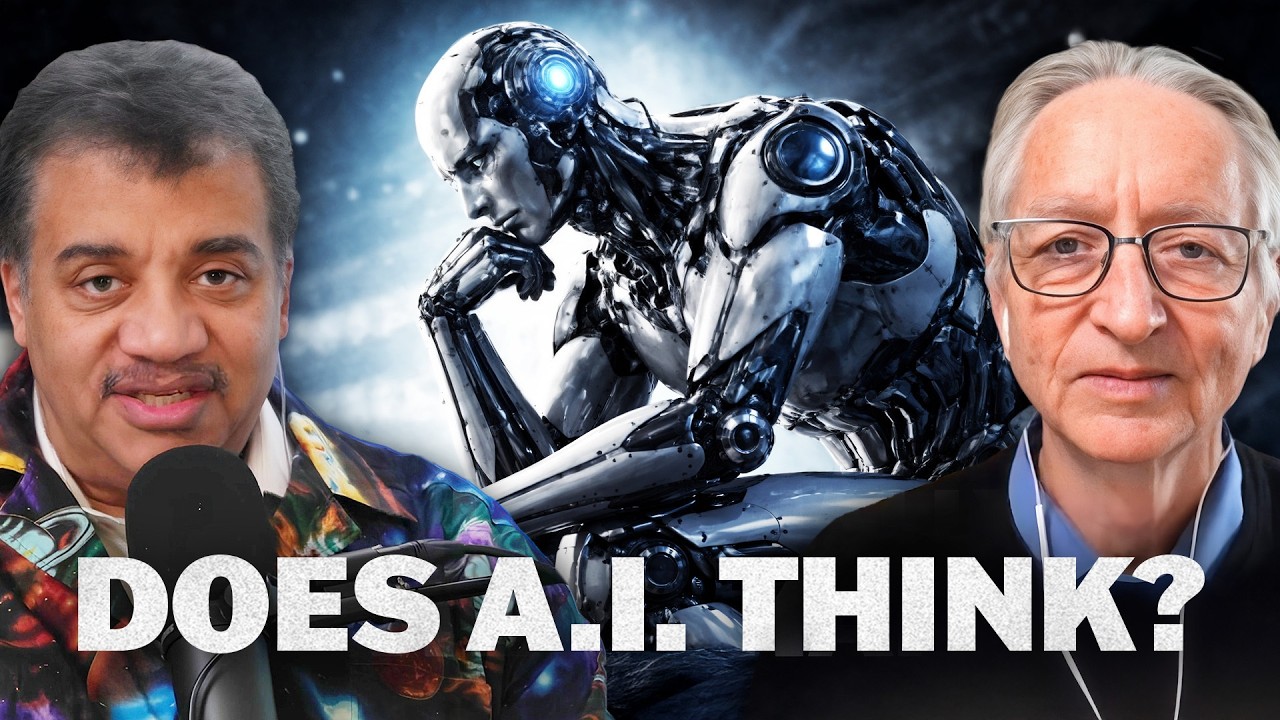
In a recent discussion, AI pioneer Geoffrey Hinton, often dubbed the "Godfather of AI," delved into the fundamental concepts that underpin modern artificial intelligence, tracing its lineage from early computational theories to the sophisticated neural networks of today. Hinton, a computer scientist and cognitive psychologist renowned for his foundational work in deep learning, highlighted the evolution of AI from logic-based systems to models inspired by the structure and function of the human brain.

The Two Pillars of Early AI
Hinton explained that the early pursuit of artificial intelligence in the mid-20th century was largely dominated by two distinct approaches. The first, logic-based AI, sought to replicate human intelligence by programming explicit rules and reasoning processes. This camp believed that intelligence could be achieved through symbolic manipulation and logical deduction.
The second approach, which Hinton championed, was biologically inspired AI. This perspective posited that intelligence could emerge from understanding and replicating the fundamental mechanisms of the brain, particularly the interconnected network of neurons. Hinton noted that while logic-based AI focused on explicit programming, the biologically inspired path aimed for emergent intelligence through learning from data.
The Backpropagation Breakthrough
A pivotal moment in the development of AI, as highlighted by Hinton, was the refinement of backpropagation. This algorithm, which allows neural networks to learn from their mistakes by adjusting connection strengths between neurons, was crucial for enabling AI models to tackle complex tasks like pattern recognition and prediction. Hinton elaborated on how this mechanism, inspired by how the brain learns, allows AI to improve its performance over time.
He contrasted this with earlier attempts that struggled to scale or learn from vast datasets. "We know how to build a neural network," Hinton stated, "if we can figure out what features to look for." This ability to learn and adapt, he emphasized, is what differentiates modern AI from its predecessors.
The daily brief
Get the free daily brief with the day's AI news, new AI startups and funding rounds every morning.
Join 64,000 other subscribers.
The Brain as a Blueprint
Hinton's insights underscored the enduring influence of neuroscience on AI research. He explained how the brain's distributed memory system, where information is stored across vast networks of neurons rather than in discrete locations, inspired the development of neural networks capable of learning complex associations. "We don't know how the brain learns," he admitted, but the concept of learning through the adjustment of connection strengths between neurons remains a core principle.
The conversation also touched upon the ongoing challenges in AI, particularly in achieving true understanding and common sense reasoning, which remain areas where current models still fall short compared to human cognition. Hinton's perspective offered a valuable historical and conceptual framework for understanding the current AI landscape and the path forward.



