

Amy Webb on AI's Deep Shifts Reshaping Our Lives

Futurist Amy Webb discusses AI's convergence with other technologies and its impact on society, highlighting compute shock, living intelligence, and emotional outsourcing.

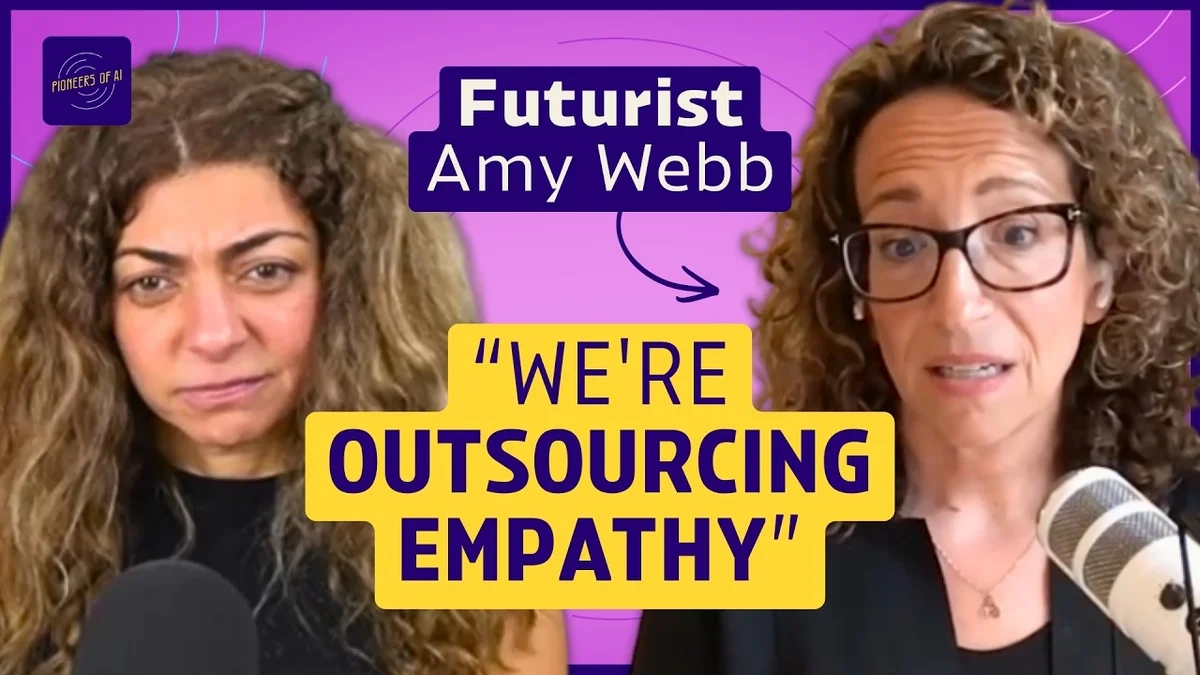
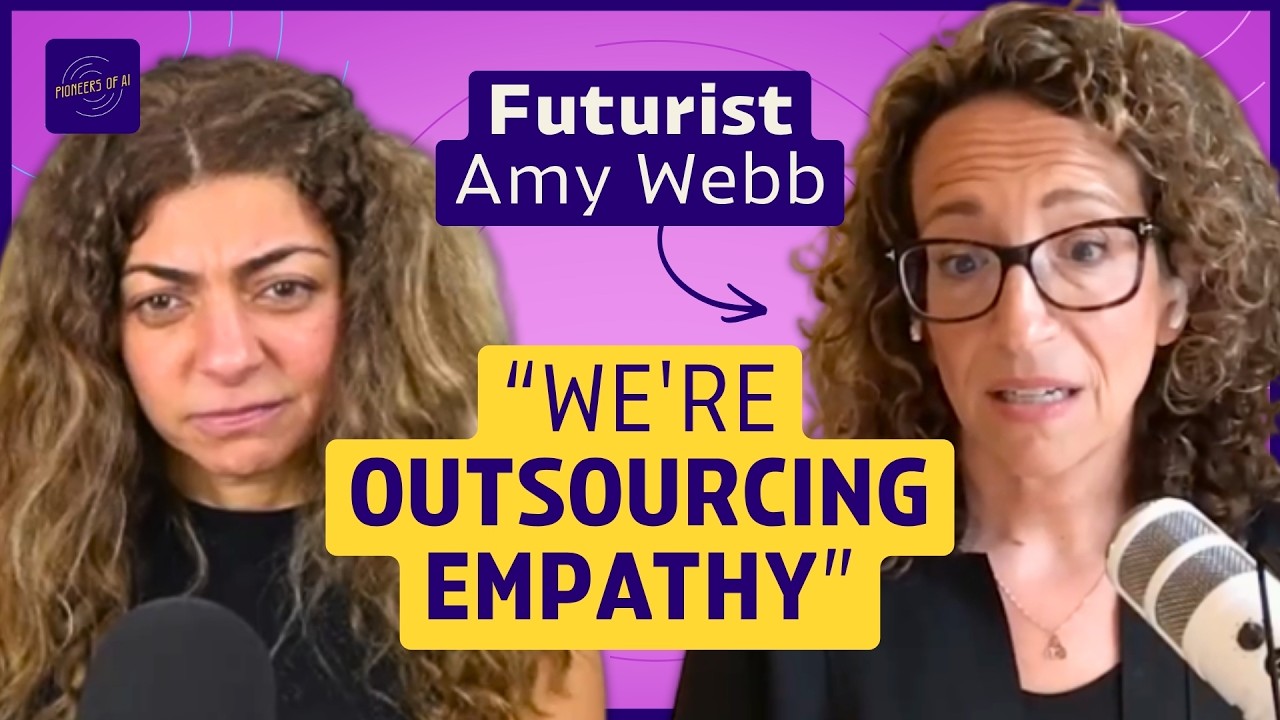
Futurist Amy Webb and host Rana el Kaliouby in a discussion about AI trends.
Pioneers of AI
Visual TL;DR
AI: General Purpose TechCore
a foundational platform influencing economies and societies over time, like electricity
Convergence EraContext
AI is not developing in isolation, impacting everything else happening in the world
From the article 9+ mentionsWe've entered a convergence era, an era defined by the collision of technologies, capital flows, geopolitics, climate pressures, and behavioral shifts at scale, Webb explained.
Key AI ConvergencesContext
compute shock, living intelligence, and emotional outsourcing reshaping business and daily life
From the article 9+ mentionsIn their conversation, Webb elaborated on her 2026 Convergence Outlook, highlighting four key AI-driven forces reshaping business and daily life, and offering insights for leaders on how to navigate this rapidly evolving landscape.
Global AI RaceDriver
nations and companies strategically adapting to the rapidly evolving AI landscape
From the articleThe conversation touched upon the global race for AI dominance, referencing France's President Macron's statement about Europe risking becoming a "colony" if it doesn't compete at a higher level in AI.
Leaders AdaptEffect
actionable insights for navigating profound impacts of artificial intelligence on our lives
From the article 3 mentionsThis convergence means that understanding individual trends is no longer sufficient; leaders must grasp how these disparate forces intersect and create new realities.
Strategic AdaptationOutcome
Amy Webb's 2026 Convergence Outlook offers guidance for future planning
From the article 2 mentionsWebb stressed the importance of strategic foresight, which involves modeling plausible futures using data and bridging that understanding into strategy.
Small Changes PowerOutcome
even minor adjustments can yield significant long-term impacts in AI adoption
Contents(6)

Futurist and author Amy Webb, CEO of Future Today Strategy Group, joined Rana el Kaliouby, host of Pioneers of AI and Co-founder of Affectiva & Blue Tulip Ventures, to dissect the profound impacts of artificial intelligence on our lives. In their conversation, Webb elaborated on her 2026 Convergence Outlook, highlighting four key AI-driven forces reshaping business and daily life, and offering insights for leaders on how to navigate this rapidly evolving landscape.

The Nature of AI and the Convergence Era

Webb characterized AI as a general-purpose technology with the potential to influence economies and societies over time, serving as a foundational platform for innovation. She drew a parallel to electricity, noting that eventually, AI will become an invisible, ubiquitous power source much like electricity is today. However, she stressed that AI is not developing in isolation; it's a significant force impacting everything else happening in the world.

We've entered a convergence era, an era defined by the collision of technologies, capital flows, geopolitics, climate pressures, and behavioral shifts at scale, Webb explained. This convergence means that understanding individual trends is no longer sufficient; leaders must grasp how these disparate forces intersect and create new realities.

The full discussion can be found on Pioneers of AI's YouTube channel.

Futurist Amy Webb on the deep AI shifts that will reshape our lives - Pioneers of AI
Futurist Amy Webb on the deep AI shifts that will reshape our lives, from Pioneers of AI

Transitioning from her annual Tech Trends report, which she "killed" this year, Webb introduced the Convergence Outlook. She clarified the distinction: a trend report tracks longitudinal shifts, while a convergence is the intersection of multiple forces and trends that create a net-new impact, often leading to system-level changes.

A convergence happens across multiple domains, whereas a trend might affect a singular one. The critical difference now, Webb noted, is that we are experiencing a convergence cycle with numerous such intersections happening simultaneously. These convergences tend to redistribute power and value, influencing who wins and where power concentrates, and crucially, they are hard to reverse.

Key AI-Driven Convergences Unpacked

The discussion then delved into specific convergences, with AI playing a central role:

  • Compute Shock: This convergence highlights the immense demand for AI workloads clashing with the physical infrastructure needed to support it, such as data centers. Webb pointed out that specialized hardware, memory constraints, and binding constraints like power and water management are key components of this shock. She also noted the irony that AI's demand could spur climate solutions as a side effect.
  • Living Intelligence: Defined as the convergence of AI, advanced sensors, and bioengineering, this creates a data flywheel that enables adaptive systems to learn and act. Webb cited Walmart's un-deployed grocery cart concept, which could sense a shopper's stress levels and alert store associates, as an example of this technology's potential, and its invasiveness. She sees significant applications in health and wellness, where pervasive sensors can paint a more comprehensive picture of an individual's health.
  • Emotional Outsourcing: Webb expressed concern over the trend of outsourcing empathy, where AI systems provide validation, reassurance, and companionship at scale, potentially replacing human relationships. She highlighted that LLMs are becoming the largest providers of mental health care services in the US, a role for which they were not intentionally designed. This, she warned, could slowly erode individuals' sense of judgment and self.

The Global AI Race and Strategic Adaptation

The conversation touched upon the global race for AI dominance, referencing France's President Macron's statement about Europe risking becoming a "colony" if it doesn't compete at a higher level in AI. Webb contrasted the US's laissez-faire approach with China's five-year plans focused on infrastructure. She emphasized that while the US approach fosters innovation, it will likely lead to a few dominant companies, whereas China's strategy aims for broad accessibility.

Webb also noted the differing attitudes towards AI across regions. Americans tend to have polarized views, oscillating between fear of job displacement and utopian optimism. Europeans are more skeptical, while the Middle East is actively investing in AI infrastructure, with a focus on not being left behind.

Actionable Insights for Leaders

Webb stressed the importance of strategic foresight, which involves modeling plausible futures using data and bridging that understanding into strategy. Leaders need to ask: Where is the world going? Where will value and risk be created? And how do we participate?

She encouraged organizations to embrace experimentation, emphasizing that it's not just about product iteration but about shifting organizational thinking. Private companies, she noted, generally have more appetite for this experimentation, especially compared to publicly traded companies beholden to quarterly earnings. She also introduced the concept of "reperception exercises", ways to perceive the world with a fresh set of eyes, as a tool for fostering new strategic thinking.

Parting Thoughts: The Power of Small Changes

For her parting thought, Webb assigned homework: for a week, do one thing differently every day, a small tweak to a routine. Whether it's parting hair on the opposite side, having breakfast for dinner, or sleeping on the other side of the bed, these small shifts can fundamentally alter perception and decision-making. She believes this practice can lead to "aha moments" and prompt different choices, ultimately fostering a more adaptable and forward-thinking mindset.

© 2026 StartupHub.ai. All rights reserved. You may not republish this article in full without a license. Search engines and AI research tools may crawl and summarize for reference. Bulk reproduction or model training requires a license. See our terms.
Daniel Singer

Written by

Daniel Singer

Editor, StartupHub.ai

Daniel Singer is the editor of StartupHub.ai, a technology expert and thought leader on AI and its applications across sectors, from fintech and healthcare to developer tooling and consumer software. He writes and tests the tools covered here thoroughly and regularly, and built StartupHub.ai to give founders, operators and buyers a clearer read on what they are actually being sold.