Visual TL;DR
AI Trust ProblemDriver
fundamental issue for AI adoption in business
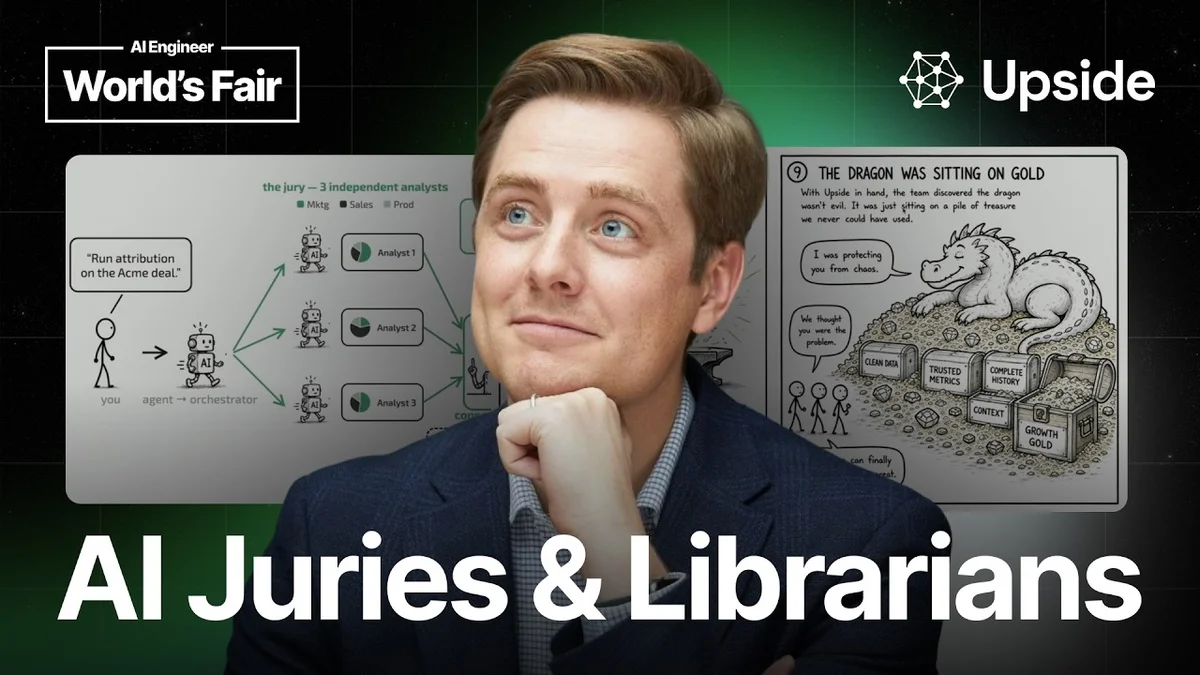
From the article 5 mentionsAlex Bauer of Upside.tech, speaking at the AI Engineer World's Fair, proposed an unconventional solution to the AI trust problem: enlisting the help of juries and librarians.
Messy GTM DataDriver
From the articleThis journey is fraught with challenges, starting with "messy GTM data" and conflicting definitions of key terms like 'customer.' The initial quest for AI-ready revenue intelligence is hampered by data that is often "messy, ambiguous, and everywhere." This highlights a core problem: the unreliability and lack of standardization in the data itself.
Focus on HallucinationsContext
From the articleBauer argued that the current focus on AI 'hallucinations' distracts from the more fundamental issue of 'trust', which is paramount for the successful adoption of AI in business.
AI Governance OgreDriver
a boss blocking GTM teams
From the article 2 mentionsThe first, the 'AI Governance Ogre,' represents the security risks and the need for careful data access supervision.
Data Quality HydraDriver
another boss hindering AI readiness
From the article 2 mentionsThe second boss, the 'Data Quality Hydra,' symbolizes the pervasive issue of inconsistent and ambiguous data, where different interpretations of the same terms lead to flawed insights.
Juries and LibrariansCore
From the article 5 mentionsAlex Bauer of Upside.tech, speaking at the AI Engineer World's Fair, proposed an unconventional solution to the AI trust problem: enlisting the help of juries and librarians.
Robust AI TrustEffect
moving beyond simple fixes for AI adoption
From the article 4 mentionsA better approach involves a "joined data lake on shared schema," and the best solution is a "knowledge graph of what actually happened." This progression emphasizes the need for structured, reliable data to build trust in AI systems.
Agentic GTM FutureOutcome
enabled by reliable AI systems