

AI Data Center Support Collapses Amid Design Concerns

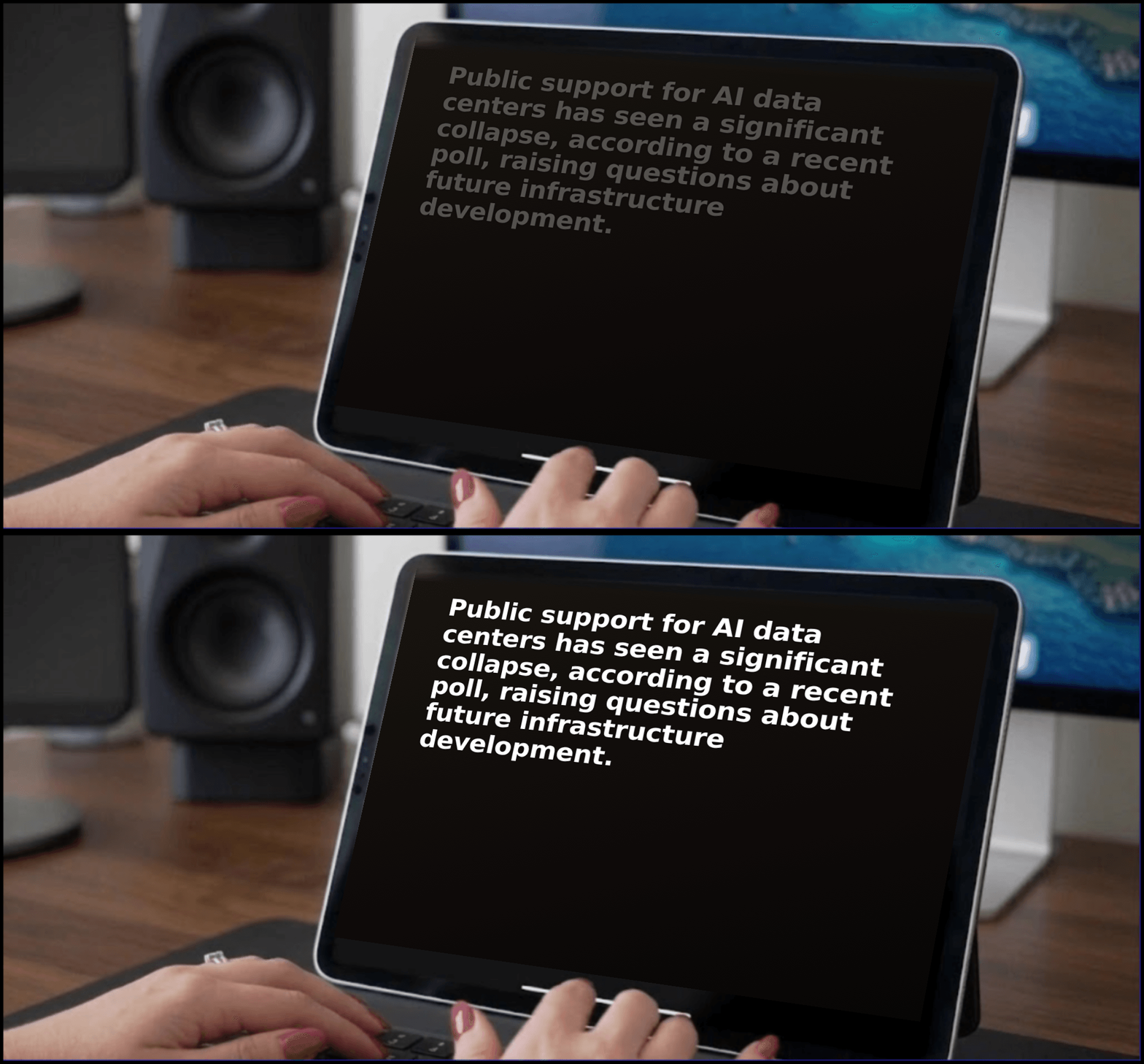
Public support for AI data centers has seen a significant collapse, according to a recent poll, raising questions about future infrastructure development. This decline coincides with discussions among leading AI organizations about engineering systems to prevent institutional capture.

AI Data Center Support Collapses Amid Design Concerns
Key Takeaways
  • 1
    Public support for AI data centers has significantly collapsed, impacting future infrastructure development.

  • 2
    The AI industry is actively discussing 'Never Again by Design' principles to prevent institutional capture in AI systems.

  • 3
    These trends will likely lead to increased scrutiny, higher costs, and a greater emphasis on ethical and transparent AI design.

A recent poll has revealed a massive collapse in public support for AI data centers, signaling a potential shift in the landscape for artificial intelligence infrastructure. This downturn in public sentiment comes at a critical juncture, as major players in the AI industry, including those associated with OpenAI and Anthropic, are actively discussing new paradigms for system design, specifically focusing on preventing institutional capture.

The findings from the poll indicate a widespread erosion of public confidence in the expansion of AI data centers. While the specific reasons for this decline are multifaceted, they broadly encompass concerns about energy consumption, environmental impact, land use, and the perceived benefits versus drawbacks for local communities. This public backlash could significantly complicate the approval and construction of new data center facilities, which are essential for powering the ever-growing demands of AI models and applications.

Simultaneously, within the AI development community, there is a growing emphasis on designing systems with inherent safeguards against institutional capture. This concept, often articulated as 'Never Again by Design,' suggests a proactive approach to engineering AI and related technologies in a way that prevents undue influence or control by a single entity, government, or powerful interest group. For instance, discussions at organizations like Anthropic are exploring how to apply these principles to critical sectors such as medicine, aiming to build resilient systems that resist manipulation and maintain their intended purpose for public benefit.

The convergence of these two trends, declining public support for AI infrastructure and a push for more robust, capture-resistant AI designs, highlights a pivotal moment for the industry. The public's skepticism about the physical footprint of AI development is now being mirrored by a more philosophical debate within the industry itself about the ethical and governance structures of AI. This internal dialogue is crucial for shaping the future direction of AI, moving beyond mere technological advancement to consider its societal integration and long-term impact.

The implications for AI startups and established technology companies are substantial. The reduced public appetite for data center expansion could lead to increased regulatory scrutiny, higher development costs, and longer timelines for new projects. Companies may need to invest more in community engagement, transparency, and demonstrating tangible local benefits to gain public acceptance. Furthermore, the 'Never Again by Design' philosophy could influence how AI systems are architected, potentially favoring decentralized approaches, open-source principles, and built-in mechanisms for accountability and oversight. This could mean a shift towards more transparent algorithms, auditable models, and governance frameworks that distribute power rather than centralizing it.

What This Means For You

For individuals and businesses involved in the AI ecosystem, these developments suggest a future where the physical and ethical infrastructure of AI will face closer examination. If you are developing AI applications, be prepared for potential delays in infrastructure scaling and a greater emphasis on ethical design principles. Investors might see a shift in funding priorities towards AI solutions that are not only innovative but also demonstrably responsible and community-friendly. For the general public, this could lead to more robust, trustworthy AI systems and a more thoughtful approach to integrating AI into daily life, albeit potentially at a slower pace of infrastructure expansion.

Frequently Asked Questions

What is causing the collapse in support for AI data centers?

The decline in public support is attributed to various factors, including concerns about energy consumption, environmental impact, land use, and the perceived lack of local benefits from these facilities.

What does 'Never Again by Design' mean for AI?

'Never Again by Design' refers to a proactive engineering philosophy aimed at building AI systems and related technologies with inherent safeguards to prevent undue influence or control by single entities or powerful interest groups, ensuring systems remain aligned with their intended public benefit.

How will this impact the development of new AI technologies?

The reduced public support could lead to increased regulatory scrutiny, higher costs, and longer timelines for AI infrastructure projects. The 'Never Again by Design' philosophy may also encourage more decentralized, open-source, and accountable AI system architectures.

Track what is happening across AI

StartupHub.ai is a directory and search engine for AI startups, tools, and the people building them. Search the directory to compare options with funding, tech stacks and reviews, or use the free API to pull the data into your own workflow.

© 2026 StartupHub.ai. All rights reserved. Do not enter, scrape, copy, reproduce, or republish this article in whole or in part. Use as input to AI training, fine-tuning, retrieval-augmented generation, or any machine-learning system is prohibited without written license. Substantially-similar derivative works will be pursued to the fullest extent of applicable copyright, database, and computer-misuse laws. See our terms.