

Bret Taylor Says Superintelligence Is Already Here

Bret Taylor tells McKinsey & Company we are in the foothills of AGI and already superintelligent for information work, with cybersecurity as the acute near-term risk.

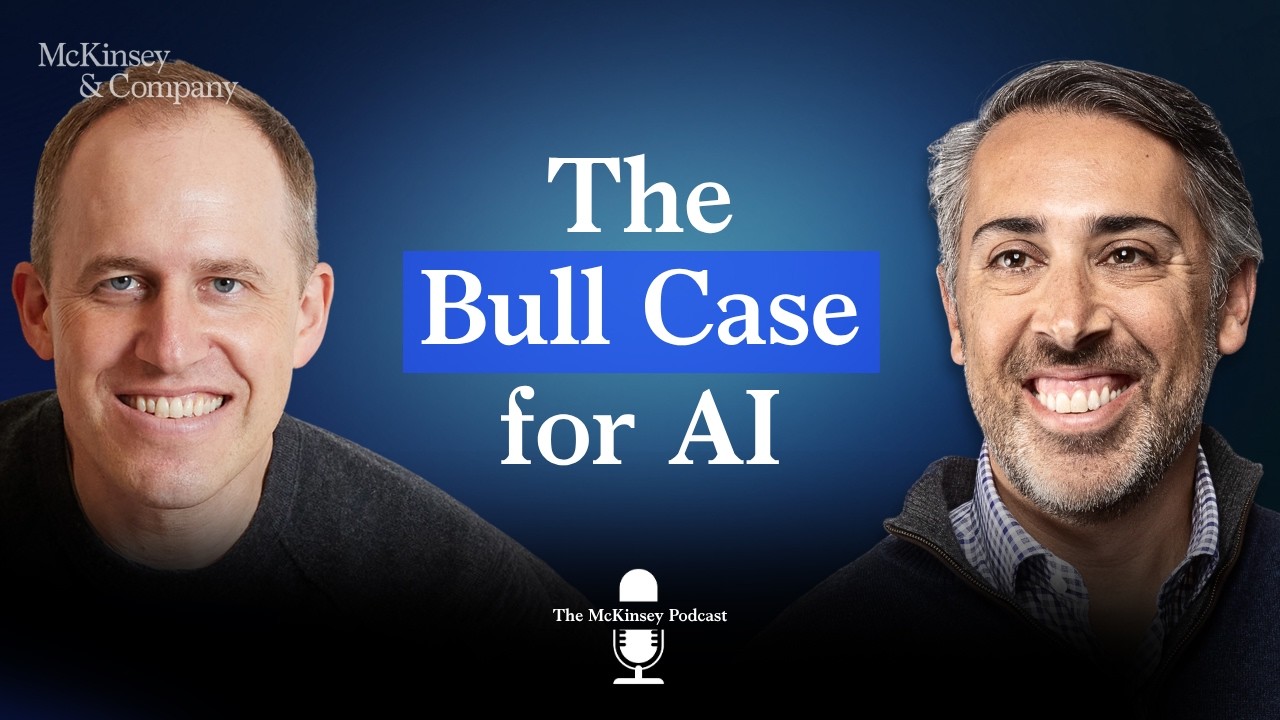
Bret Taylor told McKinsey & Company the world is already living with superintelligent AI where information is the only input, and we are in the foothills of artificial general intelligence.
Bret Taylor Says Superintelligence Is Already Here

That is the headline from a conversation that otherwise sounds like a warning label.

Taylor, who chairs OpenAI and runs enterprise agent startup Sierra, argued the shift is not theoretical. Models now support basic reasoning, he said, they can work through ambiguous tasks and complete work on their own, and recent systems have proven or disproven unproven math conjectures. In his telling, anywhere digital technology is all that is required, we probably already have superhuman capability. The near term payoff he sketched is familiar and broad: every person with a superintelligent financial adviser, access to the world’s best primary care physician, every kid with a personal tutor.

Sierra is where he tests that thesis in production. The company builds AI agents that act as a digital front door for large enterprises, per McKinsey & Company, handling customer service and revenue work like onboarding a merchant into a marketplace, doing KYC for a bank, nudging prescription adherence for a pharma company, or originating mortgages. Taylor cited one client where the agent resolves over 90% of cases autonomously, a figure he uses to make a broader point about operating leverage: decouple cost from growth, lower customer acquisition cost, scale engagement without scaling headcount. The mechanism is not a chatbot that answers FAQs. It is an agent that takes action inside workflows, and Sierra pitches it across voice, chat and email in more than 30 languages.

That same capability is what worries him most right now. Taylor named cybersecurity as the most acute near term risk and described a period of societal vulnerability. The models are very good at code, so they are very good at finding vulnerabilities whether they have source access or are working blackbox, and what makes them good at finding flaws also makes them useful for offensive security, finding and patching and eventually monitoring actively. The problem is deployment.

There are not off the shelf solutions to do that monitoring and patching at scale, he said, and the blast radius has widened because AI adoption looks vertical while infrastructure is fully connected. He described CISOs and CTOs who run agents that surface thousands of vulnerabilities and then face an impossible triage: patch everything and break the systems, or keep the systems running and stay exposed. For large enterprises that is painful. For small and medium businesses running dated stacks, including the local hospital clinic he singled out as historically vulnerable to ransomware, the risk is asymmetric. Tech debt, in his phrase, has become cyber tech debt.

On open weight versus frontier models, Taylor broke the decision into three jobs to be done. Cost is first, using a smaller hosted open weight model to dodge token economics. Fine tuning is second, taking an open model and post training it to near frontier performance on a narrow task. Sovereignty is third, owning the full stack to secure data and infrastructure. He said he is least convinced by the third, arguing it can be solved contractually much as it was in the cloud transition without staying on premises. On cost, he is most bullish for the frontier labs. They have compute scale and can vertically integrate models with hardware, distill their own frontier systems and monetize inference at efficiency that a standalone host of an open model cannot easily match. The tie between capex and token efficiency, in his view, gives the labs a durable edge while open weight keeps a permanent role for specialized fine tuning. It is a nuanced take, but it leaves a gap he does not resolve: who bears liability and update burden when a fine tuned open model drifts.

That links directly to the data center buildout. Taylor said he does not buy the circularity critique, the idea that AI capex is just money moving between a few related companies, calling it real money for real demand. If AI writes most future software and absorbs sales, service and professional work, he argued, demand for digital technology justifies the spend even without outlandish capability assumptions. His caveat is timing. The pace of AI is measured in days, he noted, while power, real estate and construction run on multi year clocks. The impedance mismatch is the risk.

McKinsey senior partner Eric Kutcher pushed on the other side of that ledger, asking whether system level operating cash flow supports the level of debt financing going into the ground when revenue and profit are not the same and inference economics and chip choices are still shifting. Taylor did not dismiss it, conceding inference can run at relatively high margins for enterprise use but likely only at scale and with concentration, comparing it to cloud where four players dominate and a hundred would not be profitable. The risk at these stakes is higher than ever, he said.

The final friction is political and local. Taylor said AI companies have done an abysmal job explaining benefits to individuals and communities, letting talk of alignment and resilience crowd out the case for universal tutoring, better health advice and better tools for small business. On data centers, he said national television is the wrong venue. The work has to happen in community meetings where companies take accountability for power so bills do not rise, address water and environmental impact directly, and show benefits like lower local taxes and jobs for electricians and HVAC technicians. Smart mayors and governors, he said, should make smart demands. He warned that several states have already pulled incentives or written laws to limit scale, a signal the narrative has already slipped.

Taylor’s history helps explain why that warning lands the way it does. He became chairman of OpenAI in the November 2023 board reconstruction that reinstated Sam Altman after his brief removal, serving alongside Lawrence Summers while Adam D’Angelo remained, a governance role that sits directly atop the mission driven tradeoffs he describes. He co founded Sierra in 2023 with longtime Google executive Clay Bavor, and McKinsey notes the startup now works with about 40 percent of the Fortune 50, which is why his comments on enterprise adoption carry weight beyond lab benchmarks. He remains optimistic, but his own timeline is sobering: a complicated couple of years where vulnerabilities that already existed are simply being found all at once, and the responsible path is iterative deployment and iterative securing, not pause or sprint.

© 2026 StartupHub.ai. All rights reserved. You may not republish this article in full without a license. Search engines and AI research tools may crawl and summarize for reference. Bulk reproduction or model training requires a license. See our terms.
Daniel Singer

Written by

Daniel Singer

Editor, StartupHub.ai

Daniel Singer is the editor of StartupHub.ai, a technology expert and thought leader on AI and its applications across sectors, from fintech and healthcare to developer tooling and consumer software. He writes and tests the tools covered here thoroughly and regularly, and built StartupHub.ai to give founders, operators and buyers a clearer read on what they are actually being sold.