

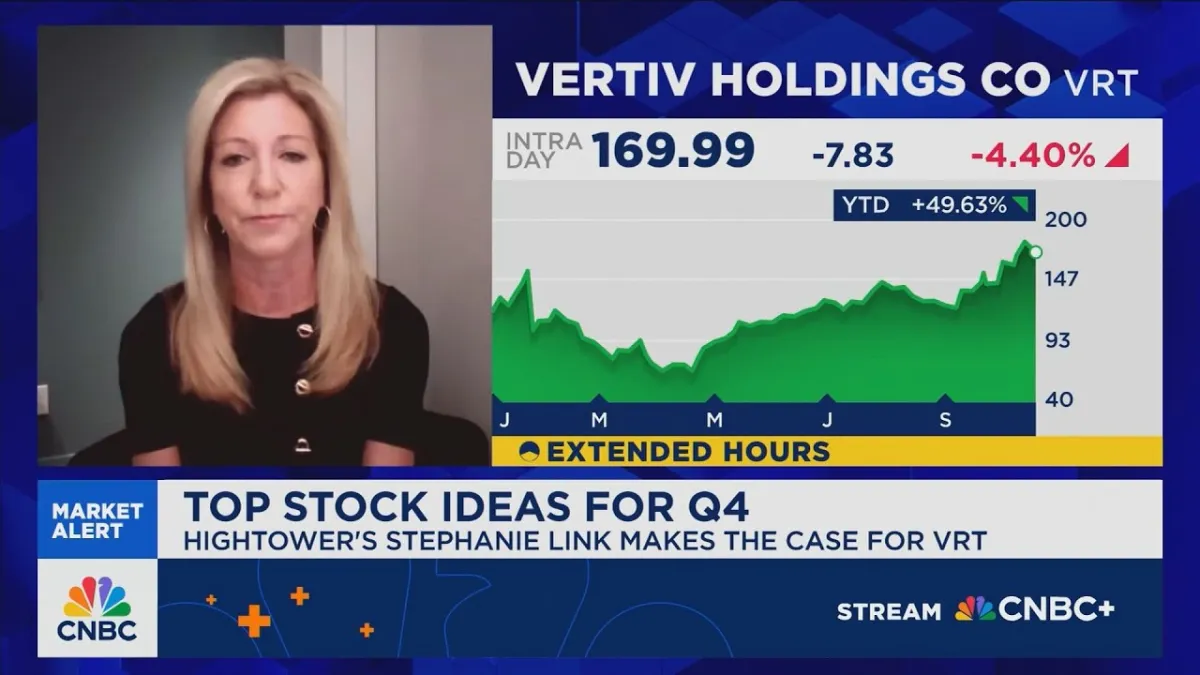
The relentless march of artificial intelligence demands an unseen, yet utterly critical, physical infrastructure. This reality was front and center when Stephanie Link, Chief Investment Strategist and Portfolio Manager at Hightower, spoke with CNBC's Frank Holland, spotlighting Vertiv Holdings Co (VRT) as her top investment pick. Link's analysis carved out a compelling case for Vertiv, positioning it not merely as a participant, but as a foundational enabler in the burgeoning AI data center market, driven by robust growth, expanding margins, and strategic leadership.
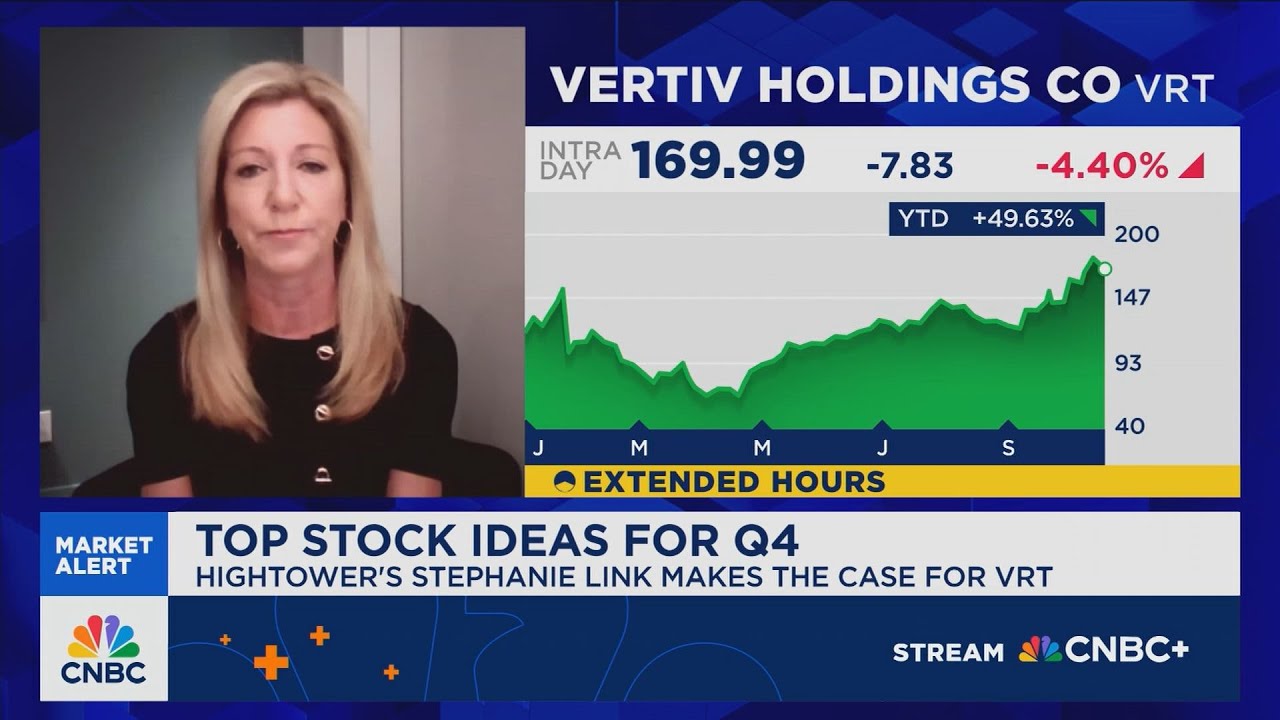
Stephanie Link underscored Vertiv’s pivotal role, declaring, "My pick is Vertiv. It is a data center buildout play." This assertion highlights a core insight: the digital transformation fueled by AI is intrinsically linked to the expansion and enhancement of physical data centers. Vertiv, a global provider of critical digital infrastructure and continuity solutions, sits at the nexus of this buildout, supplying the power, cooling, and IT infrastructure necessary for these complex operations. Link projected significant capital expenditure growth, noting, "CapEx is expected to grow about 50% between 2025 and 2029," reflecting the anticipated surge in demand for the underlying infrastructure that supports AI’s computational needs. This isn't just about constructing new facilities; it's about upgrading existing ones to handle the unprecedented power and cooling requirements of AI workloads.
Beyond the broader market trends, Vertiv exhibits strong internal fundamentals that bolster Link's confidence. The company anticipates organic growth in the range of 15-20%, a figure Link considers "conservative." This organic expansion is supported by a substantial backlog of $8.5 billion and a book-to-bill ratio of 1.2 times, indicating that new orders are outpacing shipments, a healthy sign of future revenue. Furthermore, record orders of $3.2 billion in the last quarter, representing a 25% year-over-year increase, underscore the accelerating demand for Vertiv's offerings.
A crucial insight, beyond mere revenue growth, lies in Vertiv's potential for margin expansion. Link emphasized that operating margins are "troughing right now," with a clear trajectory for improvement. The company's target of reaching 25% margins by 2028 suggests a strategic focus on operational efficiency and profitability that extends beyond the top-line figures. This anticipated margin acceleration, driven by productivity gains and a favorable demand environment, presents a significant lever for future earnings power, which Link estimated could reach $7-10 per share.
Frank Holland challenged Link on Vertiv’s valuation, noting its forward P/E ratio of 39.54, significantly higher than peers like Johnson Controls and Eaton. Link, while acknowledging ownership in Eaton, defended Vertiv by pointing to its "fastest growth" and the "depressed" state of its current margins. Her argument hinges on the idea that Vertiv's unique position in the AI infrastructure space, combined with its operational leverage, justifies the premium. The company is poised to capitalize on the increasing intensity of data center operations, where higher power densities and advanced cooling solutions become paramount.