

AI Agents: The New Primitives of Software

Kwindla Kramer of Daily discusses the historical evolution of computing and the future of AI-native software, drawing parallels from Vannevar Bush to today's AI agents.

8 min read
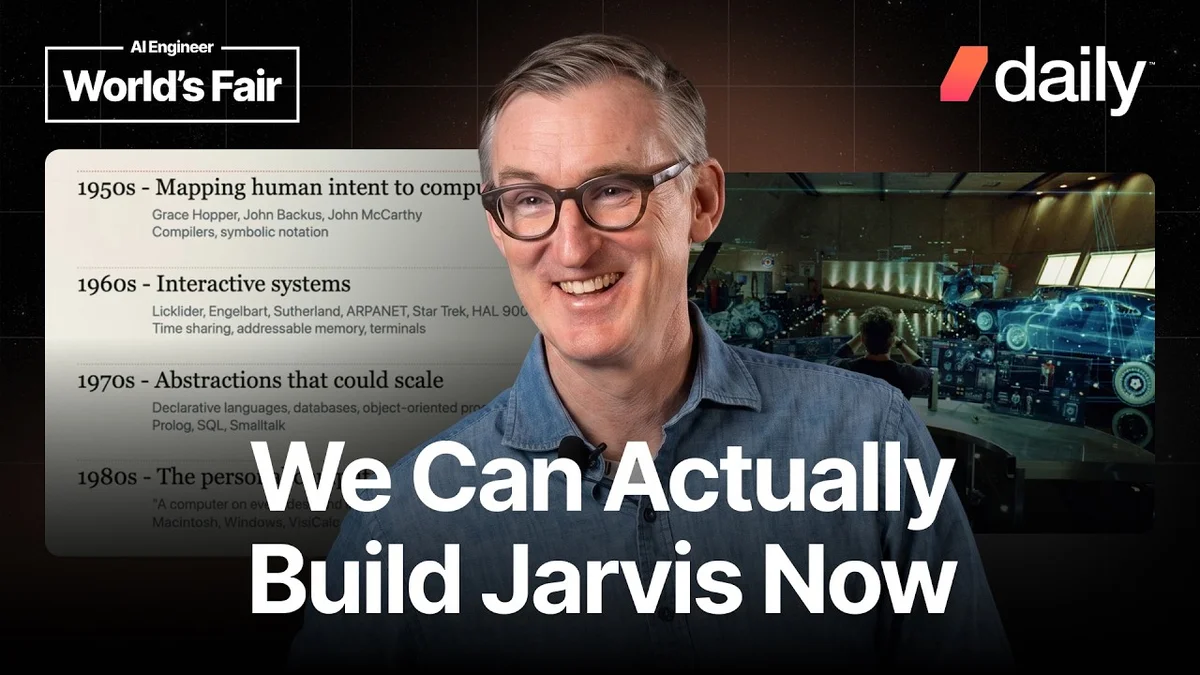
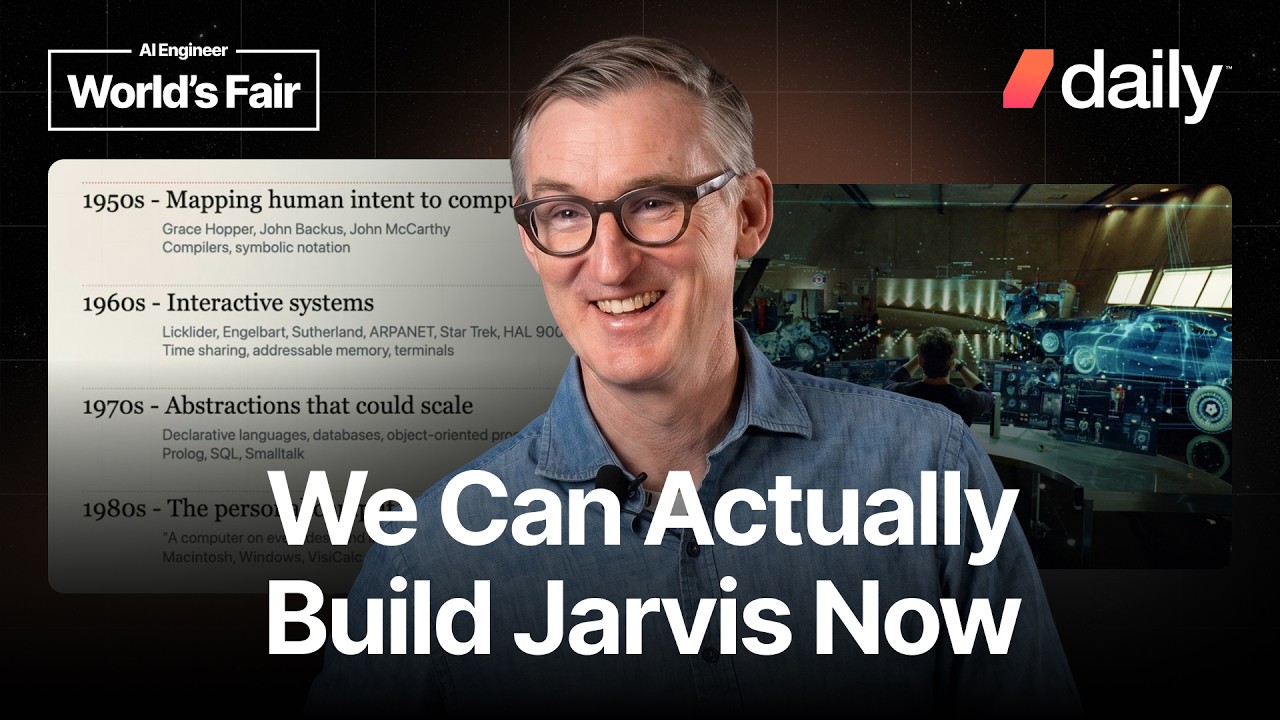
Kwindla Kramer presenting 'The New Primitives: Building AI-Native Software' at AI Engineer World's Fair.
AI Engineer

Visual TL;DR. Vannevar Bush's Vision inspired Software Primitives Evolve. Software Primitives Evolve context for Kramer's Keynote. Kramer's Keynote highlights AI Agents Emerge. AI Agents Emerge enables AI-Native Software. Kramer's Keynote from Daily's Role. Daily's Role uses Pipecat Framework.

  1. Vannevar Bush's Vision: 1945 essay 'As We May Think' foresaw many modern computing advancements
  2. Software Primitives Evolve: historical progression of digital computing from early concepts to current AI agents
  3. Kramer's Keynote: Daily's Kwindla Kramer presented at the AI Engineer World's Fair
  4. AI Agents Emerge: current era positions AI agents as new fundamental building blocks of software
  5. Daily's Role: company develops developer infrastructure for real-time audio, video, and AI
  6. AI-Native Software: future of computing built upon these new AI agent primitives
  7. Pipecat Framework: Daily's team behind the widely used Pipecat framework for AI development
Visual TL;DR
Visual TL;DR, startuphub.ai Kramer's Keynote highlights AI Agents Emerge. AI Agents Emerge enables AI-Native Software highlights enables Vannevar Bush's Vision Kramer's Keynote AI Agents Emerge AI-Native Software From startuphub.ai · The publishers behind this format
Visual TL;DR, startuphub.ai Kramer's Keynote highlights AI Agents Emerge. AI Agents Emerge enables AI-Native Software highlights enables Vannevar Bush'sVision Kramer's Keynote AI Agents Emerge AI-NativeSoftware From startuphub.ai · The publishers behind this format
Visual TL;DR, startuphub.ai Kramer's Keynote highlights AI Agents Emerge. AI Agents Emerge enables AI-Native Software highlights enables Vannevar Bush's Vision 1945 essay 'As We May Think' foresaw manymodern computing advancements Kramer's Keynote Daily's Kwindla Kramer presented at the AIEngineer World's Fair AI Agents Emerge current era positions AI agents as newfundamental building blocks of software AI-Native Software future of computing built upon these newAI agent primitives From startuphub.ai · The publishers behind this format
Visual TL;DR, startuphub.ai Kramer's Keynote highlights AI Agents Emerge. AI Agents Emerge enables AI-Native Software highlights enables Vannevar Bush'sVision 1945 essay 'As WeMay Think' foresawmany modern… Kramer's Keynote Daily's KwindlaKramer presented atthe AI Engineer… AI Agents Emerge current erapositions AI agentsas new fundamental… AI-NativeSoftware future of computingbuilt upon thesenew AI agent… From startuphub.ai · The publishers behind this format
Visual TL;DR, startuphub.ai Vannevar Bush's Vision inspired Software Primitives Evolve. Software Primitives Evolve context for Kramer's Keynote. Kramer's Keynote highlights AI Agents Emerge. AI Agents Emerge enables AI-Native Software. Kramer's Keynote from Daily's Role. Daily's Role uses Pipecat Framework inspired context for highlights enables from uses Vannevar Bush's Vision 1945 essay 'As We May Think' foresaw manymodern computing advancements Software Primitives Evolve historical progression of digitalcomputing from early concepts to currentAI agents Kramer's Keynote Daily's Kwindla Kramer presented at the AIEngineer World's Fair AI Agents Emerge current era positions AI agents as newfundamental building blocks of software Daily's Role company develops developer infrastructurefor real-time audio, video, and AI AI-Native Software future of computing built upon these newAI agent primitives Pipecat Framework Daily's team behind the widely usedPipecat framework for AI development From startuphub.ai · The publishers behind this format
Visual TL;DR, startuphub.ai Vannevar Bush's Vision inspired Software Primitives Evolve. Software Primitives Evolve context for Kramer's Keynote. Kramer's Keynote highlights AI Agents Emerge. AI Agents Emerge enables AI-Native Software. Kramer's Keynote from Daily's Role. Daily's Role uses Pipecat Framework inspired context for highlights enables from uses Vannevar Bush'sVision 1945 essay 'As WeMay Think' foresawmany modern… SoftwarePrimitives Evolve historicalprogression ofdigital computing… Kramer's Keynote Daily's KwindlaKramer presented atthe AI Engineer… AI Agents Emerge current erapositions AI agentsas new fundamental… Daily's Role company developsdeveloperinfrastructure for… AI-NativeSoftware future of computingbuilt upon thesenew AI agent… Pipecat Framework Daily's team behindthe widely usedPipecat framework… From startuphub.ai · The publishers behind this format

Kwindla Hultman Kramer, from Daily, delivered a compelling keynote at the AI Engineer World's Fair, charting the historical progression of digital computing and positioning the current AI agent era within that lineage. Kramer, whose company Daily develops developer infrastructure for real-time audio, video, and AI, and is the team behind the widely used Pipecat framework, drew parallels between past technological shifts and the burgeoning field of AI agents.
AI Agents: The New Primitives of Software - AI Engineer
AI Agents: The New Primitives of Software — from AI Engineer

From Vannevar Bush to AI Agents

Kramer began by referencing Vannevar Bush's seminal 1945 essay, 'As We May Think.' Bush, an engineer, academic, and civil servant, possessed a deep understanding of various technologies and, in his essay, foresaw numerous advancements, including document display on screens, OCR, speech-to-text, text-to-speech, programming languages, hypertext, search engines, data networks, and even early concepts of brain-computer interfaces.

Kramer highlighted the significance of Bush's predictions, noting that we are now living through a similar transformative period, which he termed the 'intelligence age.' He stated, "I've been thinking a lot about 'As We May Think' lately because Bush wrote this essay right at the very beginning of the computing age. And I think it feels to most of us like we're working right at the beginning of a new age, the intelligence age."

The Evolution of Software Primitives

The presentation then traced the evolution of computing primitives. Kramer compared the current focus on building AI agents and 'agents plus' (multi-model harnesses and embedded software co-pilots) to the early days of the World Wide Web. He recalled spending time writing HTML by hand and building web server software in C in 1995, a period when 'web pages' were the primary focus, much like 'agents' are today.

Just as the web evolved from static web pages to dynamic web and native mobile applications, Kramer posited that we are now charting a path towards entirely AI-native software that will supersede the current agent paradigm. He outlined a historical timeline, starting from the abacus, moving through stored-program computers and personal computers, and arriving at the current AI agents era, projecting a future that builds upon these advancements.

Key Technological Leaps

Kramer detailed the key developments that enabled these transitions:

  • 1950s: The development of the first programming languages and compilers, bridging mathematical formalisms with natural language.
  • 1960s: The push for interactive systems and two-way human-computer dialogue, alongside graphical programming systems like Sketchpad.
  • 1970s: The creation of abstractions that could scale, such as relational databases and declarative languages, alongside advancements in programming like object-oriented programming.
  • 1980s: The personal computer revolution, exemplified by the Macintosh and Windows, which brought tangible benefits like VisiCalc, making complex tasks accessible to a wider audience.
  • 1990s: The rise of the network and the World Wide Web, characterized by its multimodal nature, integrating text, audio, video, and data.
  • 2000s: The focus on mobility and continuous connectivity, putting supercomputers in people's pockets.
  • 2010s: The development of cloud infrastructure, laying the groundwork for AI training and inference.

The Future: AI-Native Software

Kramer emphasized that the technologies predicted by Vannevar Bush, such as the Memex, are now becoming a reality. He referenced a recent reimagining of the 'Knowledge Navigator' video, built with current technology, showcasing a foldable tablet, conversational AI with personality, real-time video and computer vision, and seamless integration of these capabilities.

He concluded by discussing a multiplayer game project, 'Gradient Bang,' built from the ground up with LLMs at its core, demonstrating real-time agent orchestration, asynchronous sub-agents, and dynamic UI generation. This project, he noted, would not have been possible even a year ago.

Kramer expressed his excitement for building not only current AI agents but also the 'next, next thing' that will emerge from this AI-native software revolution.

© 2026 StartupHub.ai. All rights reserved. Do not enter, scrape, copy, reproduce, or republish this article in whole or in part. Use as input to AI training, fine-tuning, retrieval-augmented generation, or any machine-learning system is prohibited without written license. Substantially-similar derivative works will be pursued to the fullest extent of applicable copyright, database, and computer-misuse laws. See our terms.