


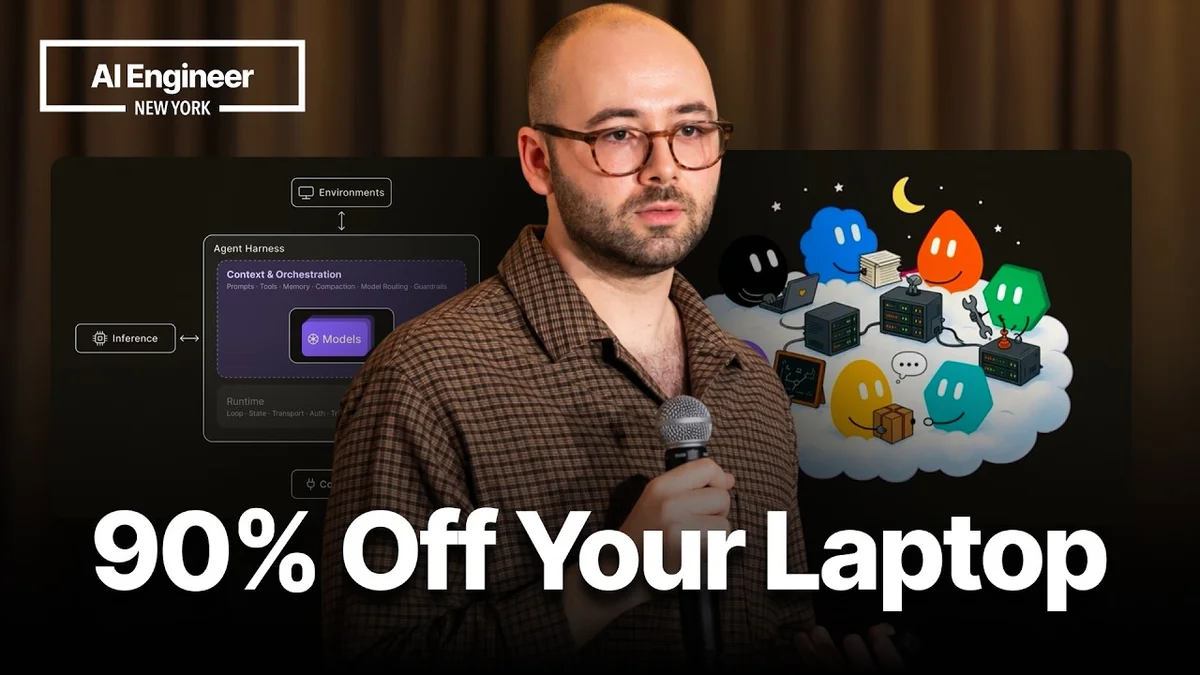
Jedidiah Katz, the longest-tenured engineer on the Cursor agent harness now at SpaceXAI after the acquisition, used an AI Engineer talk to answer his own question: is the agent harness, the software that wraps a model with prompts, tools and runtime to connect it to computers and services, dead? Katz said no, even though smarter models have made much of the old harness redundant. His answer matters because the harness is where security permissions, cloud runtime and cost still live.
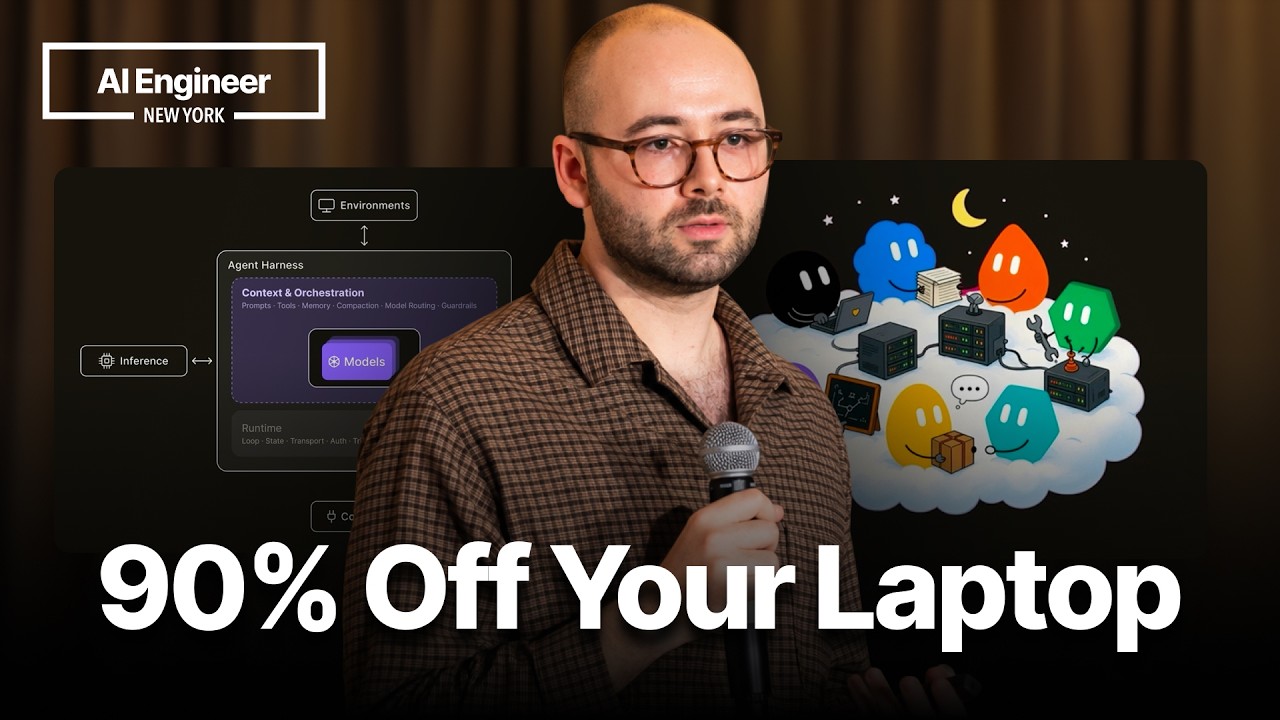
The harness he described has two layers. The runtime is the foundation that decides where the agent loop runs and how state is saved so work can resume, much like traditional backend engineering. The context and orchestration layer is the wild west that decides which model runs when and what it sees, including prompts, tools, memory compaction and guardrails. Katz said the team hit peak harness this year with Grind Swarm, a multimodal, multi-agent system built to create a browser from scratch that was so expensive it briefly took down Cursor. Then the pendulum swung. Anthropic stripped much of the system prompt from Claude Code, YC's Garry Tan predicted the harness would fade and only skills would remain, and Katz and colleague Stefan wrote about removing Cursor patches like a small model for applying file edits and hand-written instructions for exploring codebases.
The evidence for that retrenchment looks strong on scores alone.
Katz cited a UC Berkeley study of seven frontier models across harnesses including Pi, Codex and Claude Code that found harness choice did not significantly change results on SWE-Bench Light for the newest models, and a second Apple and EPFL study that found a dedicated MLE harness did not move MLEBench much either. He called this the data flywheel at work: the harness makes harder coding tasks reachable, more users try them, more coding data flows to labs, and models natively learn the tricks the harness once taught, like persistent work, codebase exploration and running tests. The same studies also found a large cost gap per task even when scores tied, and Katz showed a trivial harness with only a shell and all your secrets that could match a sophisticated one on evals but would fail any security review. That demo involved no remote exploit, it required only local model access to the shell, yet in production it would expose API keys, allow catastrophic actions and risk large bills without scoped permissions and guardrails.
That last point is why Katz says yesterday's harness is dead but tomorrow's is not. First, he argued the harness opens the next frontier that models have not yet absorbed, and pointed to Grokbot, an autonomous colleague built on long-lived coordinator bots that orchestrate a fleet of workers, as his example. Unlike Cursor where his team removed prompting as models improved, Grokbot has required adding it back for tasks like building slide decks, booking travel, deciding when to act versus ask before emailing colleagues, and keeping users updated without noise. Second, he said parts of the harness cannot be absorbed at all: cloud infrastructure to run agents for hours to days instead of on a laptop that sleeps, trust and security with per-agent and per-person scoping, and efficiency from cache hit rate, token use and model mix, which his team recently improved to cut Grokbot cost and latency without hurting quality.


