

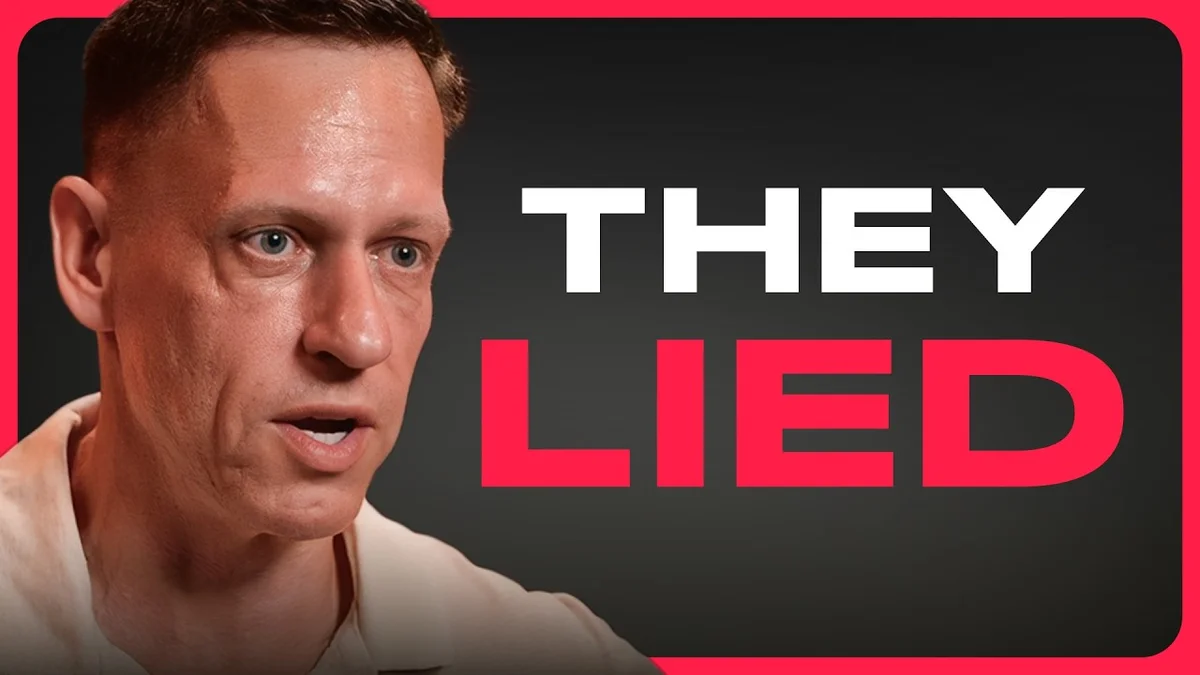
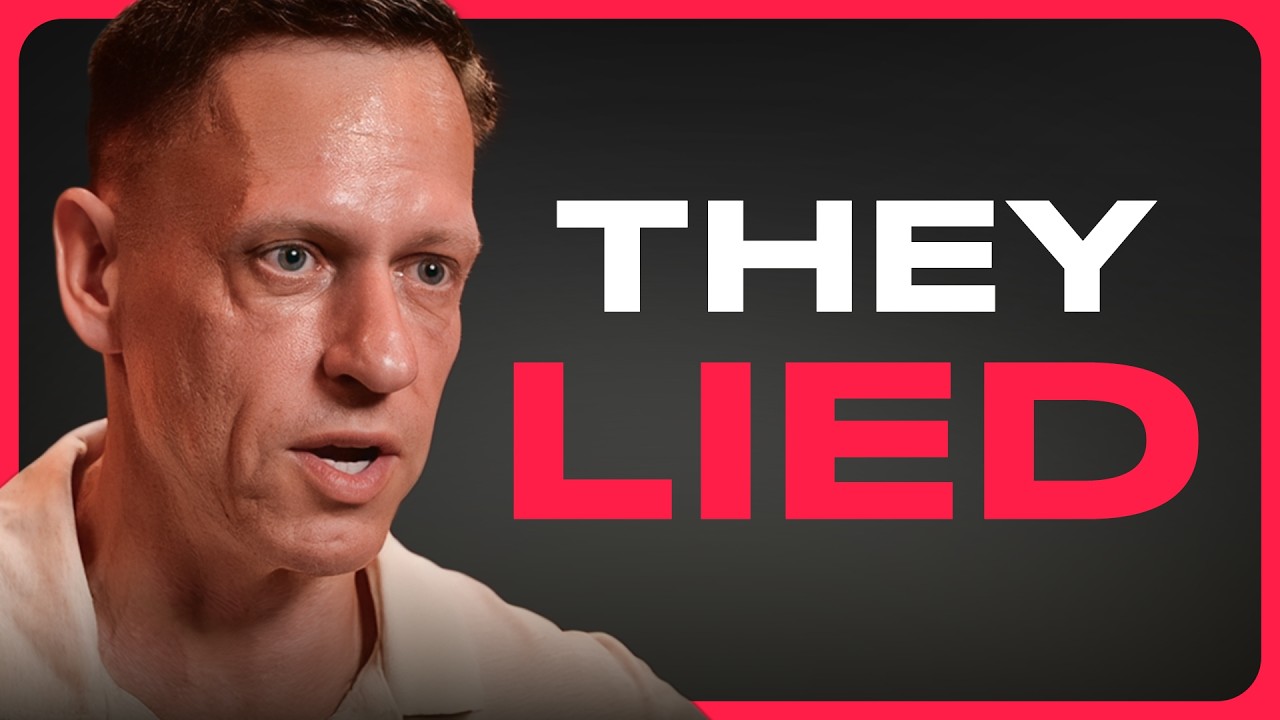
Peter Thiel: Tech Industry Pressured by "Woke" Culture

Peter Thiel, former Meta board member, discusses how the tech industry was pressured by "woke" culture and regulators, leading to policy failures and a disconnect between public statements and private realities.

8 min read
Peter Thiel speaking into a microphone in a room with bookshelves.
Joe Lonsdale

Visual TL;DR. Thiel's Assessment discusses Tech Industry Pressure. Tech Industry Pressure includes Woke Workforce Influence. Tech Industry Pressure includes Regulatory Pressure. Woke Workforce Influence leads to Policy Failures. Regulatory Pressure drives Policy Failures. Policy Failures causes Ineffective Initiatives. Policy Failures creates Public vs. Private. Policy Failures involves Speech Codes.

  1. Tech Industry Pressure: tech giants pressured by 'woke' culture and left-wing regulatory state
  2. Woke Workforce Influence: millennial workforce perceived as a 'ruling mob' dictating company policies
  3. Regulatory Pressure: significant blame on top-down regulatory pressure from the political left
  4. Policy Failures: companies adopted policies often as appeasement, not genuine conviction
  5. Speech Codes: danger of speech codes and their cascading negative effects on discourse
  6. Ineffective Initiatives: woke initiatives often ineffective, leading to their eventual collapse
  7. Thiel's Assessment: Peter Thiel, former Meta board member, offered candid assessment of pressures
  8. Public vs. Private: disconnect between public statements and private realities within companies
Visual TL;DR
Visual TL;DR, startuphub.ai Thiel's Assessment discusses Tech Industry Pressure. Tech Industry Pressure includes Regulatory Pressure. Regulatory Pressure drives Policy Failures. Policy Failures creates Public vs. Private discusses includes drives creates Tech Industry Pressure Regulatory Pressure Policy Failures Thiel's Assessment Public vs. Private From startuphub.ai · The publishers behind this format
Visual TL;DR, startuphub.ai Thiel's Assessment discusses Tech Industry Pressure. Tech Industry Pressure includes Regulatory Pressure. Regulatory Pressure drives Policy Failures. Policy Failures creates Public vs. Private discusses includes drives creates Tech IndustryPressure RegulatoryPressure Policy Failures Thiel'sAssessment Public vs.Private From startuphub.ai · The publishers behind this format
Visual TL;DR, startuphub.ai Thiel's Assessment discusses Tech Industry Pressure. Tech Industry Pressure includes Regulatory Pressure. Regulatory Pressure drives Policy Failures. Policy Failures creates Public vs. Private discusses includes drives creates Tech Industry Pressure tech giants pressured by 'woke' cultureand left-wing regulatory state Regulatory Pressure significant blame on top-down regulatorypressure from the political left Policy Failures companies adopted policies often asappeasement, not genuine conviction Thiel's Assessment Peter Thiel, former Meta board member,offered candid assessment of pressures Public vs. Private disconnect between public statements andprivate realities within companies From startuphub.ai · The publishers behind this format
Visual TL;DR, startuphub.ai Thiel's Assessment discusses Tech Industry Pressure. Tech Industry Pressure includes Regulatory Pressure. Regulatory Pressure drives Policy Failures. Policy Failures creates Public vs. Private discusses includes drives creates Tech IndustryPressure tech giantspressured by 'woke'culture and… RegulatoryPressure significant blameon top-downregulatory pressure… Policy Failures companies adoptedpolicies often asappeasement, not… Thiel'sAssessment Peter Thiel, formerMeta board member,offered candid… Public vs.Private disconnect betweenpublic statementsand private… From startuphub.ai · The publishers behind this format
Visual TL;DR, startuphub.ai Thiel's Assessment discusses Tech Industry Pressure. Tech Industry Pressure includes Woke Workforce Influence. Tech Industry Pressure includes Regulatory Pressure. Woke Workforce Influence leads to Policy Failures. Regulatory Pressure drives Policy Failures. Policy Failures causes Ineffective Initiatives. Policy Failures creates Public vs. Private. Policy Failures involves Speech Codes discusses includes includes leads to drives causes creates involves Tech Industry Pressure tech giants pressured by 'woke' cultureand left-wing regulatory state Woke Workforce Influence millennial workforce perceived as a'ruling mob' dictating company policies Regulatory Pressure significant blame on top-down regulatorypressure from the political left Policy Failures companies adopted policies often asappeasement, not genuine conviction Speech Codes danger of speech codes and their cascadingnegative effects on discourse Ineffective Initiatives woke initiatives often ineffective,leading to their eventual collapse Thiel's Assessment Peter Thiel, former Meta board member,offered candid assessment of pressures Public vs. Private disconnect between public statements andprivate realities within companies From startuphub.ai · The publishers behind this format
Visual TL;DR, startuphub.ai Thiel's Assessment discusses Tech Industry Pressure. Tech Industry Pressure includes Woke Workforce Influence. Tech Industry Pressure includes Regulatory Pressure. Woke Workforce Influence leads to Policy Failures. Regulatory Pressure drives Policy Failures. Policy Failures causes Ineffective Initiatives. Policy Failures creates Public vs. Private. Policy Failures involves Speech Codes discusses includes includes leads to drives causes creates involves Tech IndustryPressure tech giantspressured by 'woke'culture and… Woke WorkforceInfluence millennialworkforce perceivedas a 'ruling mob'… RegulatoryPressure significant blameon top-downregulatory pressure… Policy Failures companies adoptedpolicies often asappeasement, not… Speech Codes danger of speechcodes and theircascading negative… IneffectiveInitiatives woke initiativesoften ineffective,leading to their… Thiel'sAssessment Peter Thiel, formerMeta board member,offered candid… Public vs.Private disconnect betweenpublic statementsand private… From startuphub.ai · The publishers behind this format

Peter Thiel, who served on the Meta Platforms Inc. (NASDAQ:META) board for 17 years, from 2005 to 2022, has offered a candid assessment of the pressures faced by the tech industry, particularly concerning the influence of what he terms a "woke millennial workforce" and a "left-wing regulatory state." Thiel articulated a nuanced view, suggesting a confluence of forces pushed companies to adopt certain policies, often as a means of appeasement rather than genuine conviction.

The "Woke" Workforce and Regulatory Pressure

Thiel described a prevailing narrative where tech giants were perceived as either run by "communist billionaires" or dictated to by a "woke millennial workforce" acting as a ruling mob. However, he emphasized a "top-down theory" that placed significant blame on regulatory pressure from the left. "There was sort of a lot of surface area where these things could be regulated," Thiel stated, "and as long as you sort of tilted them to the left, you you ended up, you know, you thought you were appeasing the beast. You were protecting yourself."

He posited that many founders, such as Mark Zuckerberg, were not "deeply political" and preferred to focus on product development rather than engaging in political battles or congressional hearings. This led to a pragmatic approach where companies would implement moderate measures, like diversity, equity, and inclusion (DEI) programs, to gain positive recognition and avoid negative repercussions. "We had to do some DEI. It's, you know, we'll get credit for this and then it won't hurt us that much," he explained.

The full discussion can be found on Joe Lonsdale's YouTube channel.

Peter Thiel: How the Left Tried to Destroy the Tech Industry - Joe Lonsdale
Peter Thiel: How the Left Tried to Destroy the Tech Industry, from Joe Lonsdale

The Ineffectiveness and Collapse of "Woke" Initiatives

Thiel critiqued the efficacy of these adopted policies, noting that when initiatives like DEI did not demonstrably improve outcomes, such as workforce quality, companies found themselves in an ambiguous position. They could either claim they hadn't done enough or decide to abandon the efforts entirely. He observed that for many years, the prevailing response was to "just do more," but eventually, this approach "completely collapsed" over the last four to five years.

The difficulty in admitting these failures was compounded by the political climate. Thiel remarked that during the Trump administration, these issues intensified and became polarized. It wasn't until the Biden administration that it became safer, "behind closed doors," for people to acknowledge that "this stuff is is really not working." He further elaborated on the significant gap between public pronouncements and private sentiments, citing instances where companies planned to relocate staff out of San Francisco due to its workforce demographics, a strategy they could not openly discuss.

The Danger of Speech Codes and Cascading Effects

Thiel drew a parallel between the tech industry's predicament and broader issues surrounding speech codes and restrictions on free speech. He warned that such restrictions, often pushed by the left, can backfire by creating an environment where dissent is suppressed, ultimately leading to radical shifts rather than marginal adjustments. "At some point, you know, it only takes, you know, one little child to say the emperor has no clothes. And you get a cascade," he cautioned.

He also touched upon the implications for artificial intelligence, suggesting that over-regulation aimed at preventing AI from generating certain content could inadvertently lead to unintended consequences. Thiel concluded by referencing an economic theory of revolutions, where a state of widespread lying, known to all participants, can lead to a rapid cascade of preference shifts. He believes a similar dynamic has played out in Silicon Valley over the past few years, with a realization dawning that the previously accepted norms were unsustainable.

© 2026 StartupHub.ai. All rights reserved. Do not enter, scrape, copy, reproduce, or republish this article in whole or in part. Use as input to AI training, fine-tuning, retrieval-augmented generation, or any machine-learning system is prohibited without written license. Substantially-similar derivative works will be pursued to the fullest extent of applicable copyright, database, and computer-misuse laws. See our terms.