


AI Super PACs Fuel Political Spending Ahead of Midterms

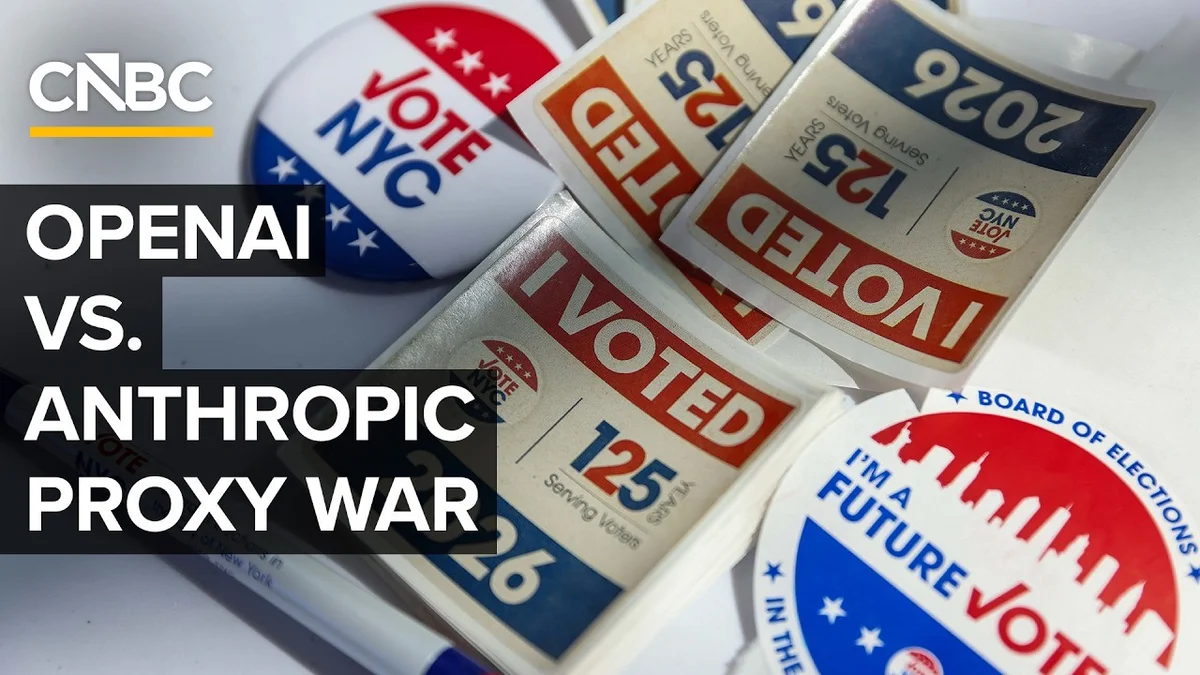
AI Super PACs are spending millions to influence midterm elections, with industry leaders backing campaigns and shaping AI policy debates.

5 min read
Emily Wilkins of CNBC speaking on camera about AI Super PACs influencing the midterms.
Emily Wilkins reporting on the role of AI Super PACs in shaping the midterm elections.· CNBC
Visual TL;DR
Industry Leaders' StakesCore
key figures backing campaigns and policy
From the article 2 mentionsThe involvement of prominent AI leaders such as OpenAI President Greg Brockman, Palantir co-founder Joe Lonsdale, and Andreessen Horowitz partners Marc Andreessen and Ben Horowitz underscores the high stakes for the tech industry.
AI Super PACs EmergeDriver
new political groups backed by tech industry funding
From the article 5 mentionsThe political landscape is being reshaped by a new wave of AI-powered Super Political Action Committees (PACs).
Significant FundingContext
over $21.3 million spent by two major PACs
From the article 5 mentionsThese organizations, backed by substantial funding from the tech industry, are actively engaging in the midterm elections, aiming to influence policy debates and electoral outcomes related to artificial intelligence.
Targeting Key RacesContext
focusing on specific congressional district primaries
Shaping AI PolicyEffect
influencing debates on artificial intelligence legislation
From the article 6 mentionsThis race saw 'Leading the Future' and 'Public First Action' supporting different candidates, demonstrating their strategic involvement in shaping the composition of Congress and influencing the national debate over AI policy.
Influencing MidtermsOutcome
aiming to shape electoral outcomes for AI issues
From the article 4 mentionsThe significant financial investment by AI Super PACs signals a new era where technology companies are directly influencing political outcomes to shape the regulatory environment in which they operate.
Legislative EffortsContext
potential regulations and industry responses
From the article 2 mentionsThe video also mentions legislative efforts, such as the proposed 'RAISE Act,' which aims to regulate AI at the state level.
Contents(5)

The political landscape is being reshaped by a new wave of AI-powered Super Political Action Committees (PACs). These organizations, backed by substantial funding from the tech industry, are actively engaging in the midterm elections, aiming to influence policy debates and electoral outcomes related to artificial intelligence.

AI Super PACs Fuel Political Spending Ahead of Midterms - CNBC
AI Super PACs Fuel Political Spending Ahead of Midterms, from CNBC

The Rise of AI Super PACs

CNBC reports on the significant financial backing of two major AI Super PACs, 'Leading the Future' and 'Public First Action.' These groups have collectively spent over $21.3 million in the current election cycle. 'Leading the Future' alone has reportedly spent $125 million, while 'Public First Action' has raised $80 million, indicating a substantial investment in shaping political discourse and electoral results concerning AI.

Targeting Key Races and Policy Debates

The PACs are not only funding broad campaigns but are also focusing on specific races. The video highlights the competitive primary in New York's 12th Congressional District, where AI Super PACs reportedly spent nearly $6 million. This race saw 'Leading the Future' and 'Public First Action' supporting different candidates, demonstrating their strategic involvement in shaping the composition of Congress and influencing the national debate over AI policy.

Key Figures and Their Stakes

The involvement of prominent AI leaders such as OpenAI President Greg Brockman, Palantir co-founder Joe Lonsdale, and Andreessen Horowitz partners Marc Andreessen and Ben Horowitz underscores the high stakes for the tech industry. These individuals are not only significant funders but are also actively shaping the messaging and policy goals of these Super PACs. Their efforts aim to promote a particular vision for AI regulation, often advocating for a more innovation-friendly approach, as seen in their opposition to certain state-level AI bills like the 'RAISE Act.'

The Broader Political Climate

The report touches upon the polarized views on AI among the general public, with a Pew Research Center survey indicating that 50% of Americans are more concerned than excited about AI's role in daily life, while 38% are equally excited and concerned. This public sentiment adds another layer to the political battles, as campaigns and PACs attempt to navigate voter perceptions and concerns regarding AI's safety, economic impact, and societal integration.

Legislative Efforts and Industry Response

The video also mentions legislative efforts, such as the proposed 'RAISE Act,' which aims to regulate AI at the state level. The opposition to such measures from industry leaders and AI companies highlights a key tension: the desire for innovation versus the need for robust safety and ethical guidelines. Lawmakers like Rep. Ritchie Torres, Rep. Josh Gottheimer, and Rep. Val Demings are noted for their roles in shaping AI policy discussions, reflecting a bipartisan interest in addressing the challenges and opportunities presented by artificial intelligence.

The significant financial investment by AI Super PACs signals a new era where technology companies are directly influencing political outcomes to shape the regulatory environment in which they operate. As the midterms approach, the impact of this AI-driven political spending is likely to be a critical factor in determining the future trajectory of AI policy in the United States.

© 2026 StartupHub.ai. All rights reserved. Do not enter, scrape, copy, reproduce, or republish this article in whole or in part. Use as input to AI training, fine-tuning, retrieval-augmented generation, or any machine-learning system is prohibited without written license. Substantially-similar derivative works will be pursued to the fullest extent of applicable copyright, database, and computer-misuse laws. See our terms.