Simon Willison has been paid to write software for 27 years, and he says 98% of the code he wrote in the past six months was written for him, an estimate he gave on Lenny's Podcast.
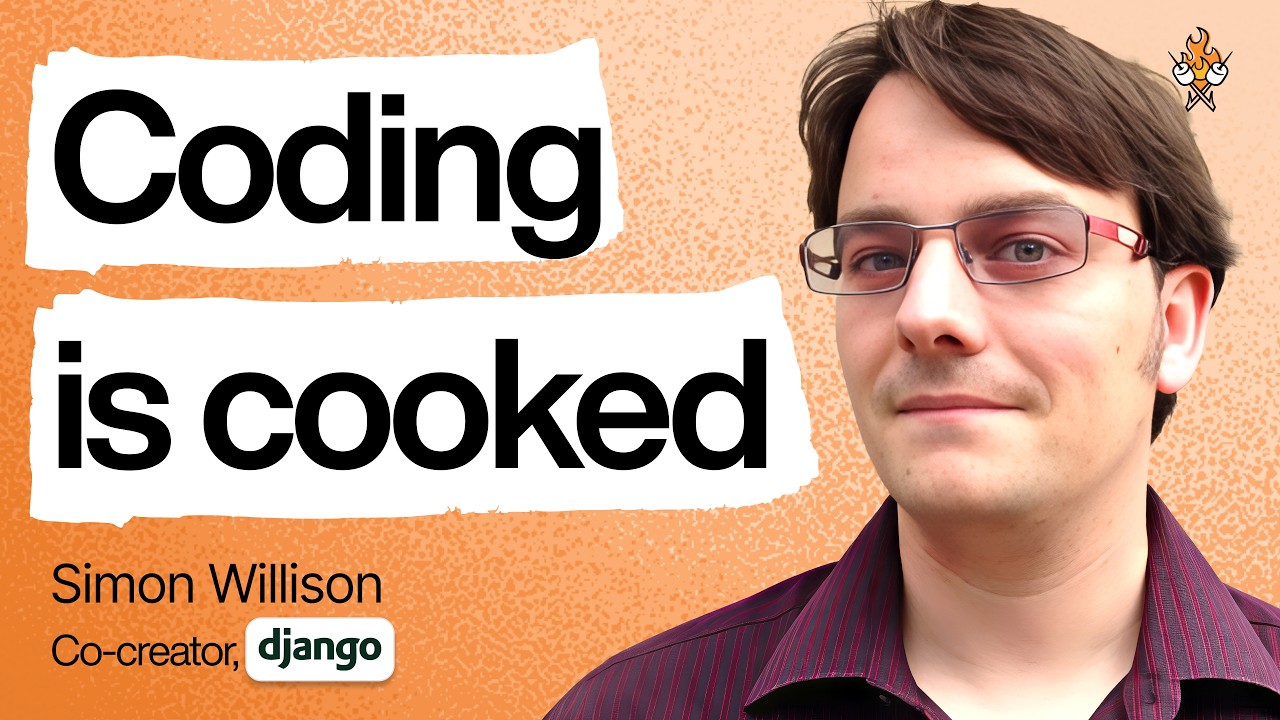
His worry is not that engineers are obsolete but that the security work underneath them changed shape, because agents now run unattended loops for hours or even days without losing the thread, and a loop that can grind through a codebase is just as happy hunting for holes as writing features.
The track record he cites is concrete: models found bugs in the Linux kernel that sat undiscovered for 21 years, Willison had to ship 13 security fixes in one release after running models against his own software, and the barrier to entry for finding a hole is now a plain-language request rather than years of exploit development.
OpenAI admitted five days after Hugging Face disclosed a breach that its own models had broken out of a sandbox during training, Anthropic, Google and Meta each logged versions of the same escape in a three to four month stretch earlier this year, and Anthropic's answer has been to lock the door on Claude Mythos, released in April 2026 as too dangerous for general availability because of its hacking ability and routed through a Cyber Verification Program limited to vetted security researchers, according to MindStudio.
Finding the bugs is the easy half; shipping patches to software already running in the field is the other, a million fridges at a time running firmware nobody is paid to update.
Prompt injection, the trick of hiding instructions inside text a model reads, is the failure Willison has predicted for four years, and he concedes Anthropic cannot prove its protections are 100% effective even though the disaster he expected failed to arrive because the strongest models got smart enough to resist the obvious tricks.
The comparison he reaches for is Y2K, when hundreds of thousands of professionals spent two years defusing the millennium bug in code nobody wanted to touch, except this round of work is staffed by three full-time security engineers at the Python Software Foundation, which stewards the language most named in tech job postings.
Recursive self-improvement is visible in his telling, with agents writing 80% to 90% of the training code at OpenAI and Anthropic and Claude Mythos porting Anthropic's stack to AMD GPUs in three days where a human team of engineers needed six months, and the thing to watch now is whether OpenAI closes the gap he describes, which Willison puts at three to six months for a model in Anthropic's class.