AWS says its Nitro System gives cloud operators no login path to customer data across every modern EC2 instance. The design blocks even local access by staff with physical servers. That claim now carries a formal proof for the code that keeps tenants apart.
Can the people who run the cloud still read your virtual machine? AWS says no, and it rebuilt the hardware to make that true.
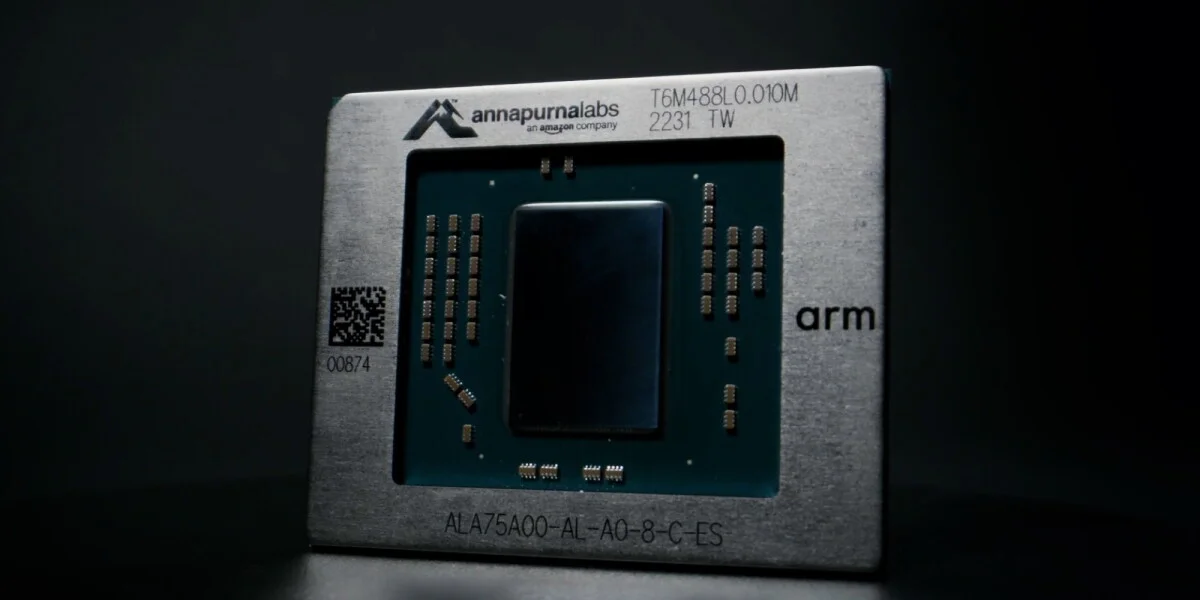
The hypervisor is the software layer that splits one physical server among many customers. EC2 once ran on Xen, which handled CPU scheduling, device emulation and networking on the main processor, the company said. Starting in 2013, AWS moved those jobs to a custom Nitro Card built with Annapurna Labs, a chip startup Amazon acquired in 2015, and launched the stripped down Nitro Hypervisor in 2017.
That split let AWS remove remote login from the hypervisor and measure firmware at every boot, the company said. Nitro Cards are now in their sixth generation with automatic encryption between supported instances. Memory encryption started with Graviton2 and expanded since, while Graviton4 encrypts high speed links to the Nitro Cards, and AWS says the new EC2 T9g instances based on Graviton5 are generally available as low cost burstable instances with best price performance among general purpose EC2 instances.
Formal verification is mathematical proof that a property holds in every system state. Testing cannot cover every case, so AWS moved isolation checks into a small Nitro Isolation Engine written in a limited subset of Rust. Scientists proved four properties with the Isabelle/HOL proof assistant, the company said: confidentiality and integrity, functional correctness, freedom from runtime errors and memory safety, while independent firm NCC Group found no operator access mechanism in a 2023 review.
Hospitals, banks and agencies face audits that ask how tenants stay separate, and they can now point auditors to hardware with no operator path plus math for the isolation check.