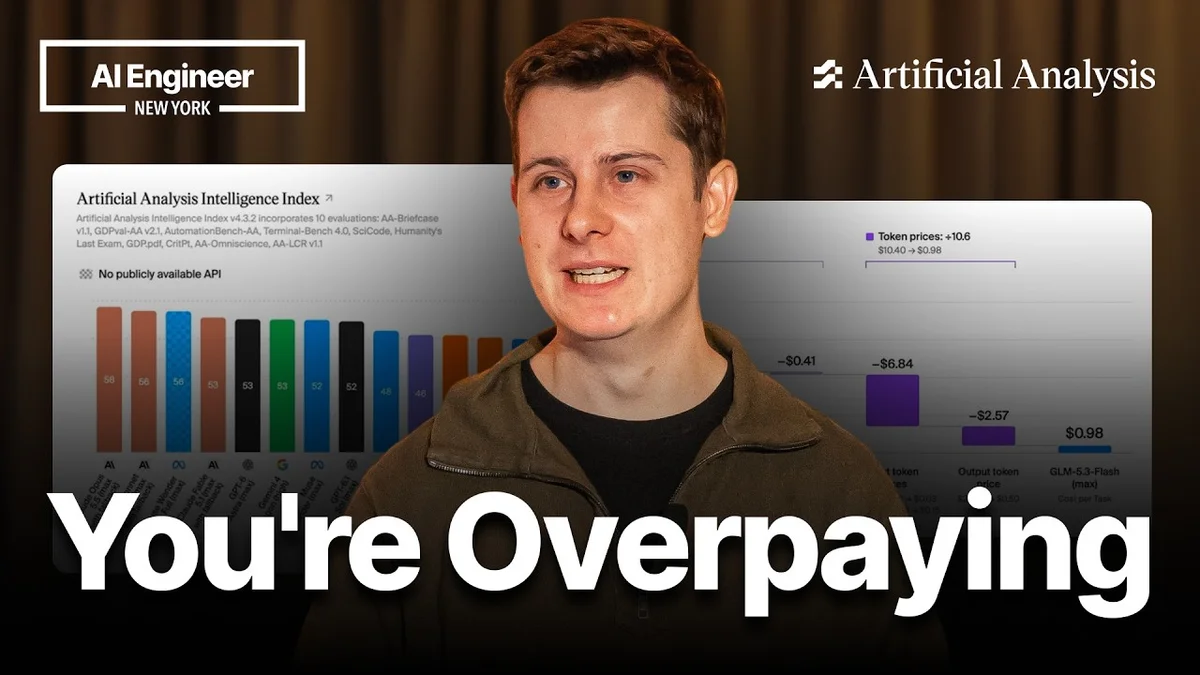
Anthropic Opus 5.5 costs $21 to complete a single agent task with caching and more than $200 without it, a roughly 10x penalty that now dominates the bill for long-horizon work, George Cameron told AI Engineer.
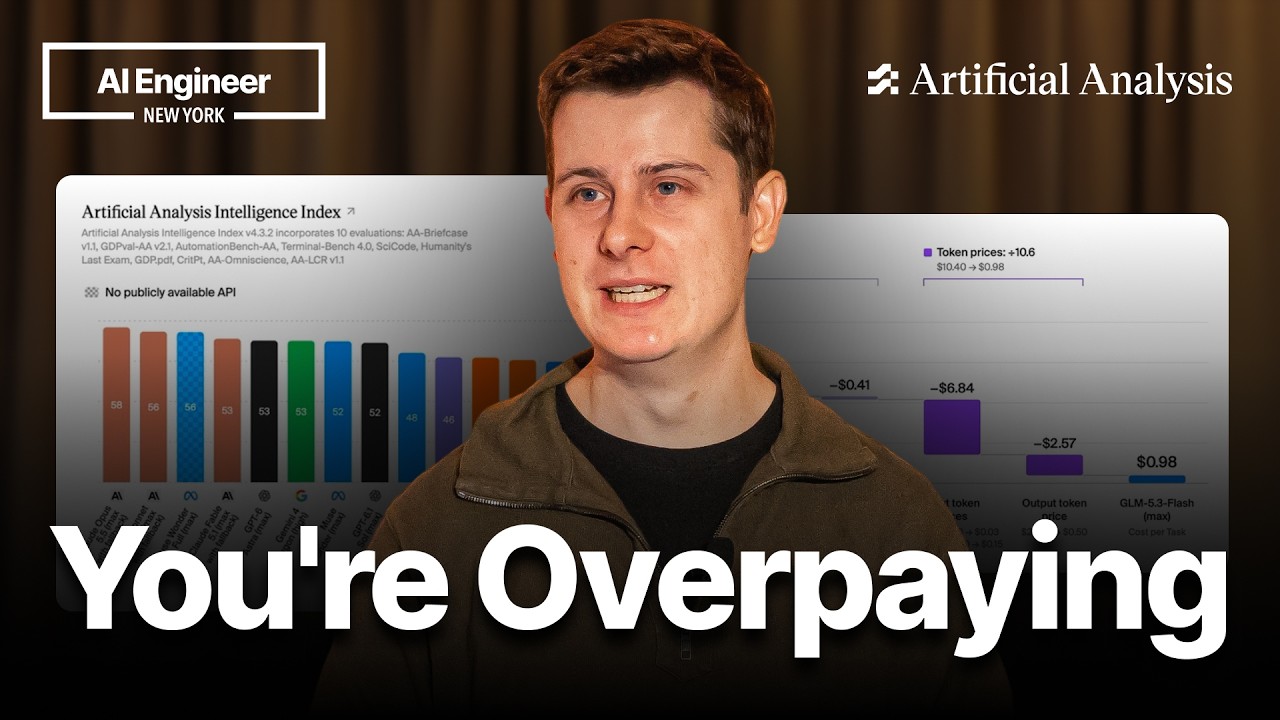
Cameron, co-founder of Artificial Analysis, said the figure comes from the firm's AA Briefcase agent workbench, where agents work across thousands of files to build reports and presentations, and the average Opus 5.5 trajectory ran 165 steps at about 13 cents per model call. Answer tokens were about 2 cents, Cameron said, while input tokens and the share that hit cache were the largest driver, which is why his team now publishes cache hit rate as a core inference metric.
GLM 5.3 Flash market, from StartupHub data
Figures below are published StartupHub profiles tagged GLM 5.3 Flash.
The same test shows why model choice still matters. Cameron put leading proprietary work at above $5 per task on one end and capable cheaper models at 5 cents or less on the other, with GLM 5.3 Flash and what he labeled Luna at about 7 cents, and he argued Luna is already stronger than GPT-4 and far stronger than GPT-3.5 Turbo. The OpenAI and Anthropic frontier models cited by Cameron sit on the right side of his intelligence versus cost Pareto, while Gemini and open-weights options like GLM cluster on the cheaper left, with open weights still within three to nine months of proprietary on his intelligence index.
Time has compressed the tradeoff. Cameron said accessing an Intelligence Index score of 30 cost a bit over $1 a year ago and now sits around 10 cents, with some tiers now in the 1 to 10 cent band, and he extrapolated that a $1 million workload at today's frontier pricing could fall toward $100,000 within a year and $10,000 in two if the curve holds.
What the numbers do not show is how often any given provider actually delivers that cache hit rate in production, since prompt caching, VLM setups and message history handling differ across stacks, and the $21 figure assumes caching is enabled and working. A published, audited hit rate per provider and per workload, or a shift to agents with far fewer turns, would change the read more than any change in per token list price.
The daily brief
Get the free daily brief with the day's AI news, new AI startups and funding rounds every morning.
Join 64,000 other subscribers.
If cache behavior is now the single biggest cost lever, will inference competition move from output token price to guaranteed hit rates and input token handling for agents with long context histories?