Artificial Intelligence

Robots.txt Evolves for AI Crawlers

Robots.txt is now essential for controlling AI crawlers like GPTBot, impacting data access and AI model training.

StartupHub.ai Staff

By StartupHub.ai Staff, reviewed by Daniel Singer, Editor

4 min read

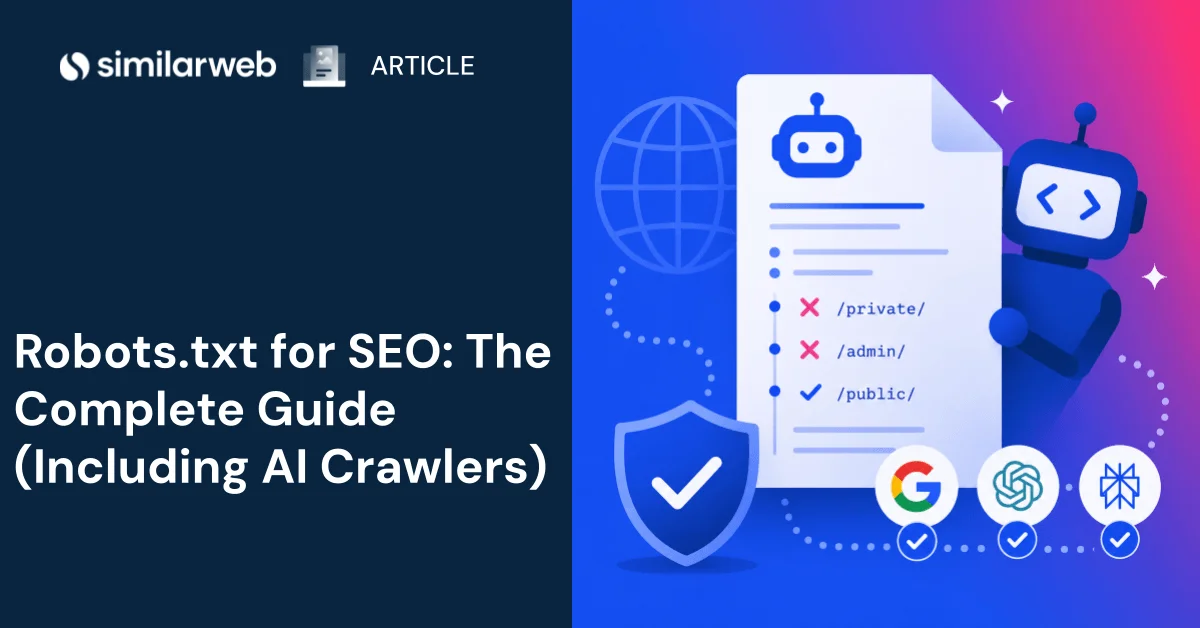
Illustration of a robots.txt file being modified to block AI bots.
Credit: Similarweb
Visual TL;DR
Rise of AI CrawlersDriver
From the article 8 mentionsSince 2023, a new class of AI crawlers, including OpenAI's GPTBot and Anthropic's ClaudeBot, have entered the digital arena, and they too adhere to these directives.
Traditional UseContext
historically managed crawl budgets and kept sensitive areas off search results
From the article 3 mentionsTo guarantee a page is not indexed, webmasters must use a `noindex` meta tag within the HTML `` or an `X-Robots-Tag` HTTP header.
Implement DirectivesContext
placed in website's root directory, instructs bots which pages to crawl
From the article 3 mentionsThe core of robots.txt lies in its directives.
Robots.txt EvolvesCore
From the article 9+ mentionsThe humble robots.txt file, a small text document dictating search engine access to a website, is no longer just for traditional bots.
Control AI AccessEffect
essential for dictating which pages AI models can crawl and avoid
From the article 8 mentionsThe ability to control AI bot access via robots.txt is a powerful, albeit simple, tool in this ongoing data governance challenge.
Business DecisionContext
From the article 3 mentionsThis shift transforms robots.txt from a simple SEO tool into a crucial business decision point for content control, as detailed by Similarweb.
Impacts AI TrainingOutcome
profound implications for how AI models are trained using web content
From the article 4 mentionsCompanies like OpenAI, Anthropic, and Perplexity have deployed bots specifically designed to gather data for training their large language models.
Data Access ControlEffect
crucial for managing what data AI crawlers can access from websites
From the article 2 mentionsThe ability to control AI bot access via robots.txt is a powerful, albeit simple, tool in this ongoing data governance challenge.

Contents(4)

The humble robots.txt file, a small text document dictating search engine access to a website, is no longer just for traditional bots. Since 2023, a new class of AI crawlers, including OpenAI's GPTBot and Anthropic's ClaudeBot, have entered the digital arena, and they too adhere to these directives. This shift transforms robots.txt from a simple SEO tool into a crucial business decision point for content control, as detailed by Similarweb. The implications for how AI models are trained and how web content is accessed are profound.

For decades, robots.txt has served as the gatekeeper for search engine optimization (SEO). Placed in a website's root directory, it instructs bots which pages to crawl and which to avoid. This is vital for managing crawl budgets, preventing duplicate content issues, and keeping sensitive areas like admin panels off search results pages. Without a robots.txt file, search engines like Googlebot will attempt to crawl everything, potentially wasting resources on low-value pages.

The Rise of AI Crawlers

The landscape shifted significantly in 2023 with the advent of AI-powered crawlers. Companies like OpenAI, Anthropic, and Perplexity have deployed bots specifically designed to gather data for training their large language models. These include GPTBot, ClaudeBot, PerplexityBot, and Google's own Google-Extended, which controls Gemini training data. These AI crawlers, alongside existing search bots, now navigate the web, making decisions based on robots.txt instructions.

This presents a new challenge. Some organizations are actively blocking these AI crawlers to protect proprietary data used for training. Others, conversely, want to ensure they aren't accidentally blocking legitimate AI research bots. StartupHub.ai data shows that while Google has a strong score of 74/100 in this evolving space, competitors like Apple (83/100) and Amazon (81/100) are also major players in web crawling and data management.

Understanding Robots.txt Directives

The core of robots.txt lies in its directives. The `User-agent` field specifies which bot the rules apply to, with `` acting as a wildcard for all bots. `Disallow:` tells bots which paths or files to avoid, while `Allow:` can override a `Disallow` for specific subdirectories. For instance, a site might disallow an entire `/private/` directory but allow access to `/private/press-releases/`. Comments, denoted by `#`, offer human-readable explanations.

It's important to note that robots.txt directives are advisory, not absolute enforcement. A page disallowed in robots.txt might still appear in search results if linked to externally. To guarantee a page is not indexed, webmasters must use a `noindex` meta tag within the HTML `` or an `X-Robots-Tag` HTTP header.

Implementing and Testing

Creating a robots.txt file is straightforward. It's a plain text file uploaded to the website's root directory. For WordPress users, SEO plugins like Yoast or AIOSEO offer built-in editors. Testing is crucial. Google Search Console provides a robots.txt tester, and the URL Inspection tool can verify if a specific page is being blocked.

The syntax supports wildcards like `` (matching any sequence of characters) and `$` (anchoring a rule to the end of a URL). This allows for granular control, such as blocking all PDF files (`/.pdf$`) or query parameters (`/search?`).

Why This Matters for Startups and Enterprises

The integration of AI crawlers into the robots.txt framework has significant implications. For AI development companies, understanding which sites are open to crawling is vital for data acquisition. For businesses, it's about data sovereignty and brand protection. Accidentally blocking AI crawlers could mean missing out on potential visibility in AI-powered search interfaces. Conversely, allowing unrestricted crawling could lead to proprietary information being used to train competitor AI models or appear in AI-generated summaries without consent.

This evolving dynamic underscores the need for proactive website management. Businesses must consider their data strategy in relation to AI development. The ability to control AI bot access via robots.txt is a powerful, albeit simple, tool in this ongoing data governance challenge. Many WordPress SEO plugins now offer simple toggles to block AI bots, but these often lack nuance, blocking all AI crawlers indiscriminately. A more tailored approach, specifying user agents like GPTBot or ClaudeBot, offers greater control. The choice between blocking AI training bots and allowing content retrieval bots for AI-powered search features is a complex one, requiring careful consideration of business goals and data privacy.

The management of AI crawlers is becoming as critical as traditional SEO. As AI continues to reshape how information is accessed and processed, the control mechanisms like robots.txt will play an increasingly important role.

Mentioned in this story

Markets

Sources

TopicsOpenAIAnthropicGoogleGPTBotClaudeBotPerplexityBotGooglebotSEO

StartupHub.ai StaffDaniel SingerWritten by StartupHub.ai Staff, Editorial teamReviewed by Daniel Singer, EditorAbout

StartupHub.ai Staff, Editorial team

The staff writers of StartupHub.ai, ranging from investment analysts to avid AI tool users, early adopters and critical enthusiasts. Backgrounds span engineering, business and the arts. We hold every piece to rigorous standards of research and review.

Daniel Singer, Editor

Daniel Singer is an AI expert who has been writing about, covering and building AI technology since 2018.

More from Daniel Singer

Get the free daily brief every morning

Every morning the day's AI news, new AI startups and new funding rounds. Free and takes a few minutes to read, unsubscribe at any time.

Join 64,000 other subscribers.

Test your Agent Readiness now

Paste your website. How well ChatGPT, Claude and the other agents can read and use a site, in about a minute.

The videos behind the news, one flip at a time

The feed mixes the videos from our articles with startup demos and you flip through them like TV channels for free with no signup.