Visual TL;DR
AI context limitationsDriver
AI agents struggle with relevant context from structured and unstructured data
From the article 5 mentionsBlumenfeld elaborated on the limitations of existing AI approaches when dealing with large, disparate datasets.
Confidently wrong AIOutcome
traditional methods lead to AI agents providing inaccurate answers with high certainty
From the articleTraditional methods often fall short when dealing with massive datasets or complex interdependencies, leading to agents that might be "confidently wrong." Neo4j's approach introduces an agnostic data model that represents data as a graph, providing structure for both documents and tables.
Neo4j graph modelCore
introduces an agnostic data model representing data as a graph for context
From the article 2 mentionsThe Neo4j graph database, with its property graph model of nodes, relationships, and properties, is presented as a solution.
Data context 'Shapes'Context
specific graph structures designed to enhance AI agents' contextual understanding
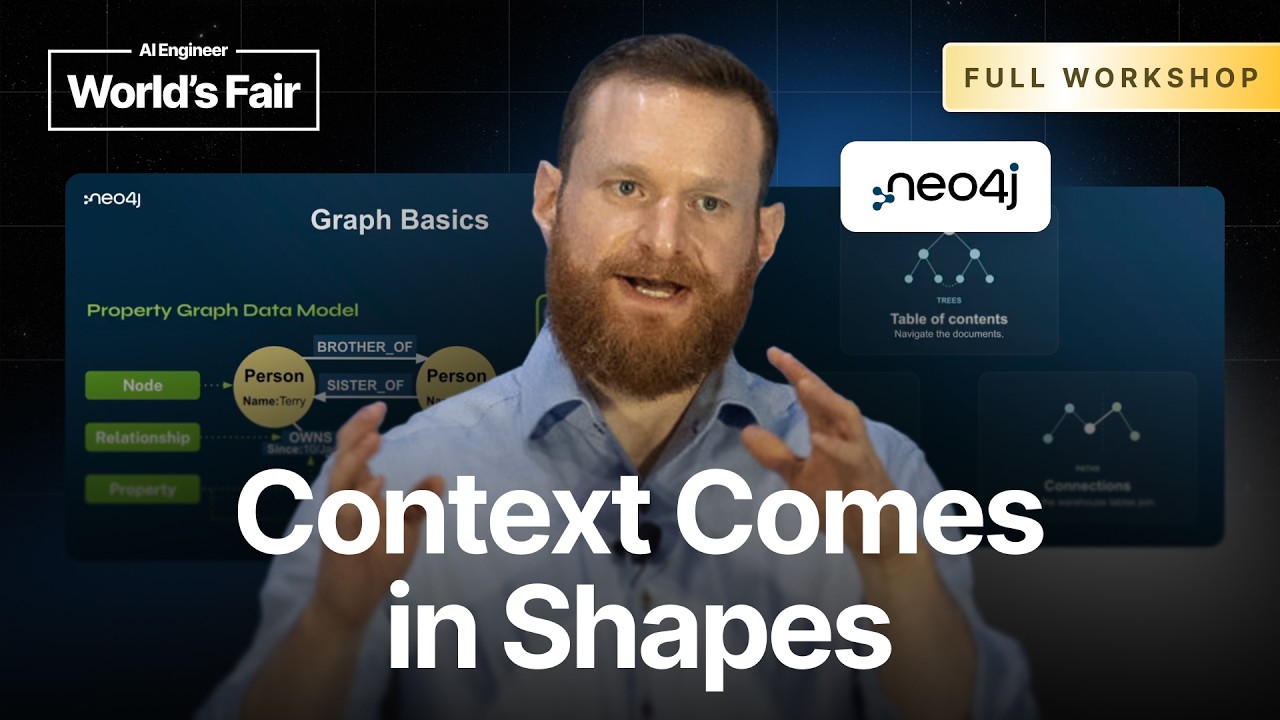
From the article 5 mentionsZach Blumenfeld, an AI Research Engineer at Neo4j, recently presented a workshop titled "AI on Your Lakehouse: Context Comes in Shapes, Not Queries." The session aimed to address the challenges of providing AI agents with the right context to accurately answer questions from both structured data warehouses and unstructured data lakes.
Lakehouse integrationContext
From the articleZach Blumenfeld, an AI Research Engineer at Neo4j, recently presented a workshop titled "AI on Your Lakehouse: Context Comes in Shapes, Not Queries." The session aimed to address the challenges of providing AI agents with the right context to accurately answer questions from both structured data warehouses and unstructured data lakes.
Table of Contents shapeContext
one of three specific shapes introduced to imbue AI agents with better context
From the article 2 mentionsTable of Contents: This shape, resembling a tree structure with links, is used to provide navigation for unstructured data like documents.
Better AI answersEffect
enables AI agents to accurately answer questions from complex, massive datasets
From the article 3 mentionsThe workshop introduced three specific "shapes" designed to imbue AI agents with better contextual understanding: