


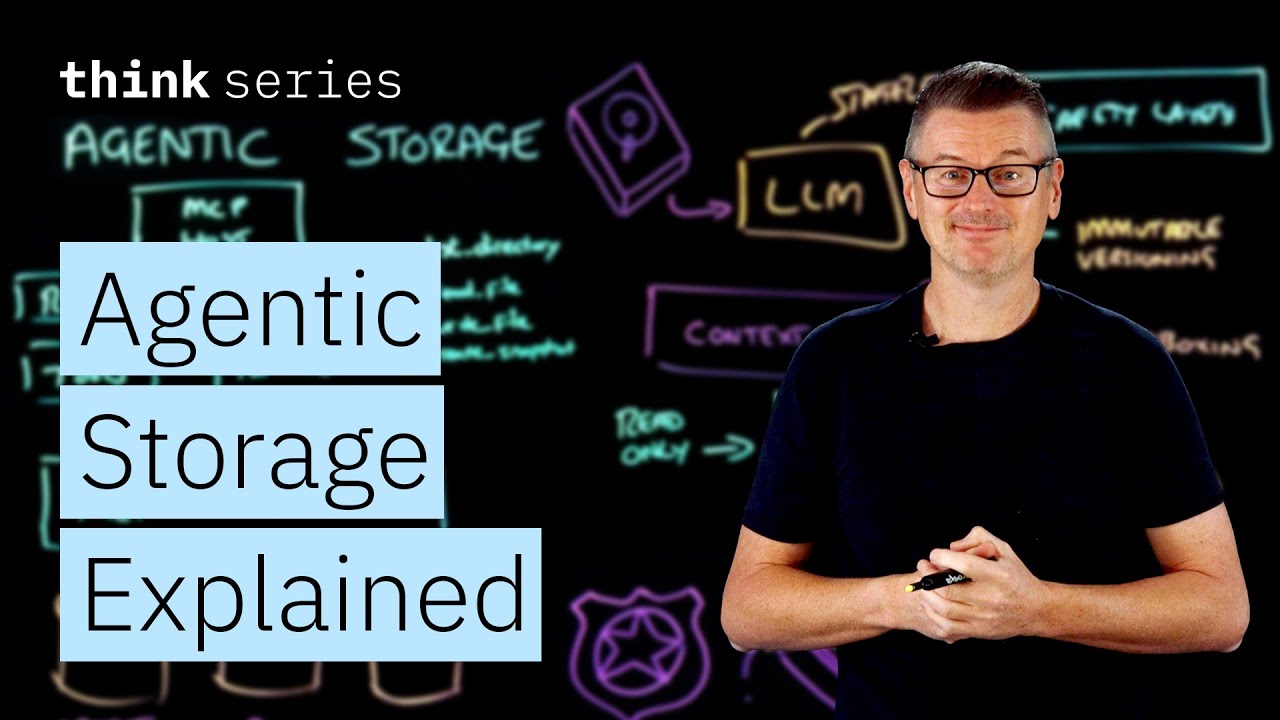
In a recent presentation, Martin Keen, a Master Inventor at IBM, delves into the critical concept of "Agentic Storage" for artificial intelligence systems. Keen, a seasoned innovator with a deep understanding of complex systems, outlines the challenges and solutions for enabling AI agents to effectively interact with and leverage vast amounts of data stored across diverse systems.
Understanding Agentic AI and its Storage Needs
Keen begins by clarifying that agentic AI systems, powered by Large Language Models (LLMs), are not merely conversational chatbots. These agents are designed to perform actions, write code, and remediate incidents autonomously. However, a key limitation of current LLMs is their reliance on a finite 'context window', essentially, their short-term memory. This means that without external data, their ability to perform complex, long-term tasks is severely restricted. This is where the need for robust and accessible storage solutions arises.
The Role of RAG and Vector Databases
To overcome the context window limitation, Keen highlights the importance of Retrieval Augmented Generation (RAG). RAG allows LLMs to access and incorporate external information into their responses. This is typically achieved by querying data stores, such as vector databases, which are optimized for semantic search. Keen illustrates this by drawing a diagram showing an LLM's context window interacting with a vector database to retrieve relevant information, which is then fed back into the LLM to generate a more informed response.
The full discussion can be found on IBM's YouTube channel.
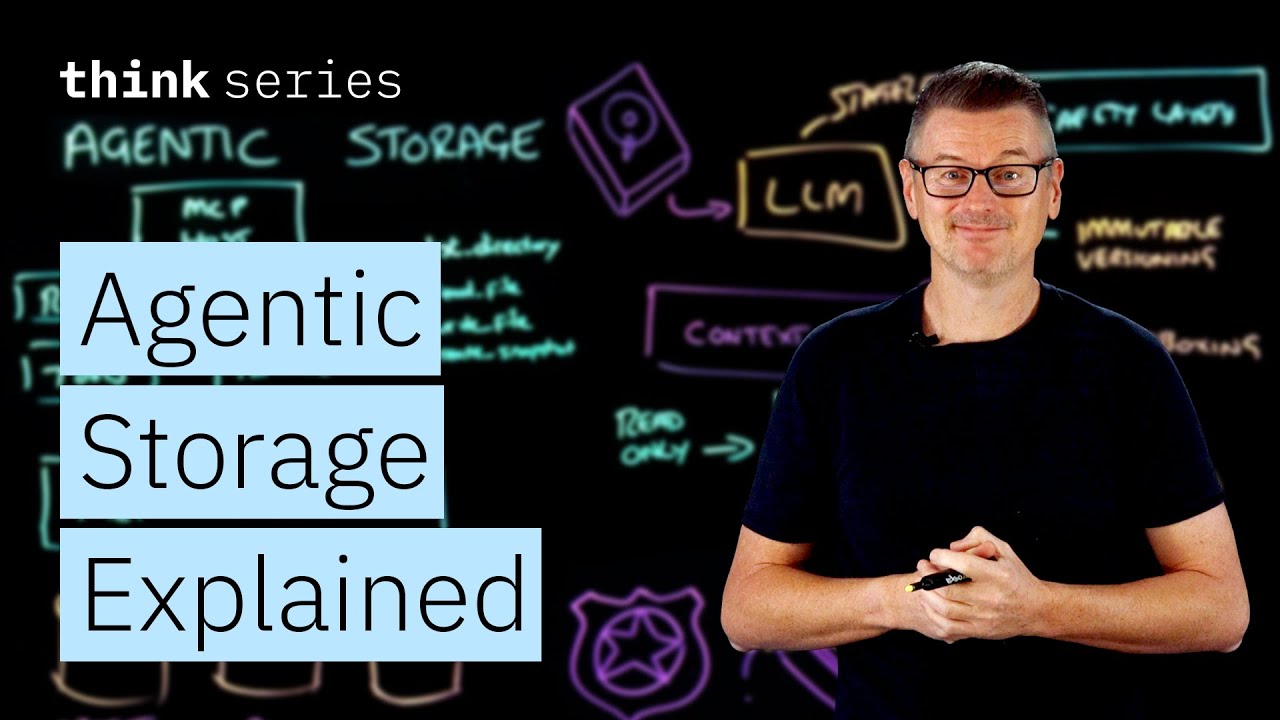
Bridging the Gap: Object, Block, and NAS Storage
The challenge, however, extends beyond simply having data available. AI agents need to interact with various types of storage, including object storage, block storage, and Network Attached Storage (NAS). Keen points out that each of these storage types has distinct APIs and data models. To enable seamless interaction, a unified interface is required. He proposes an 'MCP Server' model, where an MCP (likely standing for Metadata Control Plane or a similar abstraction) acts as a server that interfaces with the underlying storage systems.