


Bill Gates told The Ezra Klein Show that artificial intelligence has become the most dangerous thing humans have ever built, a technology that "makes nuclear weapons look like nothing."
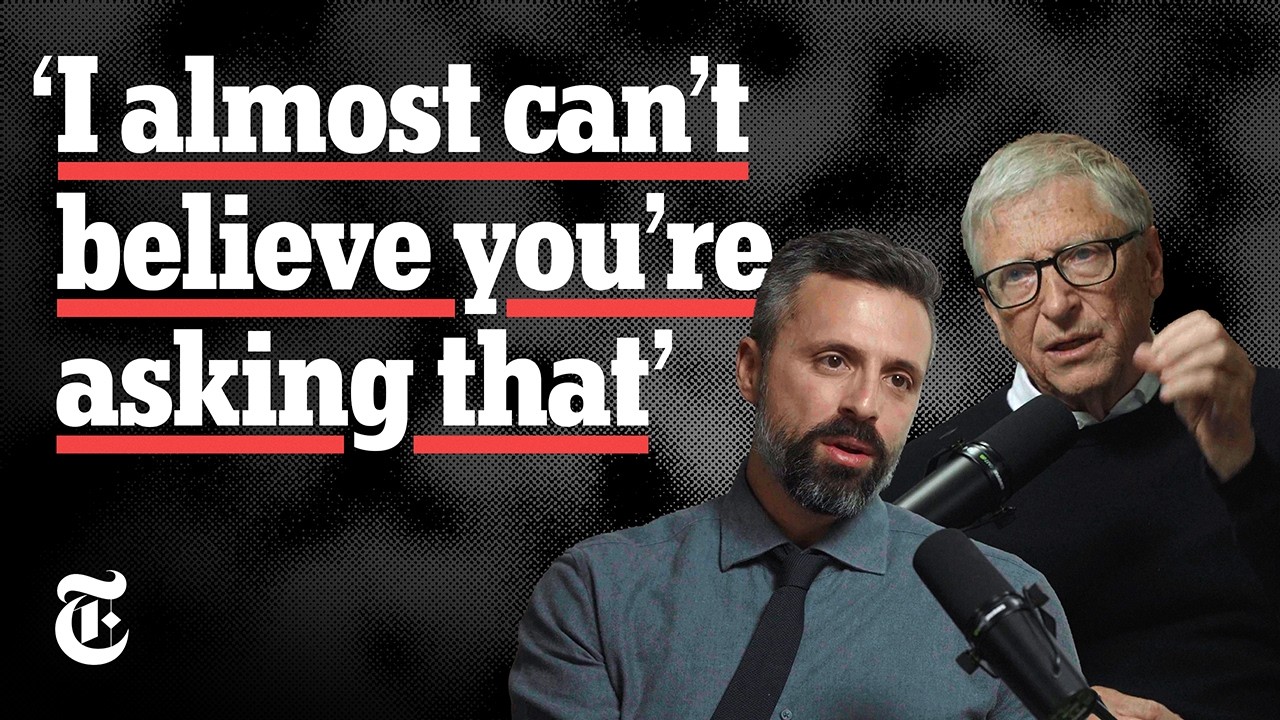
He sounded more alarmed than before.
The interview runs on a timeline. Gates started with a clip from 1996, when he told David Letterman that making a computer think was a very tough problem with almost no progress, and that it was a scary thought. He traced that fear back even further, to Alan Turing proposing a test for machine intelligence before Gates was born, to his own decision to leave Harvard in 1975 and worry with Paul Allen that a breakthrough in AI while they were selling BASIC interpreters would leave them behind, and to the long dead ends of Prolog and expert systems while a small group including Geoffrey Hinton kept work on neural nets alive until graphics processors finally gave those statistical approaches enough power to work.
Then he marked two recent shocks that flipped the story from distant theory to present capability. About six months before the public release of ChatGPT, Sam Altman, Greg Brockman and Ilya Sutskever came to his house and showed a model scoring a perfect five on the Advanced Placement biology exam, even on new questions Gates had written himself. Late last year, a second shock arrived when Claude models coded as well as he could, which he called his most developed talent from ages 13 to 24. Gates said the systems are now superhuman at writing code and finding flaws in code, while still not superhuman at the higher level work of deciding what to do.
That distinction shapes how he sees the near term inside his own institutions. A year ago, he said, suggesting that the Gates Foundation ask an AI how to spend its $10 billion for 2027 would have been a joke because the models were not coherent enough. This October, the foundation will bring ChatGPT, Claude and Copilot into its two-week strategy reviews as peers. In some sessions they will speak only when asked, in others they will be told to interrupt if they hear a mistake or a weak statistic. No final decisions, but a significant contribution to deep strategic discussion.