

ChatGPT Voice: Building with Natural Conversation

OpenAI introduces ChatGPT Voice, allowing users to interact with the AI using spoken language for enhanced productivity and natural workflows.

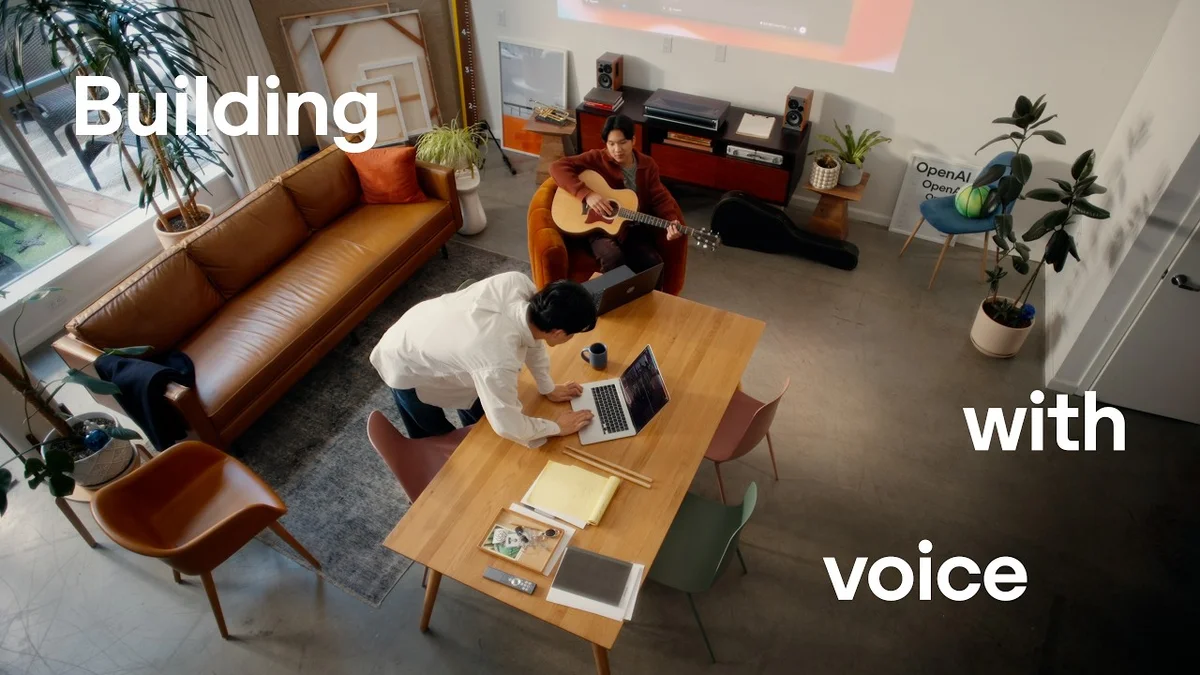
Two individuals collaborating in a modern office space, with a projector screen displaying ChatGPT interface.
OpenAI Youtube
Visual TL;DR
Natural ConversationDriver
interacting with AI using spoken language for enhanced productivity and natural workflows
From the article 5 mentionsThe new feature, dubbed 'Voice', aims to make working with the AI more natural and intuitive by allowing users to communicate via spoken language instead of typing.
Jason Liu PromptsContext
example of user prompting AI to play music and draft blog posts
From the articleOne team member, Jason Liu, prompts ChatGPT to play his daylist and then asks for help drafting blog posts for the upcoming launch.
ChatGPT VoiceCore
From the article 9+ mentionsOpenAI is pushing the boundaries of human-computer interaction with the integration of voice capabilities into ChatGPT.
Desktop AppContext
feature makes it easier to move work forward naturally within the desktop application
From the article 2 mentionsThe central theme of the video is the introduction of 'Voice in the desktop app'.
Streamline WorkflowsEffect
enabling seamless conversational workflows for tasks like drafting blog posts
From the articleThis interaction showcases the core functionality of Voice: enabling seamless conversational workflows.
CollaborationContext
team preparing for a voice launch, showcasing collaborative environment with AI
Future AIOutcome
pushing boundaries of human-computer interaction with integrated voice capabilities

Contents(4)

OpenAI is pushing the boundaries of human-computer interaction with the integration of voice capabilities into ChatGPT. The new feature, dubbed 'Voice', aims to make working with the AI more natural and intuitive by allowing users to communicate via spoken language instead of typing.

The video highlights a collaborative environment where a team is preparing for a voice launch next week. One team member, Jason Liu, prompts ChatGPT to play his daylist and then asks for help drafting blog posts for the upcoming launch. This interaction showcases the core functionality of Voice: enabling seamless conversational workflows.

The full discussion can be found on OpenAI Youtube's YouTube channel.

Building with ChatGPT Voice - OpenAI Youtube
Building with ChatGPT Voice, from OpenAI Youtube

Meet Voice in the Desktop App

The central theme of the video is the introduction of 'Voice in the desktop app'. The description emphasizes that this feature makes it easier to move work forward naturally. It suggests that users can interact with ChatGPT using their voice without interrupting their current task or thought process. The goal is to allow users to 'use your computer without breaking flow.'

The video demonstrates several use cases for this new voice functionality. One scene shows a team member requesting assistance with launch materials, specifically asking for blog post drafts. ChatGPT readily agrees, offering a 'simple first pass.' The projected screen displays a draft blog post with the title 'Meet Voice in the desktop app,' detailing how Voice makes it easier to move work forward naturally, talk through threads, and work with your computer without stopping to type.

Streamlining Workflows with Voice

Another segment illustrates a more dynamic brainstorming session. One team member proposes a feature idea, rambling a bit, and then asks the other to ask questions and push back. This interactive approach highlights how Voice can facilitate creative problem-solving and refinement of ideas. The conversation then shifts to technical tasks. One person suggests that much of the work can be done within the 'shader' due to its audio and phase inputs.

The team then delegates tasks using voice commands. One member asks ChatGPT to 'check the feature flags and make sure they're all configured properly.' Another task involves addressing a new bug report. The request is to 'spin up a new thread, make a pull request, find the root cause.' ChatGPT responds, 'Let me take a look,' and subsequently identifies the issue: a misconfigured feature flag, stating, 'It was that feature flag. Totally misconfigured. Happens.'

Collaboration and Goal Setting

The video also touches upon the collaborative aspects of using ChatGPT Voice. The team confirms they have 'everything set for launch,' and the conversation naturally moves to setting goals and ensuring tasks are completed. The ability to 'just set a goal and then tag the team for review later' is mentioned. The team plans to 'check in with you from my phone,' indicating the accessibility and flexibility of the voice feature across different devices.

The interaction concludes with a confirmation of follow-up actions. One team member states, 'Got it. I'll create a follow-up goal for that. And then just, you know, make no mistakes.' This demonstrates how voice commands can be used for task management and ensuring project completion.

The Future of Conversational AI

The introduction of ChatGPT Voice signals a significant step towards more natural and integrated AI interactions. By allowing users to speak directly to the AI, OpenAI is lowering the barrier to entry for complex tasks and fostering a more fluid and efficient user experience. The ability to manage projects, brainstorm ideas, and debug code through conversation alone has the potential to redefine how individuals and teams work with AI tools.

© 2026 StartupHub.ai. All rights reserved. You may not republish this article in full without a license. Search engines and AI research tools may crawl and summarize for reference. Bulk reproduction or model training requires a license. See our terms.
Daniel Singer

Written by

Daniel Singer

Editor, StartupHub.ai

Daniel Singer is the editor of StartupHub.ai, a technology expert and thought leader on AI and its applications across sectors, from fintech and healthcare to developer tooling and consumer software. He writes and tests the tools covered here thoroughly and regularly, and built StartupHub.ai to give founders, operators and buyers a clearer read on what they are actually being sold.