
Every team has AI. Almost no one has an edge. I think Sid Pednekar has the right test for who does. Pednekar told AI Engineer that only 37% of surveyed enterprises report a positive EBIT contribution from AI. Only 6% qualify as high performers.
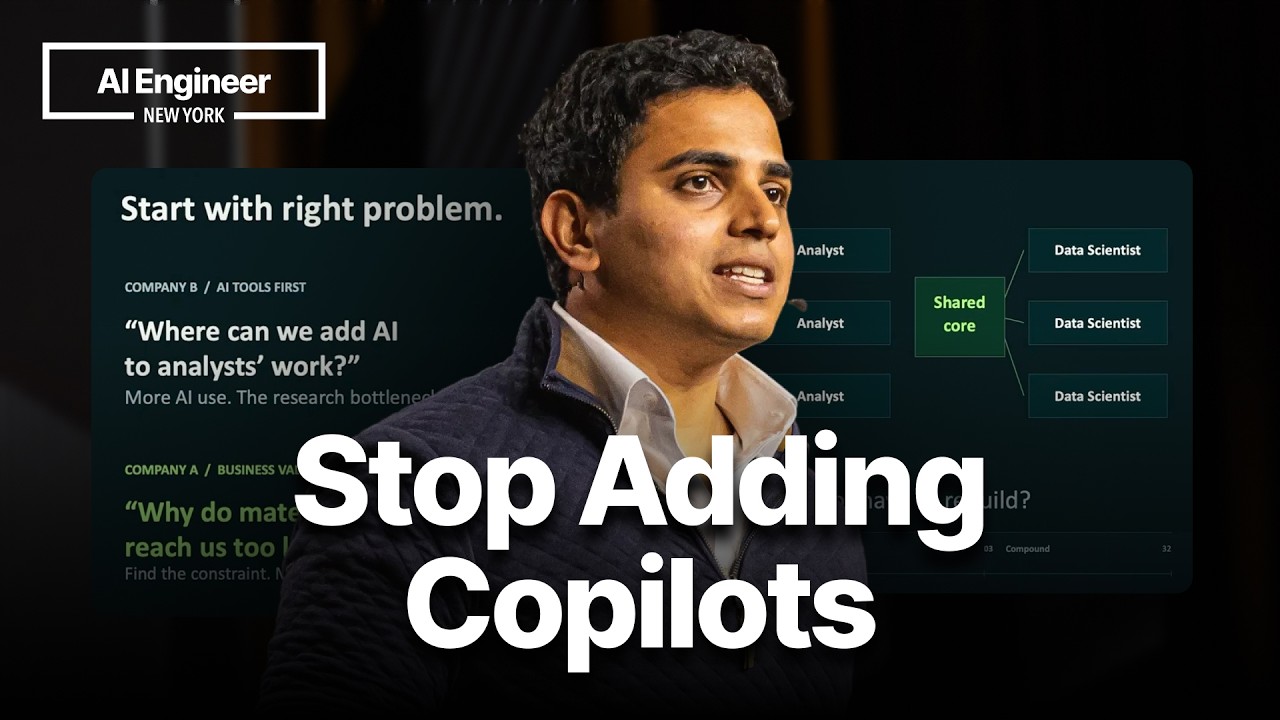
Company B bolted a copilot onto earnings transcripts and got faster summaries. Pednekar argued that speed hides a loss, because summarization strips context. Company A started elsewhere and asked why material signals arrive late, then aimed AI and analyst time at that bottleneck. It did not automate the old step. It redesigned the work around the thesis, evidence and exceptions.
Leaders also bet deeper on fewer workflows. Pednekar said they put more than 80% of investment into high value use cases and redesign work around judgment instead of automating old steps, a habit he put at 75% for high performers against 25% for the rest. He tied that to shared cores with personalized edges, so each analyst or data scientist reuses datasets, semantic layers and notes on what worked.
That matches outside data. Research involving 515 companies, per Harvard Business Review, found teams that redesigned work around AI identified 44% more use cases and generated nearly twice as much revenue. Pednekar added that 71% of organizations are modernizing core systems for AI, per studies he cited, while data quality and reuse remain the complaint that slows agents that must cross apps.
The fair pushback is that pilots teach. A scattered summarizer or retrieval bot can surface what is worth scaling, and strict focus can miss it. Pednekar conceded experimentation matters but drew a line between testing and productivity theater.
The line holds because intelligence is now cheap and attention is not. His last test was whether the system learned, not just the person, with evidence saved back into tools and context. Pick one workflow where judgment pays, then make the system remember.




