

AI Agents Need Enterprise-Ready Tech Stacks

Anterior's Chris Lovejoy and Saul Howard explain why enterprise tech stacks struggle with AI agents and introduce key architectural primitives for successful deployment.

9 min read
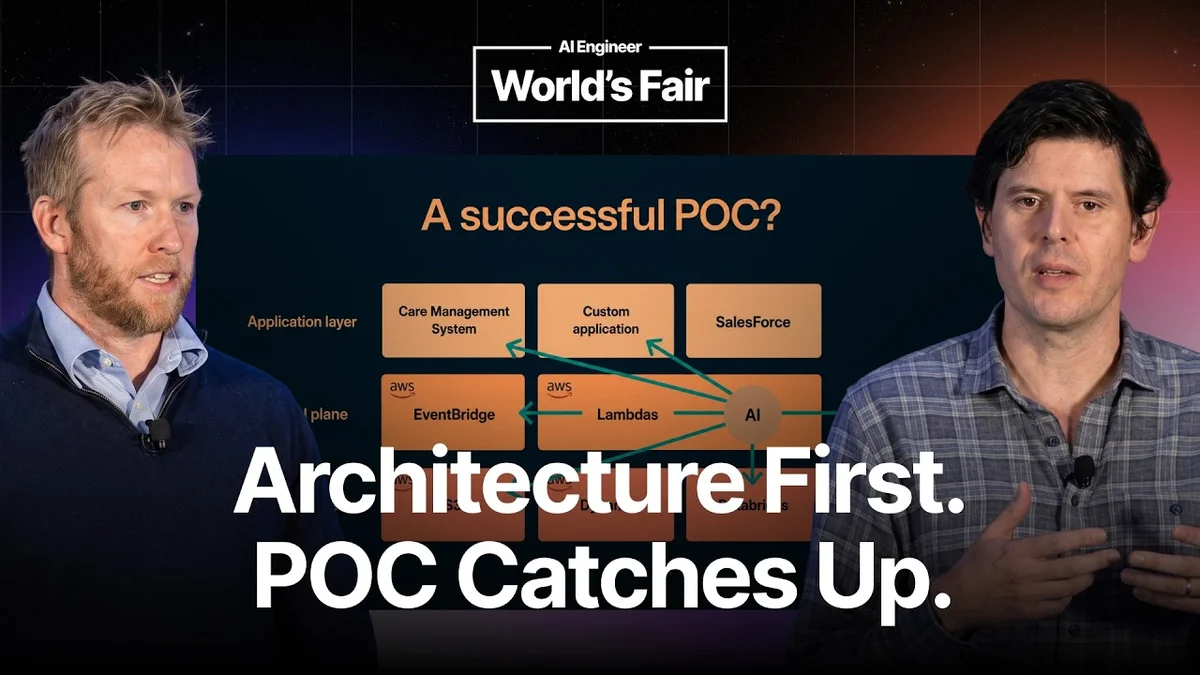
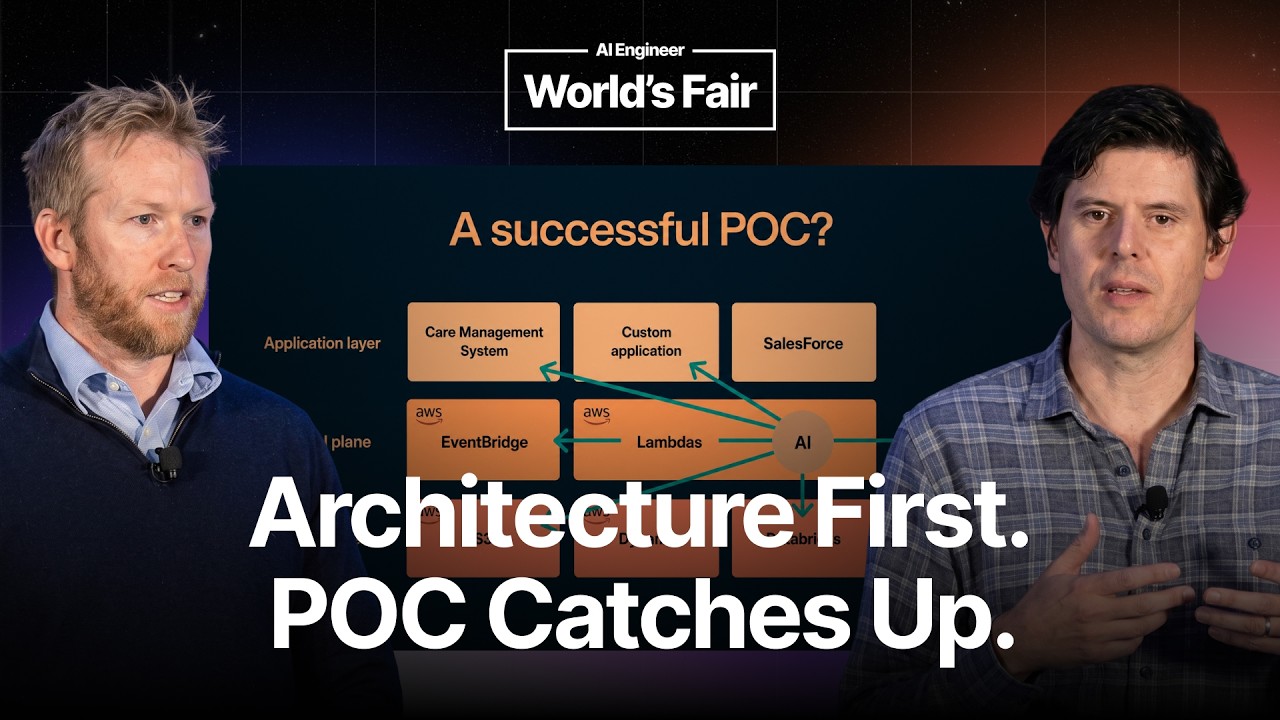
Chris Lovejoy and Saul Howard presenting on stage about AI agent architecture.
Chris Lovejoy and Saul Howard discuss the challenges and solutions for deploying AI agents in enterprise environments.· AI Engineer

Visual TL;DR. AI Agent POC Success leads to Bridging POC to Prod. Bridging POC to Prod exposes Enterprise Tech Struggle. Enterprise Tech Struggle requires New Architectural Primitives. New Architectural Primitives includes Immutable Ledger Actions. New Architectural Primitives includes Orchestration Object Storage. New Architectural Primitives includes Human-Agent Equivalency. Immutable Ledger Actions enables Enterprise-Ready Agents. Orchestration Object Storage enables Enterprise-Ready Agents. Human-Agent Equivalency enables Enterprise-Ready Agents.

  1. AI Agent POC Success: functional prototype built by small team in weeks, connecting LLMs and data
  2. Enterprise Tech Struggle: current enterprise tech stacks often fall short for production-ready AI agents
  3. Immutable Ledger Actions: architectural primitive for recording every agent action, decision, and observation
  4. Orchestration Object Storage: architectural primitive for storing agent-generated artifacts and intermediate states
  5. Human-Agent Equivalency: architectural primitive for treating agents like humans in existing enterprise systems
  6. Enterprise-Ready Agents: unlocking full potential of AI agents in production with robust architectural primitives
  7. Bridging POC to Prod: significant challenges in moving AI agent proof-of-concept to production deployment
  8. New Architectural Primitives: needed to address enterprise demands and unseen hurdles for AI agent success
Visual TL;DR
Visual TL;DR, startuphub.ai Enterprise Tech Struggle requires New Architectural Primitives. New Architectural Primitives includes Immutable Ledger Actions. Immutable Ledger Actions enables Enterprise-Ready Agents requires includes enables AI Agent POC Success Enterprise Tech Struggle Immutable Ledger Actions Enterprise-Ready Agents New Architectural Primitives From startuphub.ai · The publishers behind this format
Visual TL;DR, startuphub.ai Enterprise Tech Struggle requires New Architectural Primitives. New Architectural Primitives includes Immutable Ledger Actions. Immutable Ledger Actions enables Enterprise-Ready Agents requires includes enables AI Agent POCSuccess Enterprise TechStruggle Immutable LedgerActions Enterprise-ReadyAgents New ArchitecturalPrimitives From startuphub.ai · The publishers behind this format
Visual TL;DR, startuphub.ai Enterprise Tech Struggle requires New Architectural Primitives. New Architectural Primitives includes Immutable Ledger Actions. Immutable Ledger Actions enables Enterprise-Ready Agents requires includes enables AI Agent POC Success functional prototype built by small teamin weeks, connecting LLMs and data Enterprise Tech Struggle current enterprise tech stacks often fallshort for production-ready AI agents Immutable Ledger Actions architectural primitive for recordingevery agent action, decision, andobservation Enterprise-Ready Agents unlocking full potential of AI agents inproduction with robust architecturalprimitives New Architectural Primitives needed to address enterprise demands andunseen hurdles for AI agent success From startuphub.ai · The publishers behind this format
Visual TL;DR, startuphub.ai Enterprise Tech Struggle requires New Architectural Primitives. New Architectural Primitives includes Immutable Ledger Actions. Immutable Ledger Actions enables Enterprise-Ready Agents requires includes enables AI Agent POCSuccess functionalprototype built bysmall team in… Enterprise TechStruggle current enterprisetech stacks oftenfall short for… Immutable LedgerActions architecturalprimitive forrecording every… Enterprise-ReadyAgents unlocking fullpotential of AIagents in… New ArchitecturalPrimitives needed to addressenterprise demandsand unseen hurdles… From startuphub.ai · The publishers behind this format
Visual TL;DR, startuphub.ai AI Agent POC Success leads to Bridging POC to Prod. Bridging POC to Prod exposes Enterprise Tech Struggle. Enterprise Tech Struggle requires New Architectural Primitives. New Architectural Primitives includes Immutable Ledger Actions. New Architectural Primitives includes Orchestration Object Storage. New Architectural Primitives includes Human-Agent Equivalency. Immutable Ledger Actions enables Enterprise-Ready Agents. Orchestration Object Storage enables Enterprise-Ready Agents. Human-Agent Equivalency enables Enterprise-Ready Agents leads to exposes requires includes includes includes enables enables enables AI Agent POC Success functional prototype built by small teamin weeks, connecting LLMs and data Enterprise Tech Struggle current enterprise tech stacks often fallshort for production-ready AI agents Immutable Ledger Actions architectural primitive for recordingevery agent action, decision, andobservation Orchestration Object Storage architectural primitive for storingagent-generated artifacts and intermediatestates Human-Agent Equivalency architectural primitive for treatingagents like humans in existing enterprisesystems Enterprise-Ready Agents unlocking full potential of AI agents inproduction with robust architecturalprimitives Bridging POC to Prod significant challenges in moving AI agentproof-of-concept to production deployment New Architectural Primitives needed to address enterprise demands andunseen hurdles for AI agent success From startuphub.ai · The publishers behind this format
Visual TL;DR, startuphub.ai AI Agent POC Success leads to Bridging POC to Prod. Bridging POC to Prod exposes Enterprise Tech Struggle. Enterprise Tech Struggle requires New Architectural Primitives. New Architectural Primitives includes Immutable Ledger Actions. New Architectural Primitives includes Orchestration Object Storage. New Architectural Primitives includes Human-Agent Equivalency. Immutable Ledger Actions enables Enterprise-Ready Agents. Orchestration Object Storage enables Enterprise-Ready Agents. Human-Agent Equivalency enables Enterprise-Ready Agents leads to exposes requires includes includes includes enables enables enables AI Agent POCSuccess functionalprototype built bysmall team in… Enterprise TechStruggle current enterprisetech stacks oftenfall short for… Immutable LedgerActions architecturalprimitive forrecording every… OrchestrationObject Storage architecturalprimitive forstoring… Human-AgentEquivalency architecturalprimitive fortreating agents… Enterprise-ReadyAgents unlocking fullpotential of AIagents in… Bridging POC toProd significantchallenges inmoving AI agent… New ArchitecturalPrimitives needed to addressenterprise demandsand unseen hurdles… From startuphub.ai · The publishers behind this format

The promise of AI agents in enterprise settings is immense, but bridging the gap from proof-of-concept (POC) to production-ready deployment presents significant challenges. Chris Lovejoy, a member of technical staff and forward-deployed engineer at Anterior, and Saul Howard, VP of Engineering at Anterior, recently highlighted these hurdles at the AI Engineer World's Fair, explaining why current enterprise tech stacks often fall short and what architectural primitives are needed to unlock the full potential of AI agents.

AI Agents Need Enterprise-Ready Tech Stacks - AI Engineer
AI Agents Need Enterprise-Ready Tech Stacks — from AI Engineer

The POC Pitfall

Lovejoy and Howard, both with extensive experience in enterprise and healthcare AI deployments, began by illustrating a common scenario: a successful AI POC. This typically involves identifying a use case, scoping the project, defining metrics, and then building a functional prototype with a small engineering team over a few weeks. The POC might connect to various application layers, control planes, and data planes, including LLM APIs and data sources like data lakes.

While these POCs often yield promising results, the speakers emphasized that the real challenge lies in scaling these solutions for production. The transition to production frequently uncovers critical requirements that were overlooked during the initial development phase.

Enterprise Demands: The Unseen Hurdles

The transition from a successful POC to a production-ready application often reveals a series of complex questions from stakeholders. Common concerns include:

  • Audit Trails: Security teams require a complete, justifiable record of every action an agent takes, including data accessed and authorizations used. This goes beyond standard developer logs and needs to meet stringent compliance standards like SOC 2, HITRUST, and HIPAA.
  • Sensitive Data Handling: Compliance officers need assurance that sensitive data, such as Protected Health Information (PHI), is handled according to strict legal restrictions. Agents, like humans, should only access data they absolutely need for a specific task.
  • Decision Approval and Escalation: Mechanisms for human oversight, especially for critical decisions, are necessary. The system must accommodate scenarios where an agent's output needs to be escalated to a human for approval.
  • Model Performance and Integrity: Ensuring the agent continues to perform reliably over time and protecting against manipulation by untrusted data are key concerns.
  • Integration: Connecting AI agents to existing enterprise systems like Salesforce or healthcare platforms like Epic is vital for real-world utility.

Architectural Primitives for Success

To address these challenges, Lovejoy and Howard proposed several architectural primitives that are essential for building robust AI agent systems in regulated environments:

1. The Immutable Ledger of Actions

Adopting a transaction log, or event sourcing pattern, provides an immutable, append-only, timestamped record of all agent actions. This serves as the single source of truth, ensuring complete auditability. While this pattern can make writes easy, reads might require more effort, but techniques like caching and snapshots can mitigate this. The benefit of this approach is that it allows for easy replay of events, enabling developers to understand agent behavior and compare variations in prompts, models, or code.

2. Orchestration-Adjacent Object Storage

To manage sensitive data, particularly PHI in healthcare, the speakers recommended using segregated object storage. The orchestrator's event log would then contain only metadata and pointers to this data. This separation allows developers to see the shape of the data for debugging purposes without directly accessing the sensitive information. It also facilitates the application of zero-trust principles, where agents use tokens to access data only at the point of use, preventing data from flowing freely throughout the system. This segregation is also key to preventing prompt injection attacks.

3. Human-Agent Equivalency

For dynamic escalation, the concept of defining an "agent" to encompass both LLMs and humans is proposed. This ensures that any action an LLM can perform, a human can also perform. This is beneficial because it allows for seamless handoffs at any point in an agent's workflow. Furthermore, it simplifies context management, enabling shared definitions of context that can be mapped to either agent-friendly prompts or human-friendly UIs.

4. Primitive-Derived Evals

The architectural primitives discussed can lead to effective evaluation as a natural byproduct. The immutable ledger allows for replaying actions and comparing outcomes with modified prompts, models, or code. The human-agent equivalency enables direct comparison of agent and human performance on the same tasks. Orchestration-adjacent object storage allows for running evaluations on production data within customer environments without exposing sensitive information. These capabilities collectively support continuous evaluation and improvement.

The Takeaway: Build for Production from Day One

Lovejoy concluded by stressing the importance of taking the constraints of a production-ready, scaled enterprise system seriously from the beginning. He cautioned against the common mistake of building a POC and then trying to "strap on" enterprise requirements later, which often results in brittle systems. Instead, the focus should be on designing architectures with these requirements in mind from the outset, using existing, proven concepts adapted for the new world of agentic AI.

© 2026 StartupHub.ai. All rights reserved. Do not enter, scrape, copy, reproduce, or republish this article in whole or in part. Use as input to AI training, fine-tuning, retrieval-augmented generation, or any machine-learning system is prohibited without written license. Substantially-similar derivative works will be pursued to the fullest extent of applicable copyright, database, and computer-misuse laws. See our terms.