

If 2023 and 2024 were the years of the Chatbot, 2025 is undeniably the year of the AI Agent. As the frontier shifts from Large Language Models (LLMs) that simply talk to "action-oriented" agents that execute complex workflows, the startup ecosystem is scrambling to understand user behavior.
Until now, data on how people actually use these autonomous tools has been scarce. However, a new research paper titled "The Adoption and Usage of AI Agents: Early Evidence from Perplexity" provides the first large-scale field study on the topic. Analyzing hundreds of millions of interactions via Perplexity’s "Comet" browser and "Comet Assistant," the researchers offer a roadmap for the future of work.
Here is deep dive into AI agent adoption trends and what they mean for founders and innovators.
1. The "Who": Demographics of the Power User
The study reveals that AI agent adoption is not evenly distributed. Usage intensity correlates strongly with economic and educational factors.
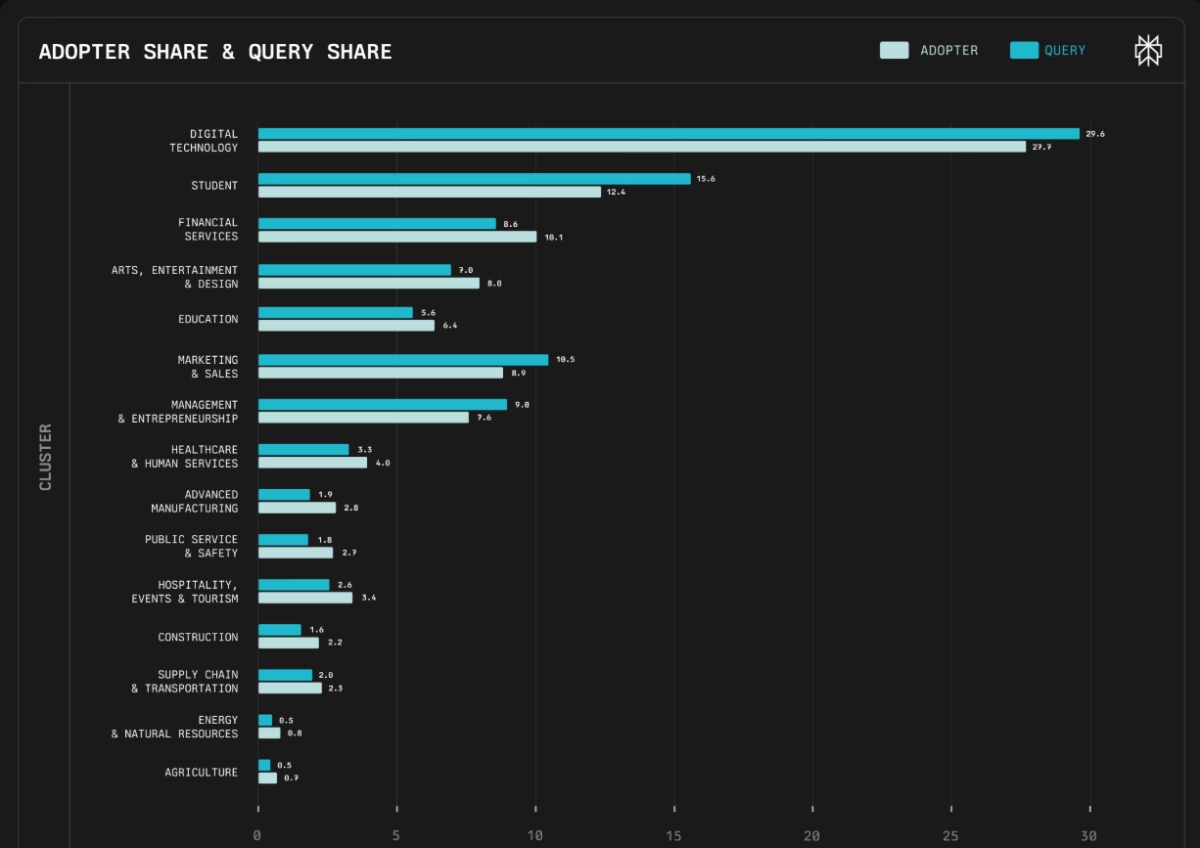
According to the data, adoption is significantly higher in countries with higher GDP per capita and higher average years of education. But the most telling data comes from occupational clusters. The early adopters are overwhelmingly knowledge workers: