

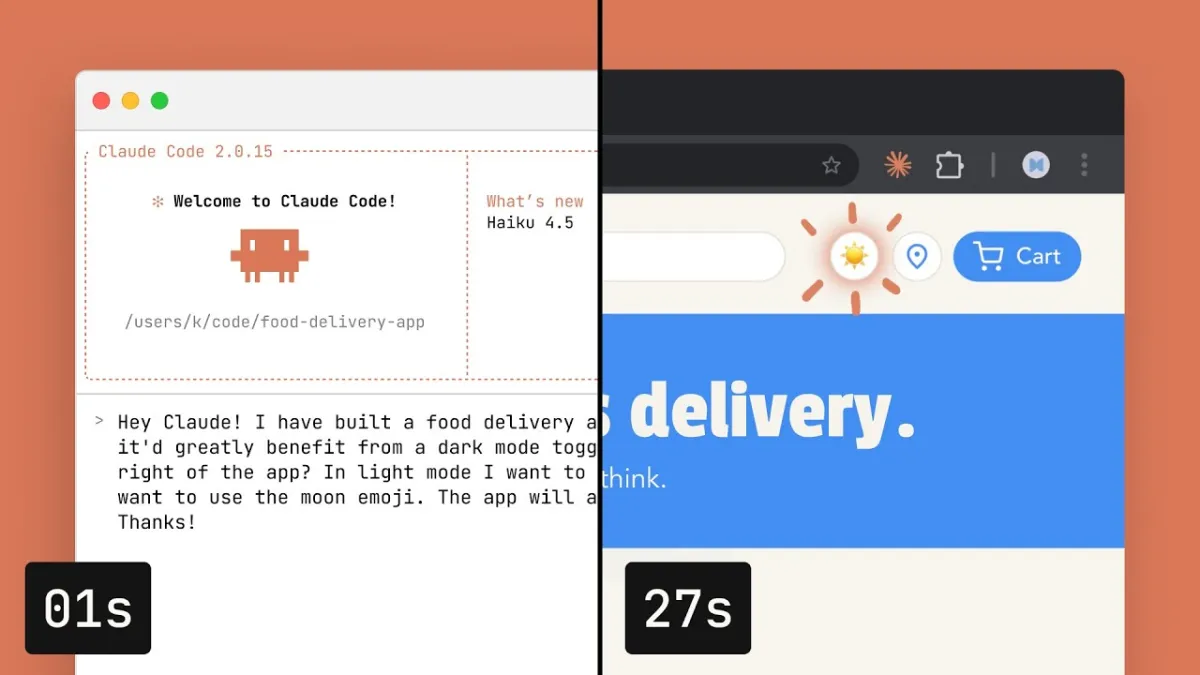
The true measure of progress in artificial intelligence often lies not just in what it *can* do, but in how efficiently and affordably it can do it at scale. Anthropic's recent product demonstration, "Introducing Claude Haiku 4.5," vividly illustrated this principle, showcasing a model that elevates developer productivity by delivering sophisticated coding capabilities with unprecedented speed and cost-efficiency. The video provided a direct, impactful look at Claude Haiku 4.5, a "small model" engineered to democratize advanced AI for a broader range of applications and users.
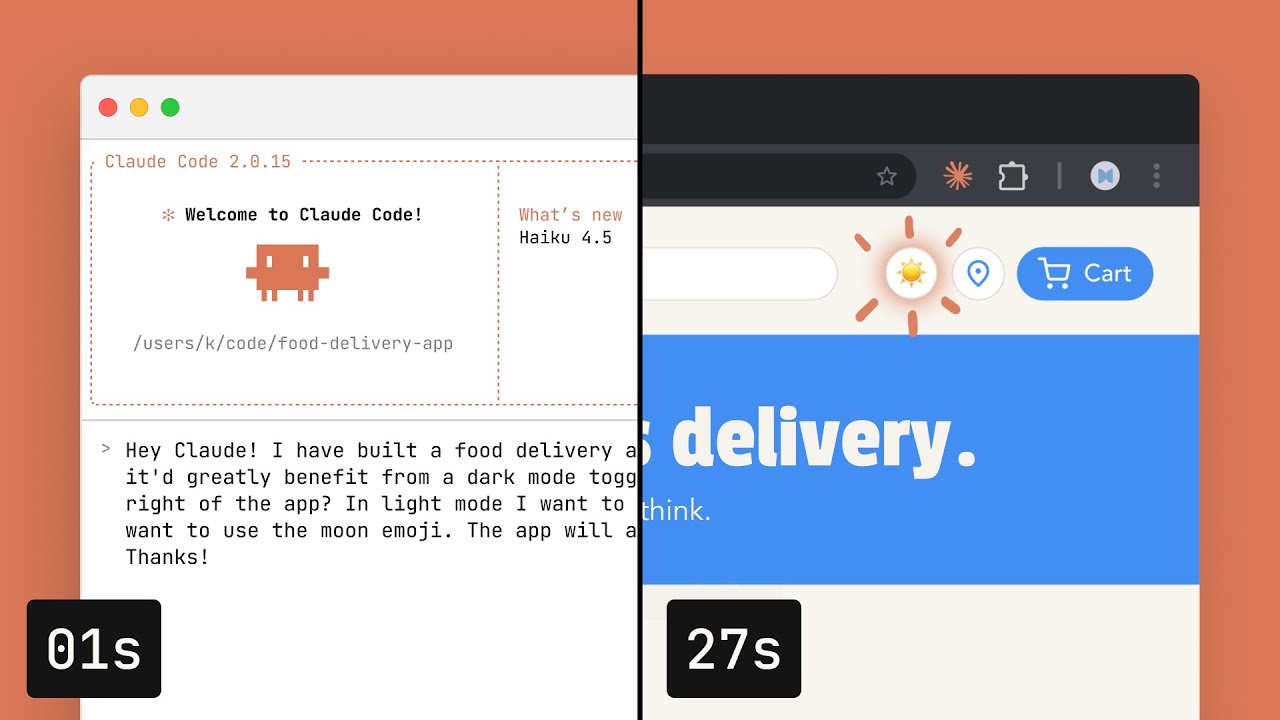
The demonstration highlighted Claude Haiku 4.5’s capabilities through a real-world coding challenge: implementing a dark mode toggle for a food delivery application. The user provided a concise prompt, requesting a dark mode feature with specific emoji indicators for light and dark modes, and the assurance that the application would auto-update. What followed was a sub-60-second display of AI-powered software engineering that moved from understanding the request to generating and applying comprehensive code changes, culminating in a fully functional and polished feature.
This swift execution underscores a pivotal insight: "What was recently frontier is now cheaper and faster." The core value proposition of Haiku 4.5 is its ability to deliver performance comparable to larger, more expensive models, but at a fraction of the operational overhead. Specifically, Anthropic states that Haiku 4.5 offers "similar levels of coding performance but at one-third the cost and twice the speed of Claude Sonnet 4." This dramatically lowers the barrier to entry for utilizing advanced AI in development workflows, making it a compelling option for startups, lean teams, and projects where resource optimization is paramount.
The demo began with Claude Code quickly analyzing the existing application structure, reading relevant files like `Header.jsx`, `Tailwind.config.js`, and `main.jsx`. Within seconds, it outlined a clear, multi-step plan: creating a DarkModeContext, updating the Tailwind configuration, adding the toggle button, wrapping the application with the context provider, and applying dark mode styling across all components. This structured approach, generated autonomously by the model, speaks volumes about its understanding of complex software architecture and best practices.
The immediate visual feedback within the demo was striking. As Claude Code implemented changes, the browser-based application updated in real-time, showcasing the new sun emoji toggle appearing in the header. Further code modifications, addressing styling for various UI elements like restaurant cards and food items, were seamlessly integrated. This iterative, responsive development cycle, driven by AI, transforms the traditional coding experience. It enables developers to focus on higher-level design and functionality, offloading repetitive or intricate implementation details to the AI.