

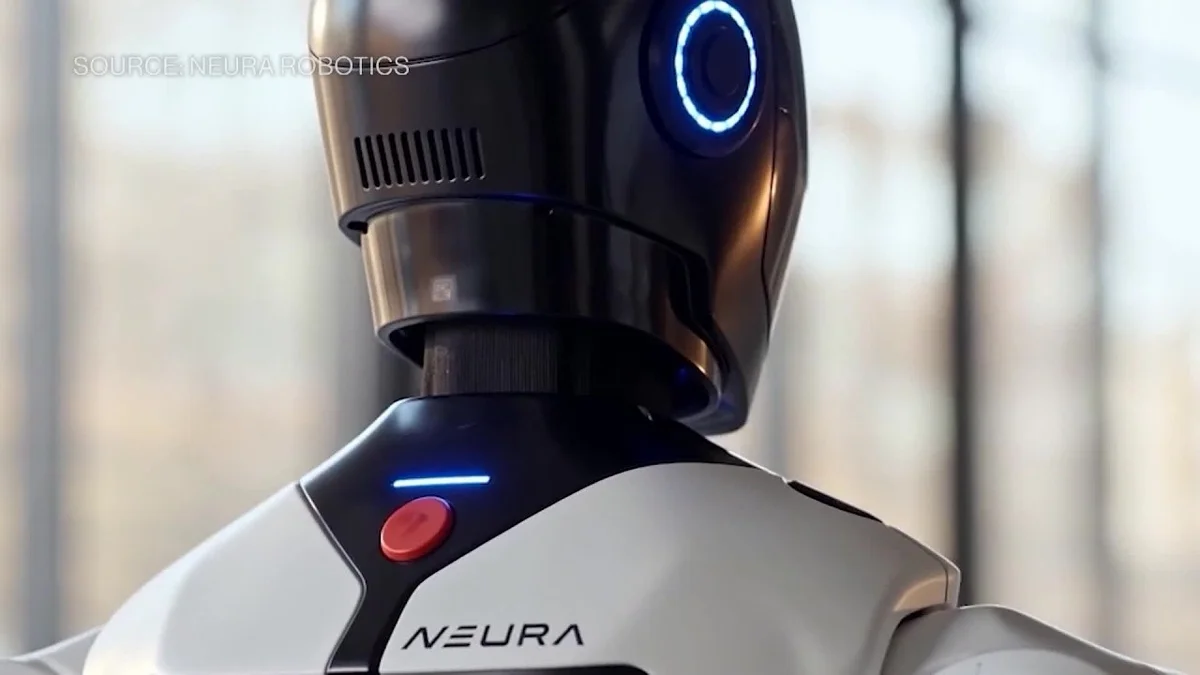
Neura CEO: AI is the Key to Robotics' Future

Neura CEO explains why AI is the key differentiator in the current robotics surge and predicts humanoids will lead the takeover of physical tasks within years.

6 min read
Neura Robotics CEO speaking in an interview.
Bloomberg Technology
Visual TL;DR
Past Robotics VisionDriver
grand visions lacked tangible proof of concept, required investor 'fantasy'
From the article 2 mentionsThe CEO emphasized that while past robotics efforts had clear ideas, they couldn't demonstrate their capabilities.
AI is KeyCore
From the article 2 mentionsThe future of physical AI and robotics is accelerating at an unprecedented pace, according to Neura CEO, who believes the integration of advanced AI is the key differentiator for this current wave of innovation.
Rapid Physical AIContext
From the article 9 mentionsIn a recent discussion, the CEO highlighted that the rapid progress in physical AI is so significant that he can predict year-over-year advancements, describing the speed as 'ridiculous.' This contrasts with previous eras of robotics, which, while having grand visions, lacked the tangible proof of concept that AI now provides.
Demonstrable ProgressEffect
companies like Neura now show tangible progress across full-stack systems
From the article 4 mentionsThis demonstrable capability is now reflected in funding rounds, as investors can finally see proof of concept.
Humanoids Lead TakeoverOutcome
humanoid robots will lead the takeover of physical tasks within years
Increased FundingOutcome
demonstrable capability now reflected in successful funding rounds from investors
From the article 2 mentionsStartupHub.ai data shows that Neura has raised $80 million in funding.
Future of WorkOutcome
accelerating pace of physical AI and robotics transforming the future of work
From the article 2 mentionsThe CEO predicts that physical work will experience the most disruption from AI and robotics, stating, "I think physically and robotics will take every physical task.
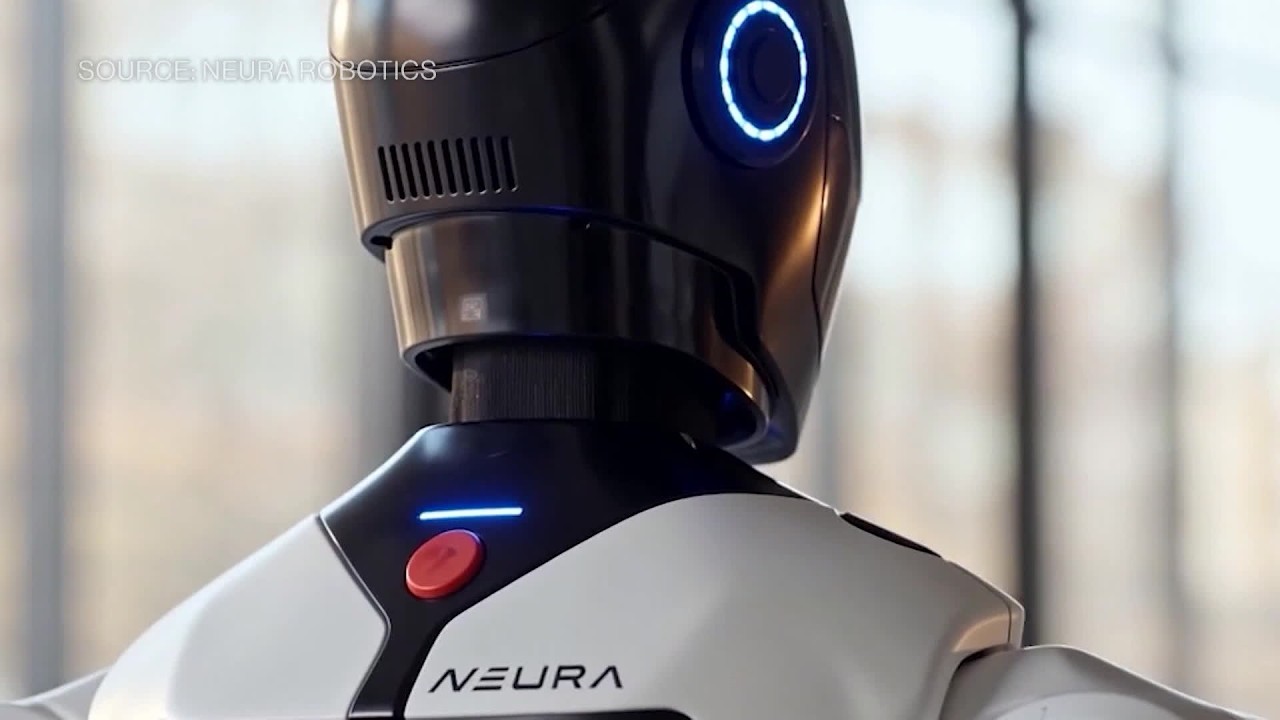
The future of physical AI and robotics is accelerating at an unprecedented pace, according to Neura CEO, who believes the integration of advanced AI is the key differentiator for this current wave of innovation. In a recent discussion, the CEO highlighted that the rapid progress in physical AI is so significant that he can predict year-over-year advancements, describing the speed as 'ridiculous.' This contrasts with previous eras of robotics, which, while having grand visions, lacked the tangible proof of concept that AI now provides.

The CEO emphasized that while past robotics efforts had clear ideas, they couldn't demonstrate their capabilities. This inability to prove functionality required significant 'fantasy' from investors to believe in the vision. However, the current state of AI has changed this dynamic, allowing companies like Neura to demonstrate tangible progress across their full-stack systems. This demonstrable capability is now reflected in funding rounds, as investors can finally see proof of concept.

The full discussion can be found on Bloomberg Technology's YouTube channel.

Pace of Physical AI Development 'Ridiculous': Neura CEO Reger - Bloomberg Technology
Pace of Physical AI Development 'Ridiculous': Neura CEO Reger, from Bloomberg Technology

The AI Advantage in Robotics

The CEO pointed to AI as the critical factor setting the current robotics revolution apart. He stated, "The difference now is actually the AI part." He elaborated that the progress in physical AI is happening daily and is tremendous, making it possible to prove capabilities today that were merely conceptual in the past. This ability to demonstrate is crucial for investor confidence and for the broader adoption of robotic technologies.

He further explained that the rapid advancement means that what was once a multi-year development cycle is now achievable in a much shorter timeframe. "I mean, it's it's ridiculous. It's a it's fast. It's it's fake. So and it's real. So you can actually prove today," the CEO remarked, underscoring the tangible nature of current AI-driven robotics.

Humanoid Robots: Psychology Over Engineering

Discussing Neura's portfolio, which includes a humanoid robot, the CEO revealed that the primary driver for the humanoid form factor is not purely engineering but the psychology of human interaction. "In my opinion, the core reason for humanoids is actually psychology of humans," he explained. He believes that the humanoid shape is the only form factor that every human intuitively understands.

To illustrate this, he shared an anecdote about his mother. When he previously showed her a robot arm performing a welding task, she was unimpressed, seemingly not recognizing it as a robot. However, upon seeing a humanoid robot, she immediately grasped its potential and had numerous ideas about its applications. "I do believe it's easier to build a robot on legs than actually changing the psychology of humanity," the CEO stated, highlighting the strategic advantage of the humanoid design.

He also pointed out that the world is built around human ergonomics, making a human-like robot the most practical choice for taking over tasks currently performed by humans. This human-like design facilitates seamless integration into existing environments and workflows.

The Future of Physical Work

The CEO predicts that physical work will experience the most disruption from AI and robotics, stating, "I think physically and robotics will take every physical task. So every so there will be no accepting exceptions." He is confident that this transformation will occur within the next 1 to 5 years, not a decade or more away.

The core reason for this rapid timeline is the efficiency of training. "I can already prove today that I can train my robots a lot of really complicated tasks faster than I can train a human for that, and with a much better reliability in the same time," he shared. This efficiency, coupled with superior precision and reliability, makes robots a compelling alternative for a vast array of physical tasks. The company's main key performance indicator, 'time to scale,' reflects this focus on rapid deployment and efficiency.

StartupHub.ai data shows that Neura has raised $80 million in funding. The company's focus on physical AI and humanoid robotics positions it in a rapidly growing sector, competing with other major players in the AI and robotics space.

© 2026 StartupHub.ai. All rights reserved. Do not enter, scrape, copy, reproduce, or republish this article in whole or in part. Use as input to AI training, fine-tuning, retrieval-augmented generation, or any machine-learning system is prohibited without written license. Substantially-similar derivative works will be pursued to the fullest extent of applicable copyright, database, and computer-misuse laws. See our terms.