

GPU prices rose 8% in September and no drop is near

Hardware Unboxed finds GPU prices up 8% in September to 34% over MSRP, with Nvidia far above AMD and the RTX 5090 near $6,000.

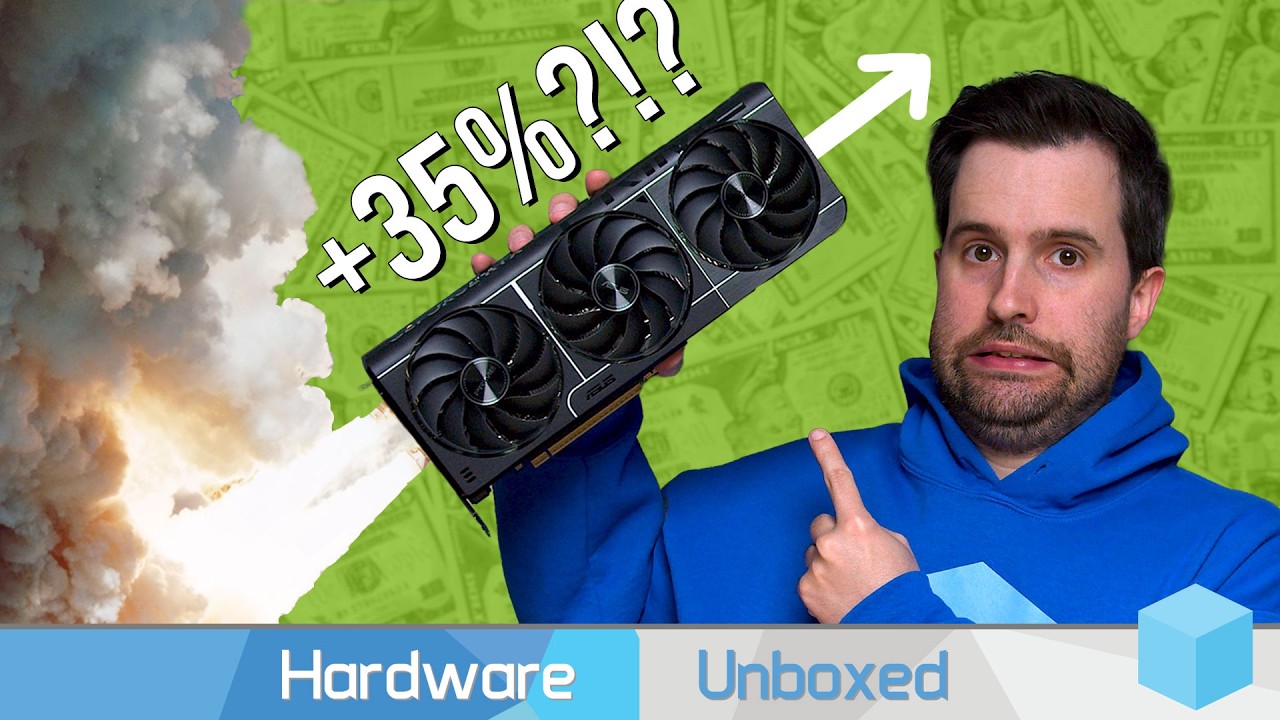
Hardware Unboxed checked the lowest in-stock listing for every current GPU in 10 countries and found prices rose 8% in the past month, leaving the market 34% above MSRP when you exclude the RTX 5090.
GPU prices rose 8% in September and no drop is near

No tier was spared this time.

That run rate is slower than August, when Hardware Unboxed measured a 15% jump from July, but it lifts total inflation since February to 26%. The data is not an average basket. It is the single cheapest available base model per region, validated at checkout, converted to a true local MSRP with taxes. By that method, entry-level cards that once held flat are climbing too, with the Nvidia GeForce RTX 5050 up 9% to 31% over its $250 MSRP and the RTX 5060 up 11% to 34% over MSRP on average, and 50% over in the United States.

The skew is sharper at the top. The RTX 5060 Ti 16GB is up 8% to nearly $800 and 60% over MSRP on average, the most overpriced gaming GeForce card in the survey, while the RTX 5070 is up 10% to 39% over MSRP and 53% over in the US, the RTX 5070 Ti up 7% to 50% over, and the RTX 5080 up 8% to 48% over, 58% over in the US and Canada. The RTX 5090 stands apart at 177% over MSRP, about $6,000 worldwide, after a 41% spike in the US alone and 22% on average. Hardware Unboxed frames that as workstation pricing, noting the same GB202 die sells in RTX Pro 6000 cards with 96GB for $16,000.

Radeon looks cheaper but not cheap. The RX 9060 XT 8GB rose 9% to 34% over MSRP, the 16GB rose 8% to 36% over, which leaves the GeForce 5060 Ti 16GB about 45% more expensive than its AMD peer versus 23% at launch. The RX 9070 and 9070 XT rose only 4% to 15% and 23% over MSRP, stretching the gap to the 5070 Ti to 52% from 49% in August. Intel Arc B570 rose 10% to 31% over MSRP where available and B580 rose 4% to 25% over.

The skeptic case is in the method and what it cannot prove. A lowest-price snapshot favors one retailer and a base cooler, so street averages are higher, and Hardware Unboxed flags that directly. It also shows broad inflation, 29% to 45% over MSRP across India, North America, the UK, Brazil and Europe, with Australia and the Philippines still above 25%, but it does not publish supply, sell-through or memory procurement costs to tie the move cleanly to AI demand. As of September 2026 Nvidia has not officially confirmed an additional hike, while AMD has pointed to roughly 10% increases on select Radeon cards and GDDR6 kits in August tied to memory costs. The cloud side hints at the same pressure, with neocloud provider Nebius notifying customers September 17 it will raise pay-as-you-go GPU instances 21% and memory 41% from October 1.

Hardware Unboxed says retailers expect more upward pressure and no new generation until 2028 at the earliest, which leaves buyers choosing between paying a tier penalty now, the $750 that used to buy a 5070 Ti now buys a 5070, or waiting with no guarantee of a correction.

© 2026 StartupHub.ai. All rights reserved. You may not republish this article in full without a license. Search engines and AI research tools may crawl and summarize for reference. Bulk reproduction or model training requires a license. See our terms.
Daniel Singer

Written by

Daniel Singer

Editor, StartupHub.ai

Daniel Singer is the editor of StartupHub.ai, a technology expert and thought leader on AI and its applications across sectors, from fintech and healthcare to developer tooling and consumer software. He writes and tests the tools covered here thoroughly and regularly, and built StartupHub.ai to give founders, operators and buyers a clearer read on what they are actually being sold.