Accessibility constraints make agents faster, not slower. Jemima Abu told AI Engineer that a Figma to code run with an accessibility skill took 5 minutes against 15 minutes without it, at what she calculated as 58% lower cost.
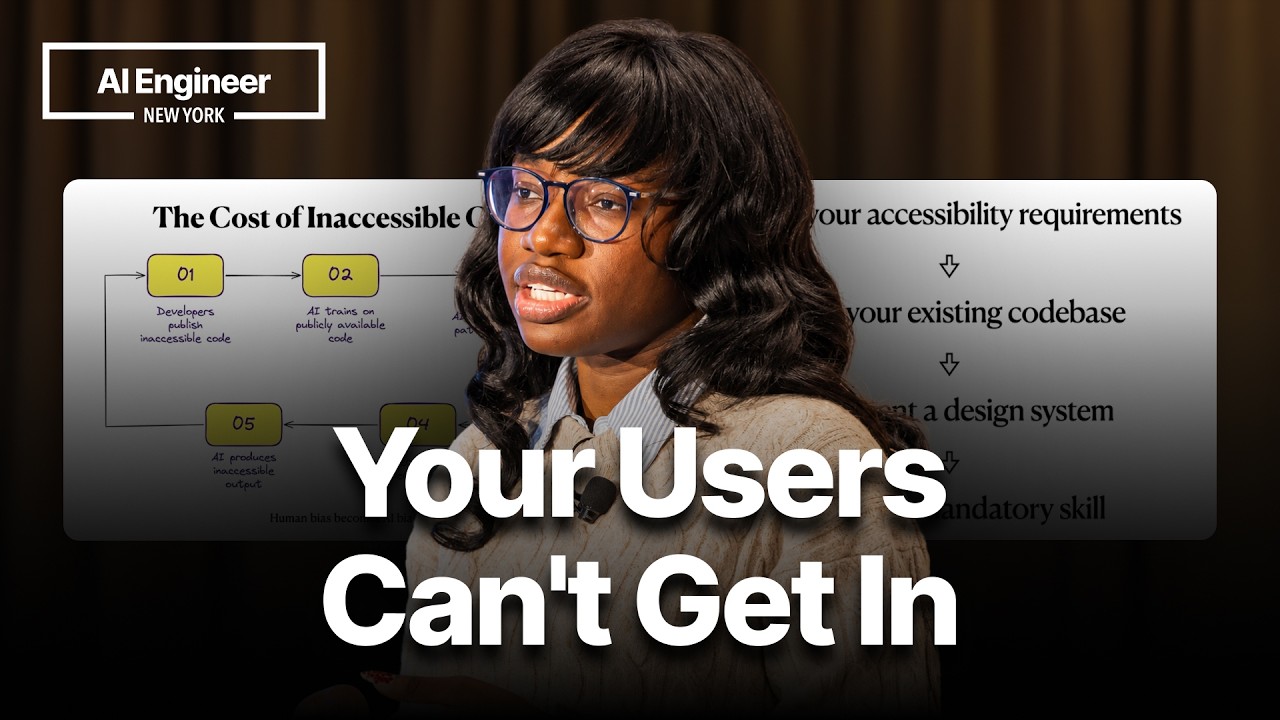
I think the money point is what will move teams. Abu said 96% of the top 1 million websites have accessibility issues, and she tied that to developers shipping what works for them. If models copy that code, she warned, they risk shutting out the 16% of people worldwide she cited as living with disability.
You can't bolt it on later.
Abu compared retrofits to shoving blueberries onto a plain muffin and calling it blueberry. Her fix is defaults: semantic HTML, keyboard-only operation for every interactive element, and native parts like the details element for accordions and popover for dialogs instead of heavy custom JavaScript, plus a design system and codebase audit so the agent does not learn bad patterns. She flagged the limit herself. Her Figma test was a one-off, she said, not empirical proof.
Managers still say access takes too long or clients do not care, and Abu said she hears that often. That excuse is fair when deadlines are tight. It fails because inaccessible code costs customers, invites lawsuits under laws like the Americans with Disabilities Act she cited, and teaches the next model the wrong pattern, a maintenance view echoed by DEV Community guidance to teach an assistant once, keep sensitive data out, and review what it remembers, and by DataCamp advice to pick a path that matches the goal and build small projects as you go.
Abu wants requirements defined up front, audits automated, and the skill enforced on every agent run, with help like Google's modern web guidance for native components. I would add memory hygiene from that wider how-to debate. Tell the agent what good looks like at the start, or you will pay to fix it later.