a16z Blog says the Senate permitting bill would make federal reviews final, fast and binding.
Matt Cronin, a writer for the publication, argues America buried building capacity under review without result.
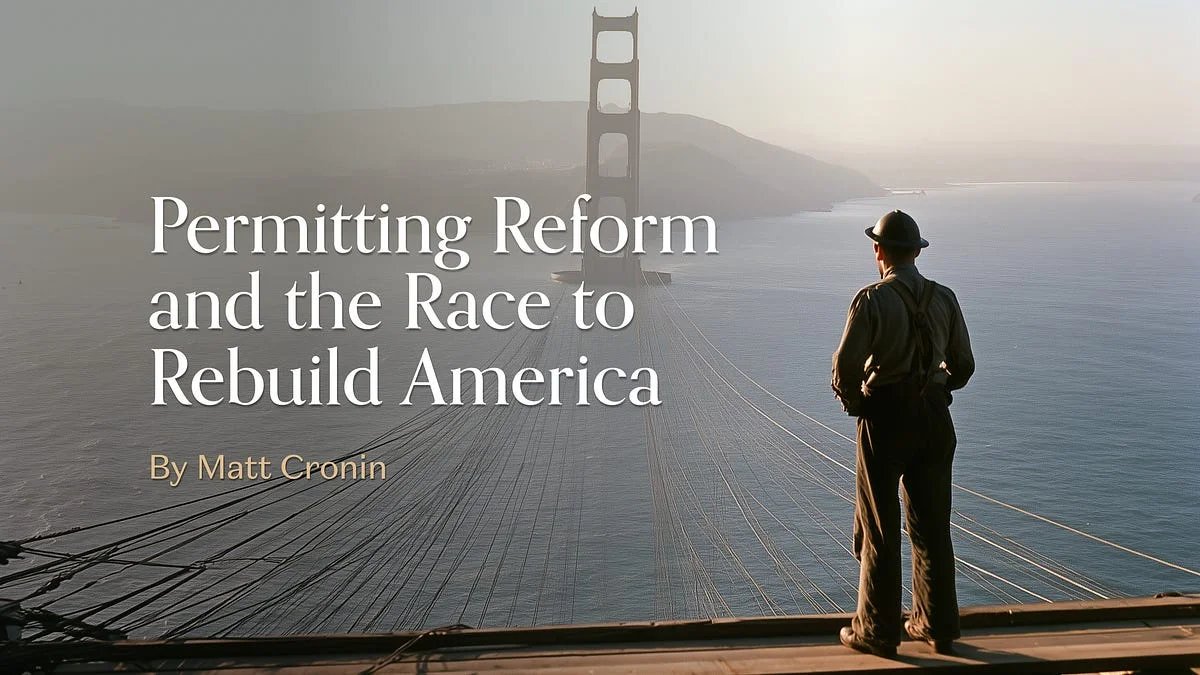
Golden Gate took four years, Cronin writes.
He contrasts that $35 million span with a 150-square-foot Noe Valley toilet projected at $1.7 million and two years, later cut to about $200,000 after donated work still needed signoff from more than a half-dozen agencies including the Arts Commission, according to his account.
He extends the pattern to California high-speed rail at $13 billion spent of a $33 billion plan now estimated at $128 billion, two large US nuclear reactors finished seven years late and about $23 billion over budget, and a 550-mile transmission line that took 17 years with two years for construction, per his tally.
Per Politico, Senate negotiators advanced the legislation toward floor debate and promised an amendment process.
Per The New York Times, the same bill divided Democrats because it would rewrite major environmental laws.
Cronin contends NEPA review averages more than a year for simple assessments and nearly four years for impact statements, with Department of Energy data cited by him putting mean costs at $6.6 million and $300,000 before fees.
He says that regime helped kill the 468-megawatt Cape Wind project after more than 15 years and over $100 million without a turbine, while more than 2,000 gigawatts now sit in an interconnection queue averaging about five years.
He backs five fixes in the Senate Bipartisan American Affordability and Jobs Act of 2026, including codified limits on NEPA scope, hard agency deadlines with court enforcement, one coordinated review, barred injunctions for procedural errors, and broader categorical exclusions.
He points to Spain with more than 3,800 kilometers of high-speed rail, Taiwan with fabs in about two years, and Switzerland delivering its Alpine rail tunnel a year early as proof democracies can decide, per his comparison.
He doesn't explain where agencies find reviewers to meet those deadlines, and that staffing gap is real.
Will courts accept a permit that lets work proceed while an error gets fixed?