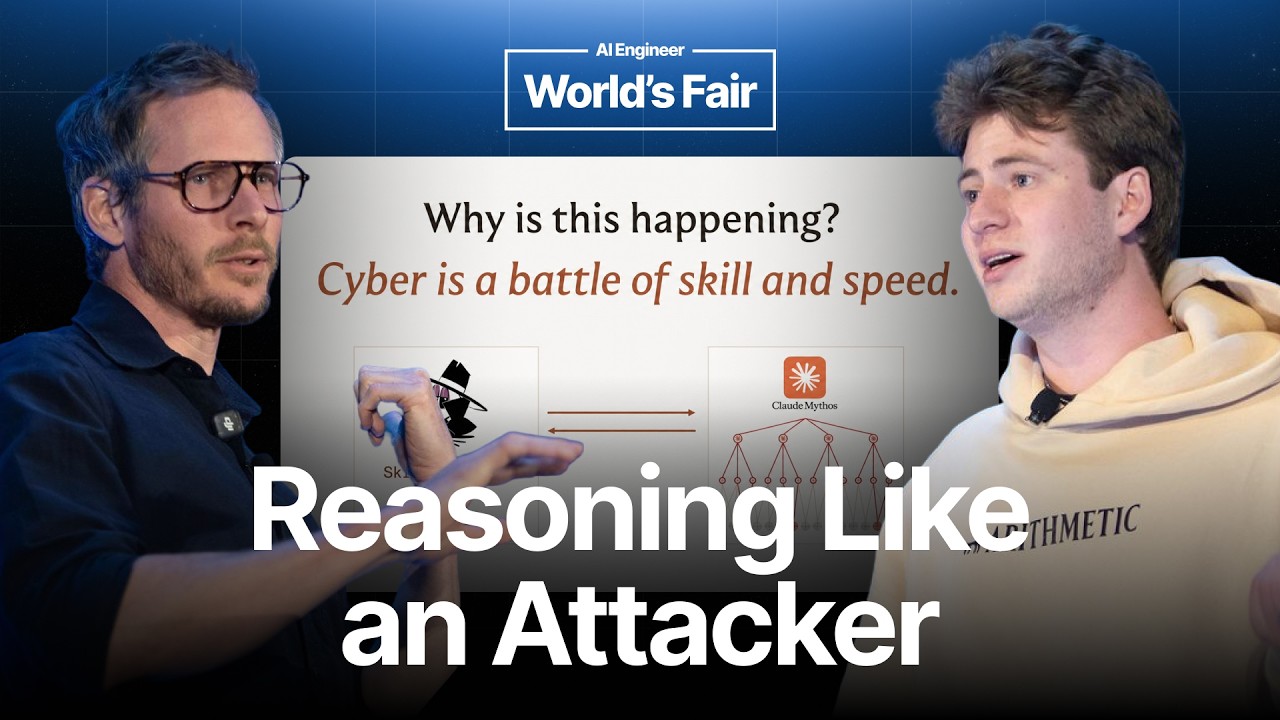
Visual TL;DR
Hackers' AdvantageDriver
attackers empowered by advanced tools, creating an economic shift
Data QualityCore
high-quality data is vital for robust AI model training and performance
AI in CybersecurityContext
AI offers unique opportunity to rebalance scales in favor of defenders
From the article 7 mentionsIn a compelling discussion at the AI Engineer World's Fair, Thomas Wolf of Hugging Face and Uri Rolls of Arithmetic explored the burgeoning intersection of artificial intelligence and cybersecurity.
Open-Source AICore
crucial for training models to out-think cyber attackers effectively
From the article 3 mentionsA key theme of the discussion was the significant potential of open-source AI models in bolstering cybersecurity defenses.
MaskOff BenchmarkCore
new benchmark tests AI's reasoning in dynamic cybersecurity environments
From the article 7 mentionsThe central piece of their presentation was the "MaskOff" benchmark, designed to evaluate AI models on access control, a fundamental aspect of cybersecurity.
AI-Powered DefenseEffect
AI models can understand and interact with complex attack scenarios
From the article 2 mentions"And I think the only way to do that is through a real array of strong open source models and collaboration that we can post-train on and that we can post-train to each network and to each environment as well." This collaborative approach, they believe, is essential for building a future where AI-powered defenses are robust and widely accessible.
Future CybersecurityOutcome
AI will tackle complex challenges, enhancing defender capabilities
From the article 9 mentionsThe presentation concluded with a look towards the future, where AI models are trained to not only identify but also out-think sophisticated cyber attackers.