

Open Source AI: Beyond Virtue to Ownership

Open source AI infrastructure is an ownership strategy, not charity. Controlling the AI model orchestration layer is key for long-term stability and auditability.

8 min read
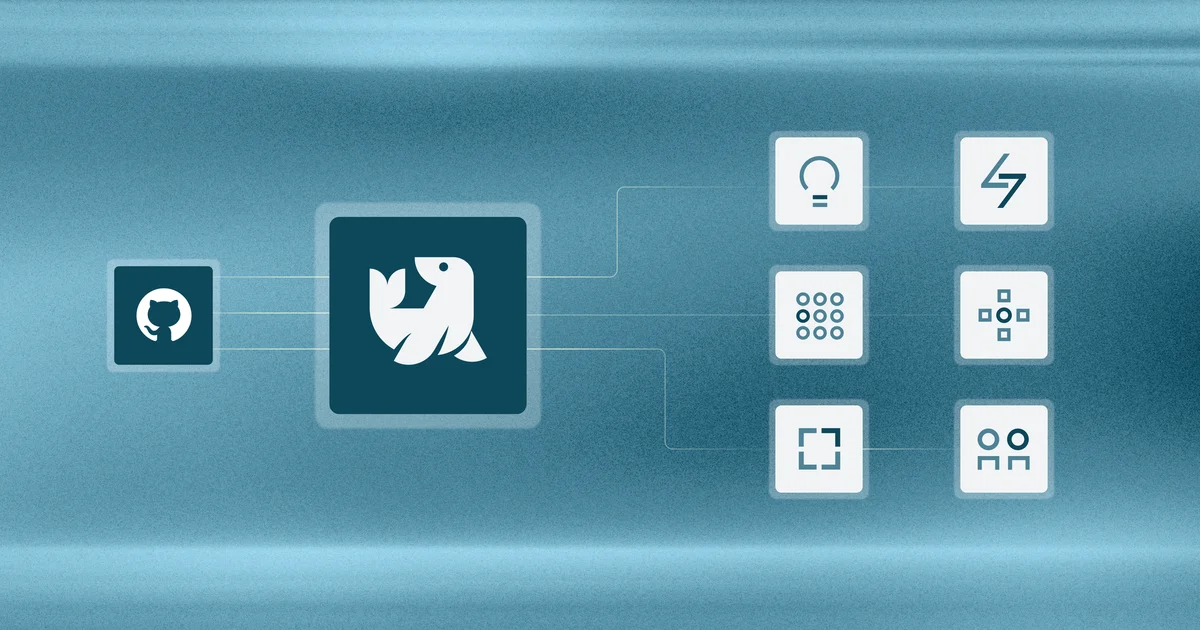
Diagram showing an application connecting to an AI control plane, which then routes to various AI models.
Mozilla Blog

Visual TL;DR. AI Models Fleeting leads to Systems Endure. Systems Endure requires Open Source AI. Open Source AI enables Control Orchestration Layer. Middleware Instability mitigated by Control Orchestration Layer. Control Orchestration Layer ensures Auditability. Control Orchestration Layer achieves Sovereignty in Practice. Open Source AI is Strategic Ownership.

  1. AI Models Fleeting: industry fixates on transient models, benchmarking, and parameter counts
  2. Systems Endure: focus shifts to permanent systems orchestrating AI models for long-term stability
  3. Open Source AI: an ownership strategy, not charity, for controlling critical infrastructure layers
  4. Control Orchestration Layer: owning key architectural layers ensures long-term stability and auditability
  5. Middleware Instability: uncontrolled middleware introduces architectural risk and operational uncertainty
  6. Auditability: source code provides power to inspect, verify, and control system behavior
  7. Sovereignty in Practice: users retain control over systems dictating behavior and portability, like Linux
  8. Strategic Ownership: not owning every component, but critical abstraction boundaries for control
Visual TL;DR
Visual TL;DR, startuphub.ai AI Models Fleeting leads to Systems Endure. Systems Endure requires Open Source AI. Open Source AI enables Control Orchestration Layer. Control Orchestration Layer achieves Sovereignty in Practice leads to requires enables achieves AI Models Fleeting Systems Endure Open Source AI Control Orchestration Layer Sovereignty in Practice From startuphub.ai · The publishers behind this format
Visual TL;DR, startuphub.ai AI Models Fleeting leads to Systems Endure. Systems Endure requires Open Source AI. Open Source AI enables Control Orchestration Layer. Control Orchestration Layer achieves Sovereignty in Practice leads to requires enables achieves AI ModelsFleeting Systems Endure Open Source AI ControlOrchestration… Sovereignty inPractice From startuphub.ai · The publishers behind this format
Visual TL;DR, startuphub.ai AI Models Fleeting leads to Systems Endure. Systems Endure requires Open Source AI. Open Source AI enables Control Orchestration Layer. Control Orchestration Layer achieves Sovereignty in Practice leads to requires enables achieves AI Models Fleeting industry fixates on transient models,benchmarking, and parameter counts Systems Endure focus shifts to permanent systemsorchestrating AI models for long-termstability Open Source AI an ownership strategy, not charity, forcontrolling critical infrastructure layers Control Orchestration Layer owning key architectural layers ensureslong-term stability and auditability Sovereignty in Practice users retain control over systemsdictating behavior and portability, likeLinux From startuphub.ai · The publishers behind this format
Visual TL;DR, startuphub.ai AI Models Fleeting leads to Systems Endure. Systems Endure requires Open Source AI. Open Source AI enables Control Orchestration Layer. Control Orchestration Layer achieves Sovereignty in Practice leads to requires enables achieves AI ModelsFleeting industry fixates ontransient models,benchmarking, and… Systems Endure focus shifts topermanent systemsorchestrating AI… Open Source AI an ownershipstrategy, notcharity, for… ControlOrchestration… owning keyarchitecturallayers ensures… Sovereignty inPractice users retaincontrol oversystems dictating… From startuphub.ai · The publishers behind this format
Visual TL;DR, startuphub.ai AI Models Fleeting leads to Systems Endure. Systems Endure requires Open Source AI. Open Source AI enables Control Orchestration Layer. Middleware Instability mitigated by Control Orchestration Layer. Control Orchestration Layer ensures Auditability. Control Orchestration Layer achieves Sovereignty in Practice. Open Source AI is Strategic Ownership leads to requires enables mitigated by ensures achieves is AI Models Fleeting industry fixates on transient models,benchmarking, and parameter counts Systems Endure focus shifts to permanent systemsorchestrating AI models for long-termstability Open Source AI an ownership strategy, not charity, forcontrolling critical infrastructure layers Control Orchestration Layer owning key architectural layers ensureslong-term stability and auditability Middleware Instability uncontrolled middleware introducesarchitectural risk and operationaluncertainty Auditability source code provides power to inspect,verify, and control system behavior Sovereignty in Practice users retain control over systemsdictating behavior and portability, likeLinux Strategic Ownership not owning every component, but criticalabstraction boundaries for control From startuphub.ai · The publishers behind this format
Visual TL;DR, startuphub.ai AI Models Fleeting leads to Systems Endure. Systems Endure requires Open Source AI. Open Source AI enables Control Orchestration Layer. Middleware Instability mitigated by Control Orchestration Layer. Control Orchestration Layer ensures Auditability. Control Orchestration Layer achieves Sovereignty in Practice. Open Source AI is Strategic Ownership leads to requires enables mitigated by ensures achieves is AI ModelsFleeting industry fixates ontransient models,benchmarking, and… Systems Endure focus shifts topermanent systemsorchestrating AI… Open Source AI an ownershipstrategy, notcharity, for… ControlOrchestration… owning keyarchitecturallayers ensures… MiddlewareInstability uncontrolledmiddlewareintroduces… Auditability source codeprovides power toinspect, verify,… Sovereignty inPractice users retaincontrol oversystems dictating… StrategicOwnership not owning everycomponent, butcritical… From startuphub.ai · The publishers behind this format

Open source is often framed as a moral imperative, a gift to the community. However, its enduring success, particularly at the infrastructure level, stems from a more pragmatic strategy: ownership. As the AI landscape rapidly evolves, the focus shifts from transient models to the permanent systems that orchestrate them. This perspective is central to understanding the strategic value of controlling key architectural layers, a point emphasized in a recent analysis from Mozilla Blog.

Foundational technologies like Linux and Kubernetes didn't achieve dominance solely through goodwill. Their success was driven by operational mechanics, ensuring users retained control over systems dictating behavior and portability. It's not about owning every component, but strategically owning critical abstraction boundaries.

Models Are Fleeting, Systems Endure

The AI industry has fixated on which model will win. Teams pour resources into benchmarking, debating parameter counts, and optimizing prompts for the latest proprietary APIs. Yet, the reality is that models are temporary. Their capabilities, pricing, and underlying weights change frequently. The lasting value of an AI application lies not in the model API call itself, but in the surrounding system: the context assembly, routing logic, fallback policies, and data contracts.

Increasingly, the decisions about model selection are being ceded to providers. These vendors dictate which model handles specific queries, often presenting it as convenience. This surrender of control over routing logic, however, means renting not just compute, but also the intelligence guiding how an application uses AI. This creates a subtle but dangerous fragility.

Middleware Instability and Architectural Risk

Middleware companies in AI operate under intense market pressure, fueled by venture capital. They may subsidize services to gain developer mindshare, but their long-term viability is uncertain. Pivots, acquisitions, or pricing shifts can fundamentally alter the utility of a service treated as a neutral utility. When a vendor hosting routing, rate limits, and fallback policies changes hands, an organization's entire stack can be jeopardized.

If an organization's multi-model orchestration is locked within a proprietary vendor's platform, it transforms a strategic asset into a potential migration crisis. This mirrors the foundational role Kubernetes played in establishing an open control plane for heterogeneous infrastructure. AI systems now require a similar open standard for managing diverse models.

Auditability and the Power of Source Code

The inability to inspect the code at the boundary of an application hinders true auditability. Debugging failures or performance degradation through a closed proxy is like looking through a keyhole. Historically, source code availability didn't always translate to practical ownership due to complexity and expertise requirements. However, AI coding agents are changing this dynamic.

With AI tools assisting in software development and maintenance, the value of accessible source code dramatically increases. Developers can direct agents to analyze fallback calculations, add adapters for new model endpoints, or adjust routing policies. This makes source code an active, operable component, rather than just a possession. An open project guarantees the ability to understand, modify, and maintain software, independent of a single company's shifting priorities.

Sovereignty in Practice

Beyond technical considerations, privacy, compliance, and data residency requirements necessitate control over the AI stack. For regulated industries or organizations handling sensitive data, running the control plane within their own perimeter is an operational necessity, not an ideological stance. This option distinguishes infrastructure that is truly controlled from a closed, proprietary silo. Building the future on proprietary gateways creates long-term operational fragility.

Mozilla.ai is addressing this need with Otari, an open-source LLM control plane designed to manage the critical boundary between applications and the evolving model ecosystem. The principle remains: open source is about building systems that can be trusted, understood, and controlled. Renting the layer that coordinates intelligence is a risk; owning it is the strategic imperative.

The importance of such control planes is growing. StartupHub.ai data shows that while Kubernetes itself has a moderate score of 22/100, competitors like Docker (70/100) and Runhouse (52/100) highlight the market's demand for flexible infrastructure management tools. The ability to own and audit these systems is becoming paramount in the rapidly shifting AI field.

© 2026 StartupHub.ai. All rights reserved. Do not enter, scrape, copy, reproduce, or republish this article in whole or in part. Use as input to AI training, fine-tuning, retrieval-augmented generation, or any machine-learning system is prohibited without written license. Substantially-similar derivative works will be pursued to the fullest extent of applicable copyright, database, and computer-misuse laws. See our terms.